
By using this site, you agree to the Privacy Policy.
Accept
The International Space Federation (ISF)The International Space Federation (ISF)The International Space Federation (ISF)
  • Science News
    • All Articles
    • Physics
    • Astronomy
    • Biology
    • Technology
    • Other
  • Research
    • Research Papers
    • Physicists Testimonials
  • Technology
  • About
    • About us
  • ISF News
  • Events
    • Events
  • Get Involved
    • Invest
    • Donate – Zero Point Foundation
  • Careers
  • Contact Us
Reading: Study Finds Mobile Genetic Elements Rewiring Genomes
Share
The International Space Federation (ISF)The International Space Federation (ISF)
Search
  • Science News
    • Physics
    • Astronomy
    • Biology
    • Technology
  • Research Papers
    • Physicists Testimonials
  • About
    • ISF News
  • Events
  • Get involved
    • Invest
  • Translations
    online pharmacy https://worldneurologyonline.com/ no prescription pharmacy
Follow US
© 2022 International Space Federation. All Rights Reserved.
The International Space Federation (ISF) / Explore / Biology / Study Finds Mobile Genetic Elements Rewiring Genomes
Biology

Study Finds Mobile Genetic Elements Rewiring Genomes

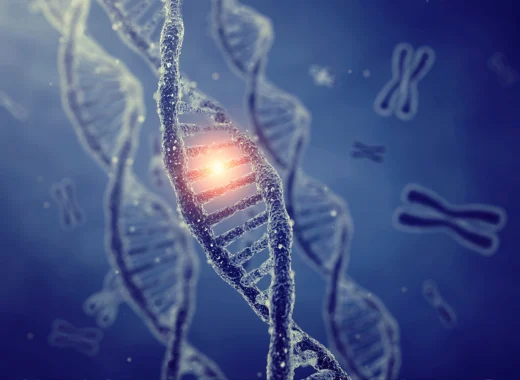
A study published in the journal Science has described the generation of a genetic transcription factor by fusion of a pre-existing gene with the transposase exon of a mobile genetic element [1]. Mobile, or transposable genetic elements cut-and-paste or copy-and-paste their genetic sequence into various sites throughout a genome using a transposase enzyme that they code for. In a survey of all tetrapod (vertebrate animals) genomes available the study identified 106 host-transposase fusion events, in which during transposition, transposase sequences were inserted into a pre-existing gene, resulting in alternative splicing of the gene generating novel functional proteins— many of which are involved in transcriptional regulation. Since transcriptional regulators interact simultaneously with large numbers of genes, up-regulating or down-regulating their expression in the gene network, such events can result in veritable rewiring of a genome.

Dr. William Brown
Last updated: 2024/09/02 at 8:25 PM
Dr. William Brown
Share
3 Min Read
SHARE

A study published in the journal Science has described the generation of a genetic transcription factor by fusion of a pre-existing gene with the transposase exon of a mobile genetic element [1]. Mobile, or transposable genetic elements cut-and-paste or copy-and-paste their genetic sequence into various sites throughout a genome using a transposase enzyme that they code for. In a survey of all tetrapod (vertebrate animals) genomes available the study identified 106 host-transposase fusion events, in which during transposition, transposase sequences were inserted into a pre-existing gene, resulting in alternative splicing of the gene generating novel functional proteins— many of which are involved in transcriptional regulation. Since transcriptional regulators interact simultaneously with large numbers of genes, up-regulating or down-regulating their expression in the gene network, such events can result in veritable rewiring of a genome.

The results of the study are a major advancement in understanding the source and generation of transcription factors— genetic elements that regulate large networks of genes— and demonstrates how transposable elements interacting within an organism’s genome provide the raw material to generate new combinations of functional domains that can be selected upon and incorporated within the hierarchical cellular gene network.

The study offers key insights into understanding the mechanisms of molecular biology, evolutionary biology, and the interplay of the two in the generation of novel genetic networks and speciation [2]—exemplifying yet another central role played by mobile genetic elements in generating and shaping the genomic regulatory landscape.

As the authors of the study describe:

How novel protein architectures evolve remains poorly understood. The rearrangement of domains with preexisting functions into new composite architectures through exon shuffling is a powerful path to form genes encoding proteins with novel functionalities. Although exon shuffling is thought to account for the evolution of many protein structures, the source of new exons and splice sites as well as the mechanisms by which they become assimilated have been scarcely characterized. In this work, we investigate the contribution of DNA transposons to the formation of novel protein-coding genes through exon shuffling during vertebrate evolution. L. Cosby et al., “Recurrent evolution of vertebrate transcription factors by transposase capture,” Science, Feb. 2021, doi: 10.1126/science.abc6405.

References:

[1] R. L. Cosby et al., “Recurrent evolution of vertebrate transcription factors by transposase capture,” Science, Feb. 2021, doi: 10.1126/science.abc6405.

[2] R. Cordaux, S. Udit, M. A. Batzer, and C. Feschotte, “Birth of a chimeric primate gene by capture of the transposase gene from a mobile element,” Proceedings of the National Academy of Sciences, vol. 103, no. 21, pp. 8101–8106, May 2006, doi: 10.1073/pnas.0601161103.

Sign Up For Daily Newsletter

Be keep up! Get the latest breaking news delivered straight to your inbox.
loader

loader

loader

By signing up, you acknowledge the data practices in our Privacy Policy. You may unsubscribe at any time.
En vous inscrivant, vous reconnaissez les pratiques en matière de données dans notre politique de confidentialité. Vous pouvez vous désinscrire à n'importe quel moment.
Al registrarse, reconoce las prácticas de datos en nuestra política de privacidad. Puedes darte de baja en cualquier momento.
Share This Article
Facebook Twitter Copy Link Print
By Dr. William Brown
William Brown is a biophysicist, investigating the physics operational at the cellular and molecular level of the biological system. He presents lectures (Unified Science Review), talks, and Q&A forums to teach the syncretic theories of unified science. He is a part of the research team at The International Space Federation where he applies his extensive knowledge of cellular and molecular biology to an exploration of the biological system from a unified physics perspective; developing an understanding of life from the most fundamental level.
Previous Article New Study Describes Invariance of the Correlation Structure of Grid Cell Modules in a Manifold with Toroidal Topology
Next Article Results of Experiment Reveals that our Understanding of Electrochemistry is Incomplete

Stay Connected

981k Like
18.7k Follow
7.7k Follow
7.3k Subscribe

Categories

  • Astronomy106
  • Biology68
  • ISF News25
  • ISF Research14
  • Other22
  • Physics168
  • Technology36

You Might also Like

Biology

Cognition Without Brains: How Memory Emerges in Polymers, Cells, and Spacetime.

23. March 2026.
Biology

Where Biology Meets Resonance: Light, Vibration, and Living Order

19. February 2026.
BiologyPhysics

Do Cells Use a Quantum Compass to Heal Wounds?

2. December 2025.
Biology

Memory Without Neurons: New Evidence of Learning in Single Cells

13. November 2025.
The International Space Federation (ISF)The International Space Federation (ISF)

Harnessing quantum vacuum energy for sustainable solutions – a unified approach to science, technology and education.

Quick links

  • About
  • Research Papers
  • Events
  • Invest

Explore

  • ISF Research
  • Physics
  • Technology
  • Astronomy
  • Biology
  • ISF News

Sign Up for Our Newsletter

Subscribe to our newsletter to get our newest articles instantly!

loader

Follow US
© 2023 International Space Federation. All Rights Reserved. INTERNATIONAL SPACE FEDERATION is a trademark of ISFS SA. The mark is registered in the United States under Registration No. 7772313. The ®️ symbol is used exclusively in the U.S.
  • Press
  • Careers
  • Privacy policy
  • Carrieres
  • Presse
  • Prensa
Join Us!

Subscribe to our newsletter and never miss our latest news.

loader

Welcome Back!

Sign in to your account

Lost your password?