

The Building Blocks of Cellular Architecture
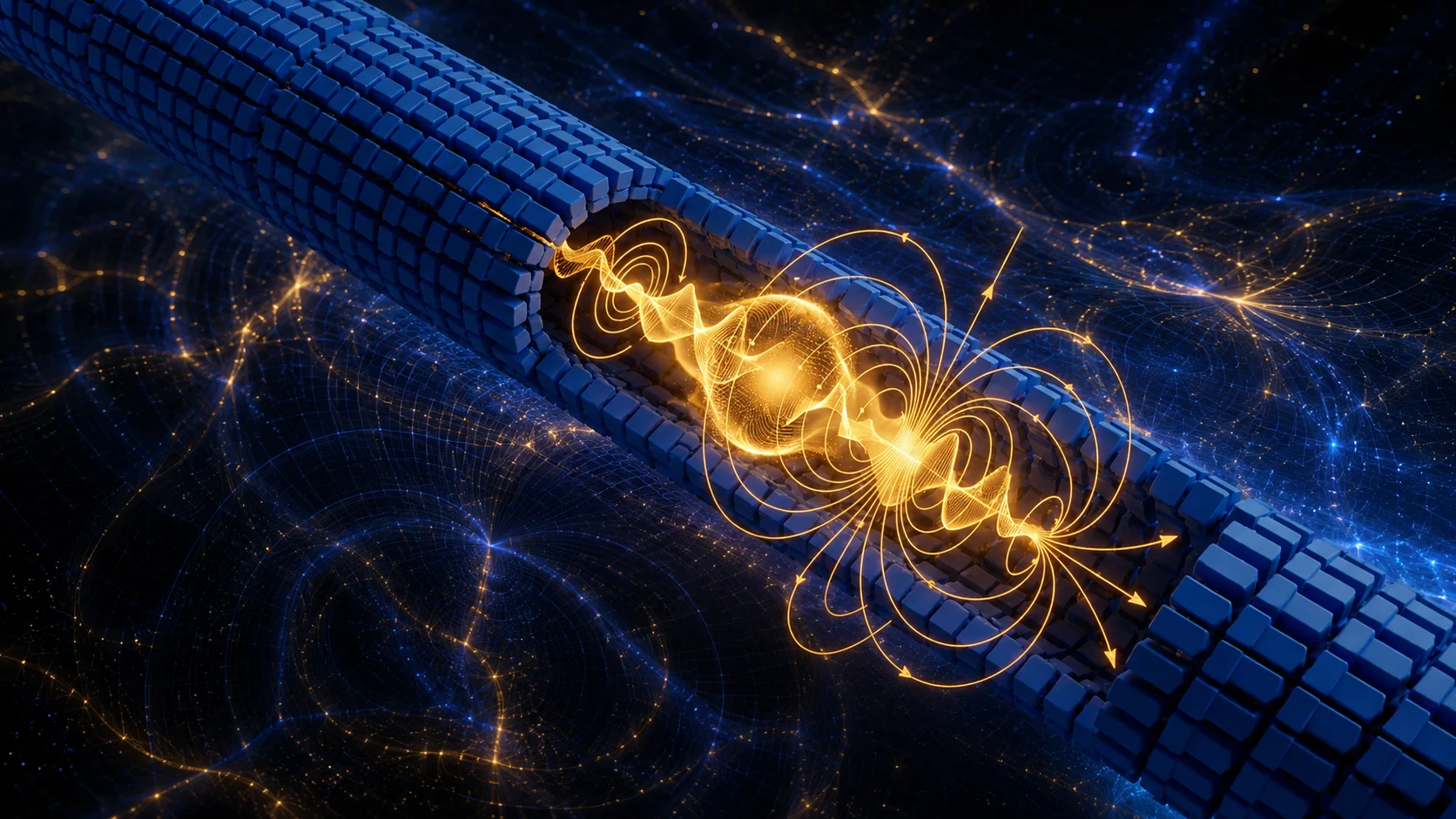
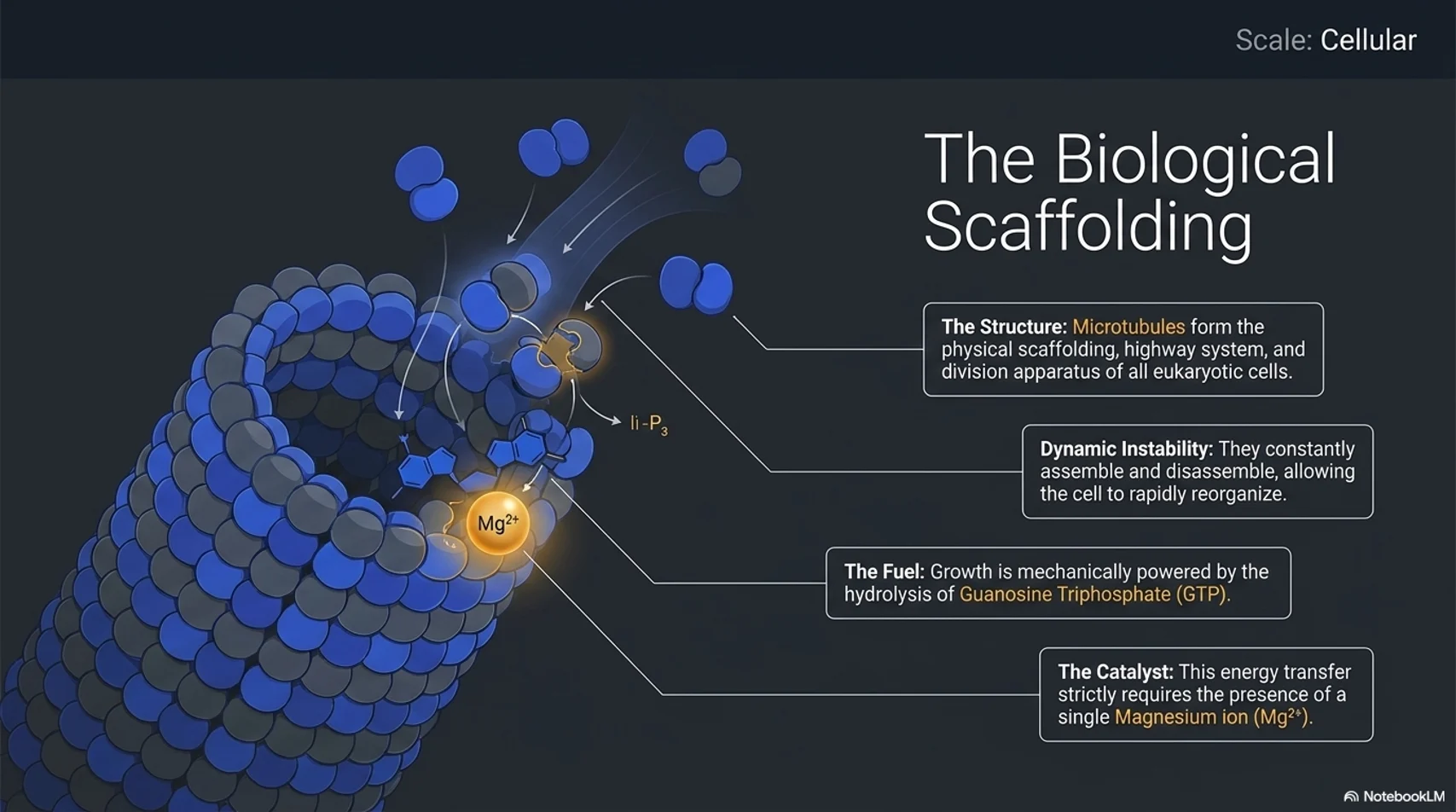
Every cell in your body depends on an extraordinary feat of molecular self-assembly. Proteins called tubulin spontaneously stack together to form long, hollow cylinders — microtubules — that serve as the structural scaffolding, highway system, and organizational framework of the cell. Without microtubules, cells could not divide—microtubules are essential to sorting and distributing chromosomes during cellular replication— neurons could not grow nor form dynamic synaptic connections, and intracellular cargo could not be shuttled to where it is needed. They are, in a very real sense, the architectural backbone of eukaryotic life.
Microtubules form highly ordered stabilized structures in locations like the neuronal axon. However, in many instances— like dendrites, sticking with our example of the neuron, where plasticity underlies synaptic modulation—microtubules are highly dynamic structures. In many respects what makes microtubules especially fascinating is their dynamic instability — they are constantly growing and shrinking, assembling and disassembling, in a carefully regulated dance that allows the cell to rapidly reorganize its internal architecture in response to changing conditions. This process is powered by the hydrolysis of a small energy-carrying molecule called GTP (guanosine triphosphate), and it requires the presence of magnesium ions (Mg²⁺) to proceed.
That last detail — the requirement for magnesium — turns out to be far more interesting than anyone previously imagined, and it opens the door to one of the most elegant experiments in quantum biology to date.
A landmark study published in Science Advances in February 2026 by Zadeh-Haghighi, Siguenza, Smith, Simon, and Craddock of the University of Waterloo Quantum Neurobiology Lab, demonstrates that the quantum spin properties of magnesium nuclei directly influence how microtubules assemble — and that this effect is amplified by a weak applied magnetic field [1]. The results provide compelling evidence that a quantum mechanical process known as spin chemistry is at work during microtubule polymerization, making this one of the strongest demonstrations of functional quantum effects in a non-sensory biological system. This latest study adds spin chemistry as playing a possible role in biology alongside studies that have implicated its involvement in magnetoreception [2], healing [3], and consciousness [4].
Craddock and colleagues have also recently released a preprint applying a Lindblad master equation to tryptophan chromophore networks in microtubules, revealing that the lattice geometry supports complementary superradiant and subradiant excitonic channels that respectively export or transiently retain quantum correlations, with subradiant lifetimes extending to the millisecond range in ordered assemblies. Notably, the direction and persistence of information flow depend strongly on the initial excitation state and on structural order, with non-Markovian information backflow observed between neighboring tubulins within a spiral [5].
In simpler terms, the ordered arrangement of tryptophan residues within the microtubule lattice creates two distinct pathways for quantum information: ‘bright’ modes that act as rapid broadcast channels, radiating energy and correlations outward, and ‘dark’ modes that act as temporary storage buffers, sheltering coherence and entanglement from dissipation. Which pathway dominates depends on where and how the initial excitation is introduced, and the regular geometry of the microtubule is what makes this selective routing possible—disorder degrades it. The microtubule, in effect, functions not merely as a structural scaffold but as a structured quantum reservoir capable of directing information flow along geometrically defined channels.
With that broader picture of the microtubule lattice in mind, where again we see the significance of non-trivial quantum processes to the form and function of the cytoskeleton, we now return to the Science Advances experiment and the question it set out to answer — one that begins not with tryptophan, but with magnesium.
Why Magnesium — and Why Its Isotopes Matter
To appreciate the experiment, we need a brief detour into nuclear physics — but don’t worry, the core idea is beautifully simple.
Every chemical element can exist as different isotopes — versions of the atom that have the same number of protons but different numbers of neutrons in their nucleus. Magnesium, for example, naturally occurs as three stable isotopes: 24Mg (which makes up about 79% of natural magnesium), 25Mg (about 10%), and 26Mg (about 11%). Chemically, these isotopes are nearly identical — they form the same bonds, participate in the same reactions, and occupy the same biological roles.
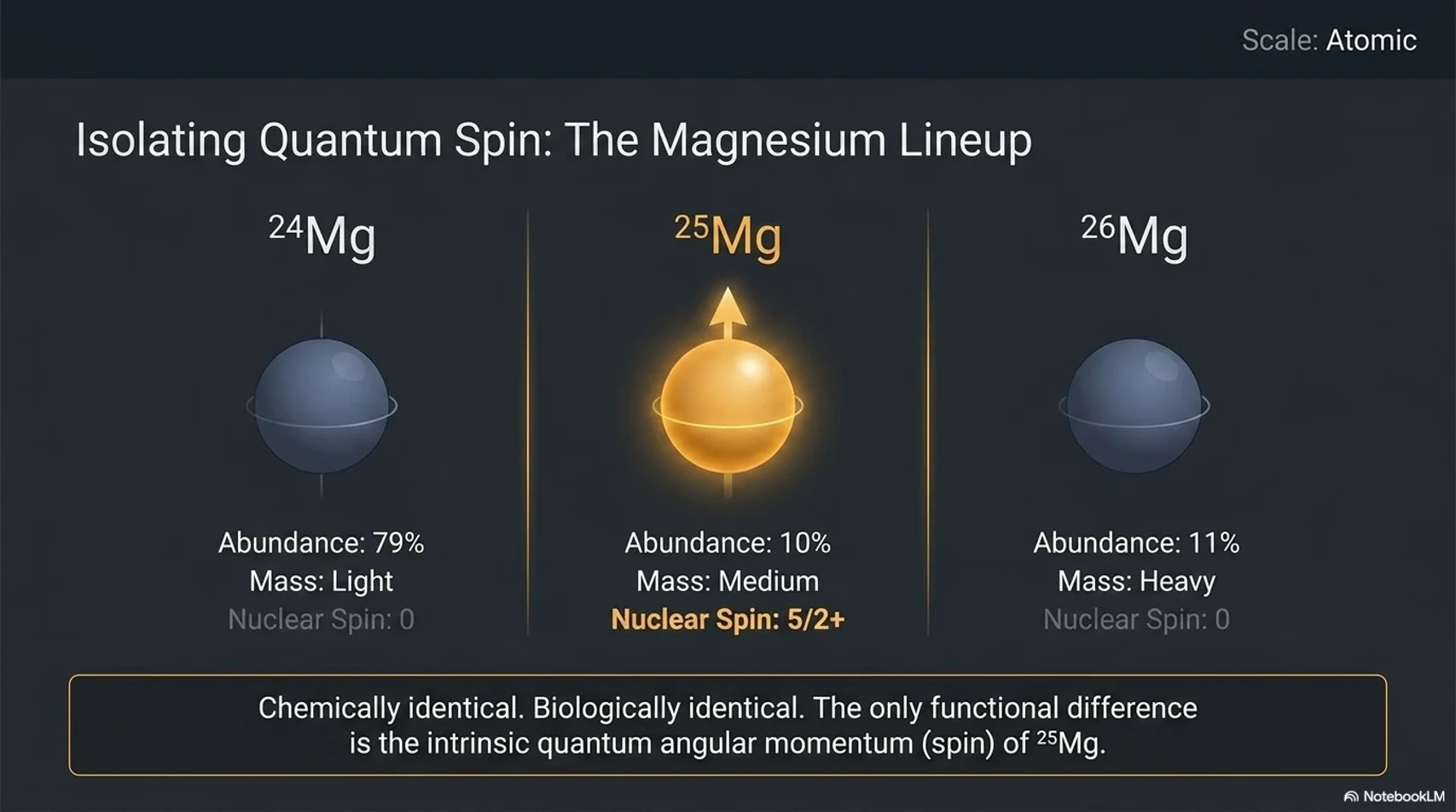
But there is one crucial difference. The nucleus of each isotope has a property called nuclear spin, which is an intrinsic quantum mechanical angular momentum. Think of it loosely as the nucleus having a tiny, invisible compass needle embedded within it. For 24Mg and 26Mg, that compass needle effectively doesn’t exist — their nuclear spin is zero. But 25Mg has a nuclear spin of 5/2, meaning it carries a significant magnetic moment that can interact with nearby electrons.
This distinction — zero spin versus nonzero spin — is invisible to conventional chemistry. The mass difference between the isotopes is tiny, the chemical bonding is identical, and no classical biochemical model would predict any difference in behavior. But quantum mechanics says otherwise. Many of the most energetically important reactions in biology — the redox steps that drive metabolism, and the phosphate-transfer reactions that power molecules like GTP and ATP — pass through fleeting intermediates that carry unpaired electrons. These unpaired electrons behave as tiny magnets, and when one of them sits near a nucleus that itself has a non-zero spin (such as ²⁵Mg, or a nearby hydrogen’s proton), the two couple through what physicists call the hyperfine interaction. An external magnetic field, even a very weak one, then shifts the energies of these spin states through the Zeeman interaction. So while ²⁵Mg is chemically indistinguishable from its sibling isotopes, quantum mechanically it can steer chemistry via its nuclear spin. This is most prominent in what has come to be known as the radical pair mechanism—a topic we have explored in some of our previous articles like Do Cells Use a Quantum Compass to Heal Wounds?
The Radical Pair Mechanism: When Chemistry Meets Quantum Spin
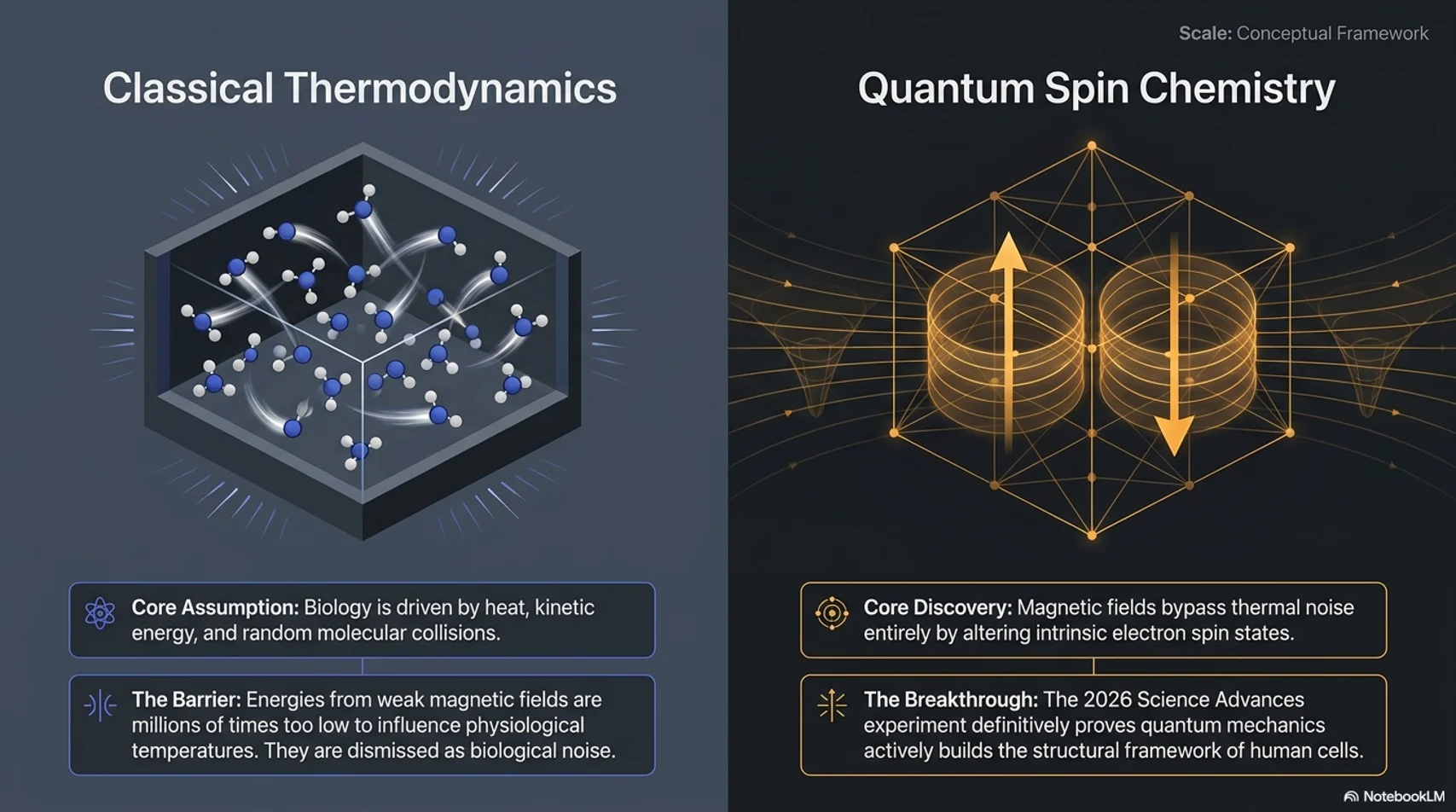
The radical pair mechanism (RPM) is a well-established concept in physical chemistry that describes how certain chemical reactions can be influenced by magnetic fields — even fields far too weak to have any effect through classical thermal physics.
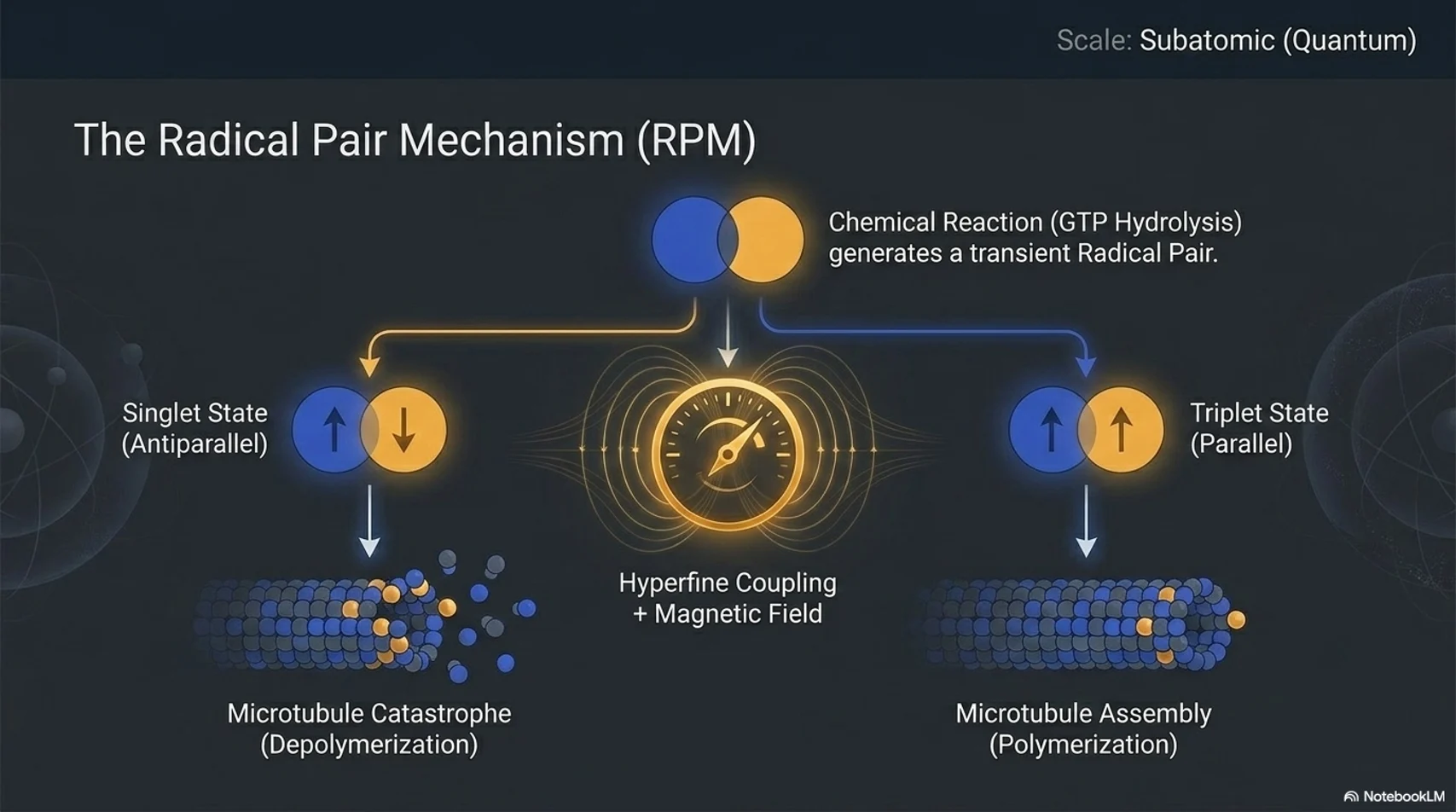
Here is how it works. During certain chemical reactions, a pair of molecules can each end up with an unpaired electron — making them “radicals.” These two unpaired electrons can exist in one of two quantum states: a singlet state (where the electron spins are antiparallel and their combined spin is zero) or a triplet state (where the spins are parallel, giving a combined spin of one). The key insight is that these two states lead to different chemical products at different rates. Whichever state the radical pair is in when it recombines determines the outcome of the reaction.
Now, the radical pair doesn’t just sit in one state — it oscillates back and forth between singlet and triplet, driven by interactions between the electron spins and several environmental factors. Three of those factors are especially important: the external magnetic field (even a very weak one), the nuclear spins of nearby atoms, and the intrinsic spin relaxation dynamics of the electrons.
This is the mechanism by which migratory birds are thought to navigate using Earth’s magnetic field, via radical pairs formed in cryptochrome proteins in their eyes. But the radical pair mechanism is far more general than bird navigation. It is a fundamental feature of spin chemistry — and the question driving this new study was whether it also operates during microtubule assembly.
The Experiment: A Beautifully Clean Design
The researchers set up their experiment with exceptional care for controlling confounding variables — a response, in part, to the well-known difficulty of reproducing magnetic field and isotope effects in biological systems, which has been a persistent challenge in the field.
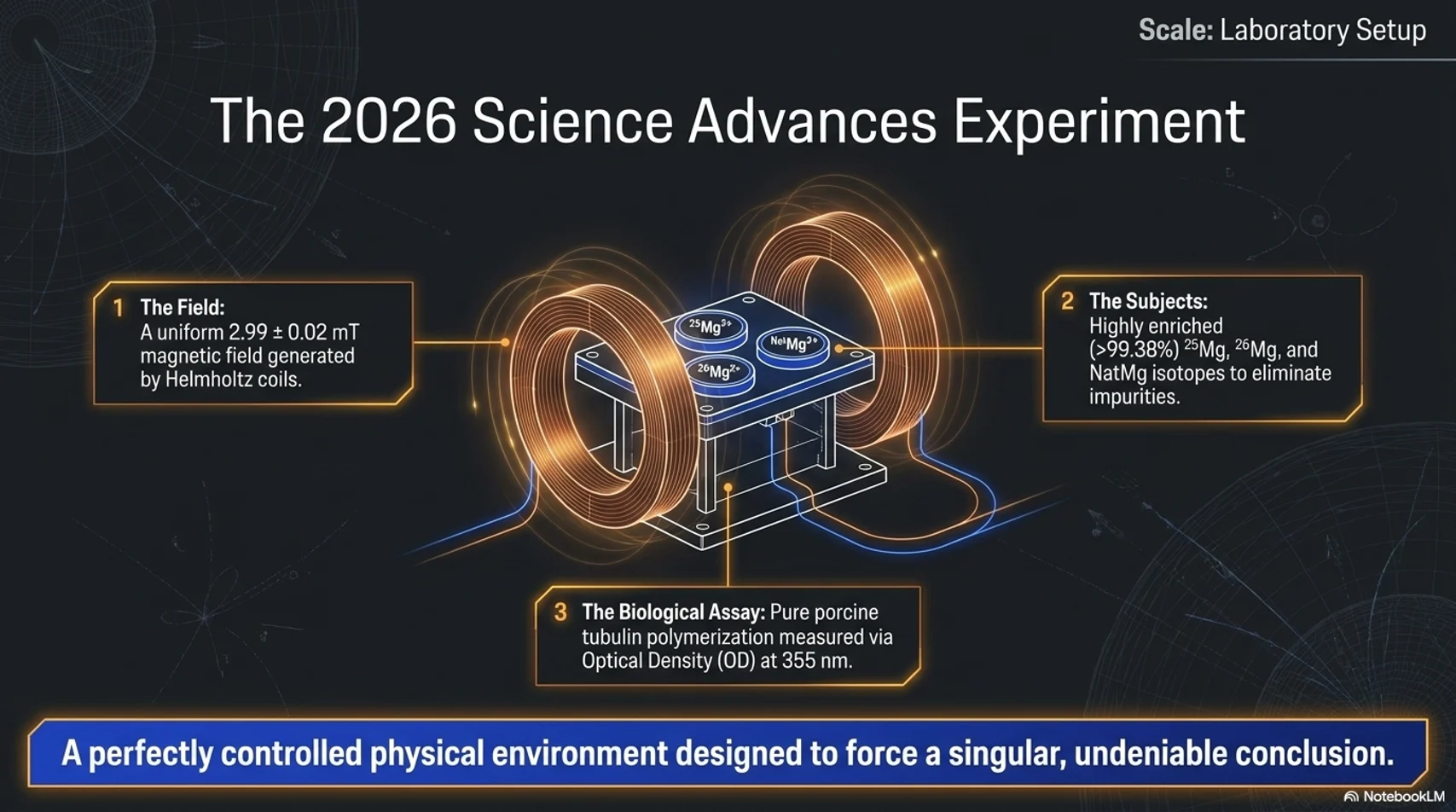
They prepared three separate polymerization buffers, each identical in pH, temperature, and composition, differing only in which magnesium isotope was used: natural-abundance magnesium (NatMg, predominantly 24Mg), purified 25Mg (the one with nuclear spin), or purified 26Mg (zero spin, like 24Mg, but heavier). The isotopes were purchased at greater than 99.38% enrichment to ensure that the effects observed could be attributed to specific isotopes rather than impurities.
Purified porcine tubulin was then allowed to polymerize in the presence of each magnesium isotope, under two conditions: in the ambient geomagnetic field alone (about 0.05 mT), and with an additional uniform 3-mT magnetic field applied using a Helmholtz coil. The extent of polymerization was measured by optical density at 355 nm — a standard, well-validated assay for microtubule assembly.
The three-isotope design is what gives the experiment its diagnostic power, because the classical and quantum frameworks predict two distinctly different patterns. The classical prediction is a smooth, linear trend with mass: because heavier nuclei move slightly more slowly, a kinetic isotope effect would cause polymerization rates to vary monotonically across the series ²⁴Mg → ²⁵Mg → ²⁶Mg. Whatever direction the effect runs, the middle isotope should fall between the other two.
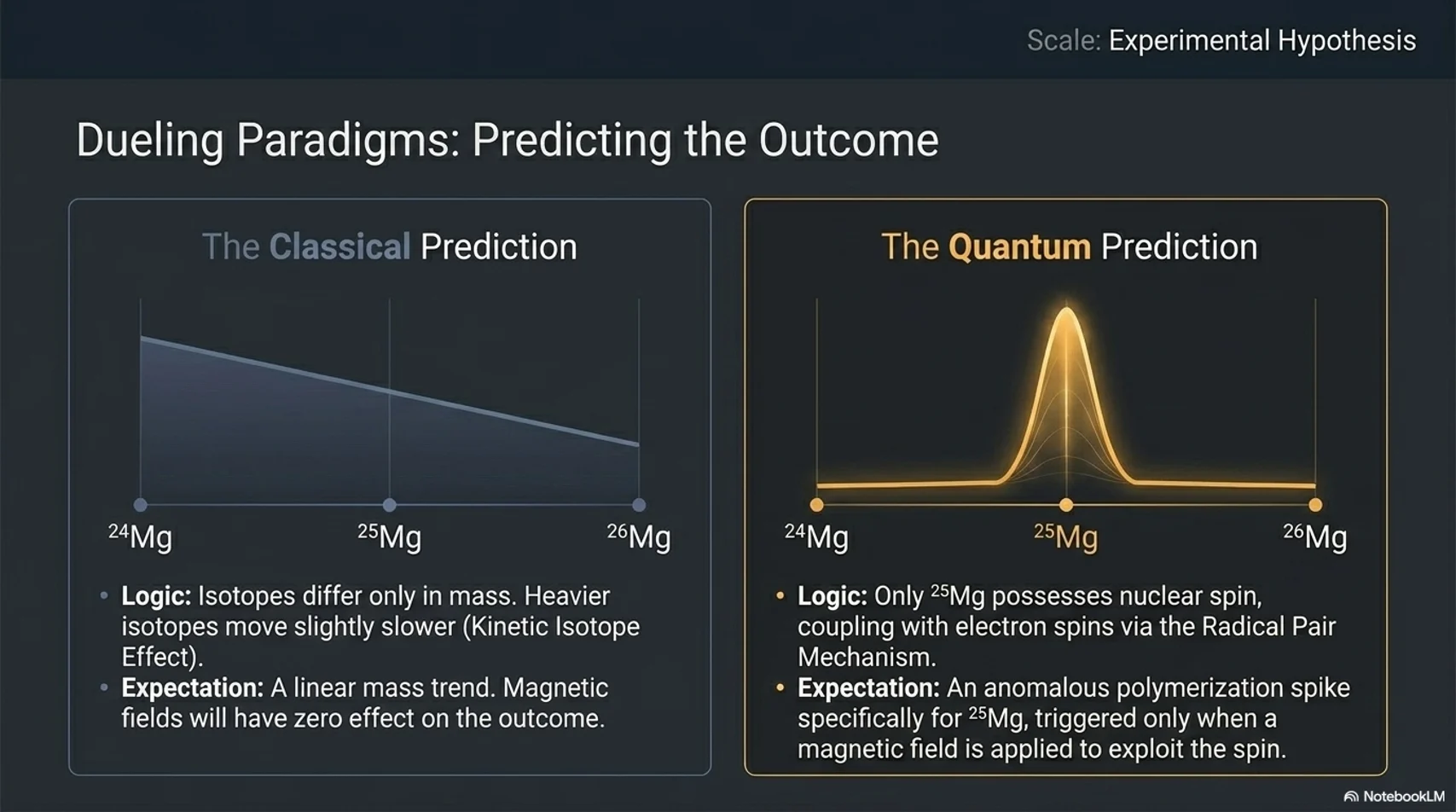
The quantum prediction is fundamentally different. Because ²⁴Mg and ²⁶Mg both have zero nuclear spin while ²⁵Mg has spin-5/2, the radical pair mechanism predicts that ²⁵Mg should produce an anomalous, non-monotonic shift in polymerization rate — an outlier that doesn’t sit on the line between its two siblings — and that this anomaly should appear only when an external magnetic field is applied. Mass and spin therefore make incompatible predictions for the same three samples, and a single experiment can adjudicate between them.
Critically, the researchers measured and controlled for well-to-well temperature variations, well-to-well magnetic field variations, and verified that paramagnetic ion impurities were negligible (below 0.6 μM). They also used alternating well-placement patterns across runs to ensure that no isotope was systematically biased by position on the plate.
What They Found
The results were striking and unambiguous.
In the ambient geomagnetic field alone, all three magnesium isotopes produced similar levels of tubulin polymerization — no significant differences were observed between NatMg, 25Mg, and 26Mg.
But when the 3-mT magnetic field was applied, 25Mg — the isotope with nuclear spin — produced a dramatic enhancement in polymerization compared to the other two isotopes, with statistical significance well beyond P < 10−7. Neither NatMg nor 26Mg showed any significant difference between the field-on and field-off conditions.
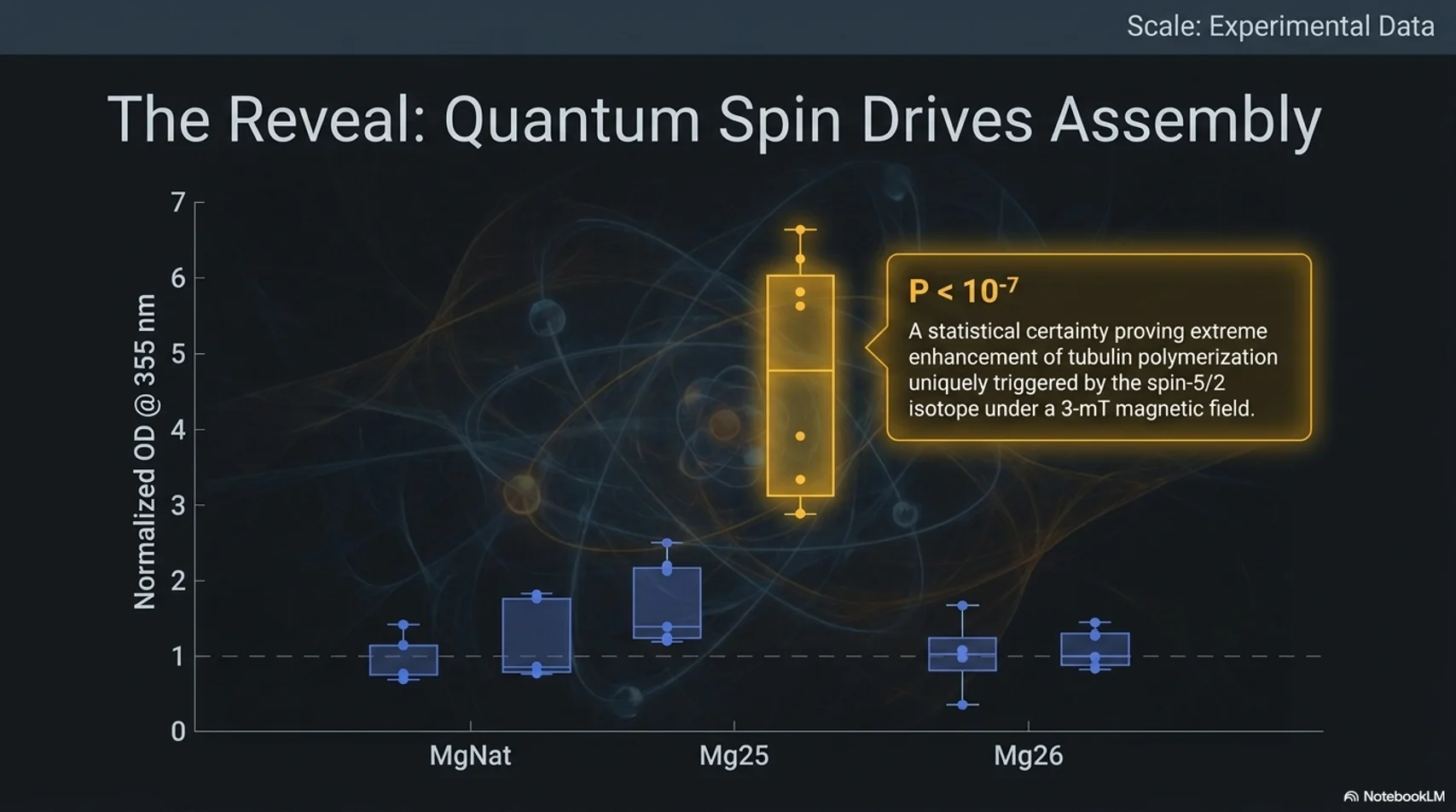
This pattern is precisely what the radical pair mechanism predicts. The nuclear spin of 25Mg provides an additional hyperfine coupling — an interaction between its nuclear magnetic moment and nearby electron spins — that modifies the singlet-triplet interconversion dynamics of a radical pair formed during GTP hydrolysis. The applied magnetic field amplifies this effect by shifting the energy balance between singlet and triplet states through the Zeeman interaction. Without nuclear spin (as in 24Mg and 26Mg), there is no hyperfine coupling to exploit, and the magnetic field has nothing to act upon.
The beauty of the experimental design is that it uses isotope substitution as an internal control. Since 25Mg sits between 24Mg and 26Mg in mass, any classical kinetic isotope effect (where heavier atoms slow reaction rates) would predict a monotonic trend with mass. Instead, the effect is uniquely associated with the spin-5/2 isotope, ruling out mass-dependent explanations entirely.
The Theory: Radical Pairs Modulating Microtubule Dynamics
To make this quantitative, the researchers developed a theoretical model coupling a standard ordinary differential equation description of microtubule dynamics (polymerization versus depolymerization rates) with a quantum mechanical radical pair model. The key idea is that magnesium-dependent GTP hydrolysis controls the depolymerization rate, and that the radical pair triplet yield — which depends on magnetic field strength and nuclear spin — modulates that rate.
The radical pair model uses a generic “F-pair” framework, meaning the two radicals are assumed to form from independent encounters rather than through a direct bond-breaking event. Each radical is coupled to a spin-1/2 nucleus via hyperfine coupling, with one radical additionally coupled to the ²⁵Mg nuclear spin when that isotope is present. The model parameters were optimized using a differential evolution algorithm — an unbiased search through parameter space — and the optimized model achieved quantitative agreement with the experimental data across all conditions.
Importantly, only triplet initial states (not singlet or fully mixed states) were able to reproduce the experimental observations — a finding that constrains the possible identities of the radical species involved.
The model also makes testable predictions: microtubule polymerization with ²⁵Mg should be further reduced at field strengths above 5 mT, and polymerization with all isotopes should decrease under hypomagnetic conditions (below 5 μT) — consistent with previous observations that removing Earth’s magnetic field disrupts microtubule assembly.
Ruling Out the Alternatives
What makes this study particularly robust is the systematic elimination of alternative explanations:
Mass effects: Ruled out because 25Mg is lighter than 26Mg but heavier than the dominant component of natural Mg. A kinetic isotope effect would predict a monotonic trend, not a unique enhancement for the middle-mass isotope.
Temperature: Well-to-well temperature analysis showed no significant correlation with polymerization outcomes under any condition.
Magnetic field inhomogeneity: The Helmholtz coil delivered a highly uniform field (±0.7% homogeneity across all wells), and no significant correlation between local field strength and polymerization was found.
Paramagnetic impurities: The high enrichment levels of the purchased isotopes ensured paramagnetic ion contamination was less than 0.6 μM — far below levels that could account for the observed effects.
pH differences: All buffers were prepared to identical pH.
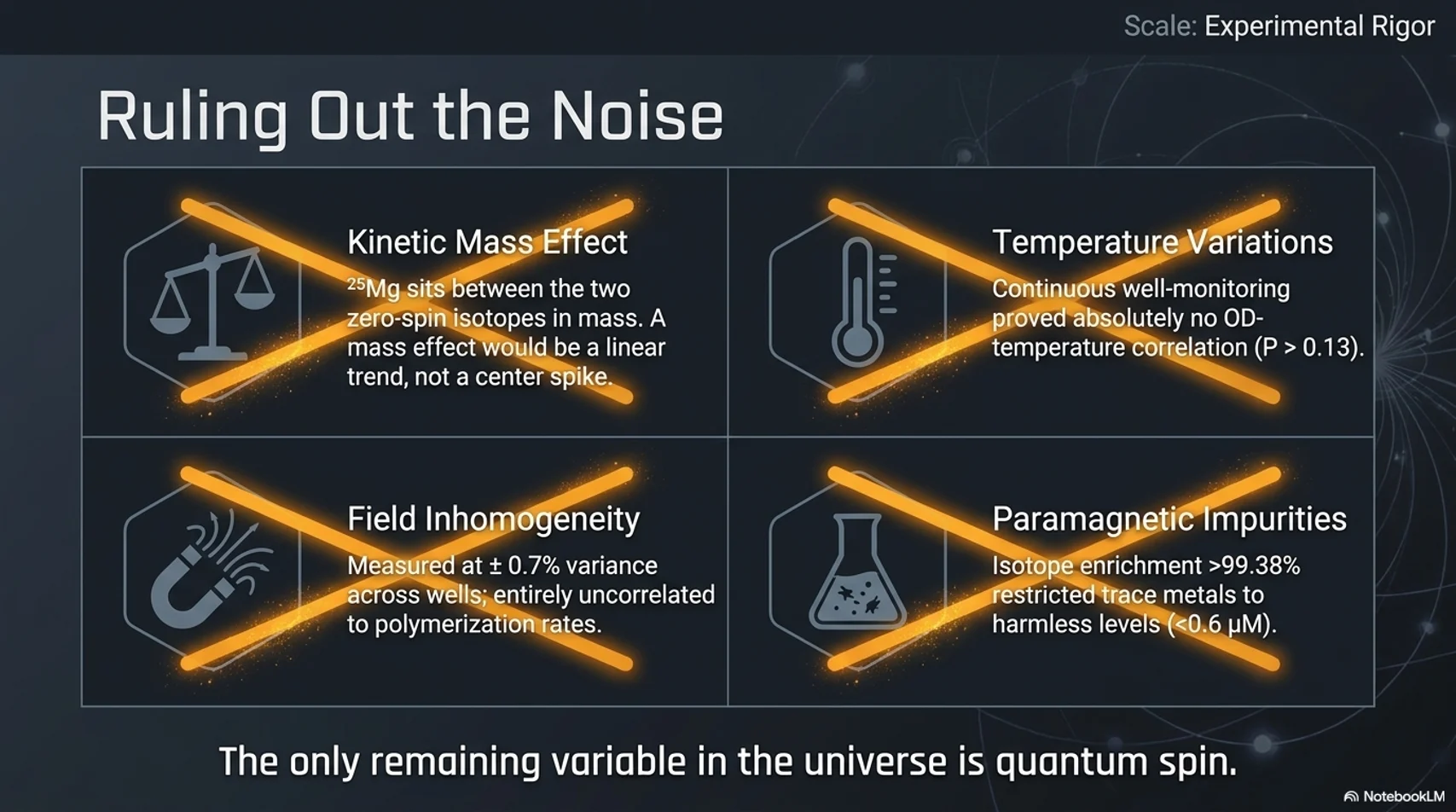
What remains is the nuclear spin of 25Mg, interacting with a radical pair via hyperfine coupling, modulated by the applied magnetic field. The explanation is quantum mechanical — and the data are consistent with no known classical alternative.
Broader Significance: Quantum Biology Comes of Age
This study represents a significant milestone for quantum biology. The radical pair mechanism has been convincingly demonstrated in cryptochrome-based magnetoreception, but extending it to microtubule dynamics — a process central to virtually all eukaryotic cellular function — is a major step in showing that quantum spin effects are not confined to exotic sensory systems. They may be woven into the basic fabric of cellular operation.
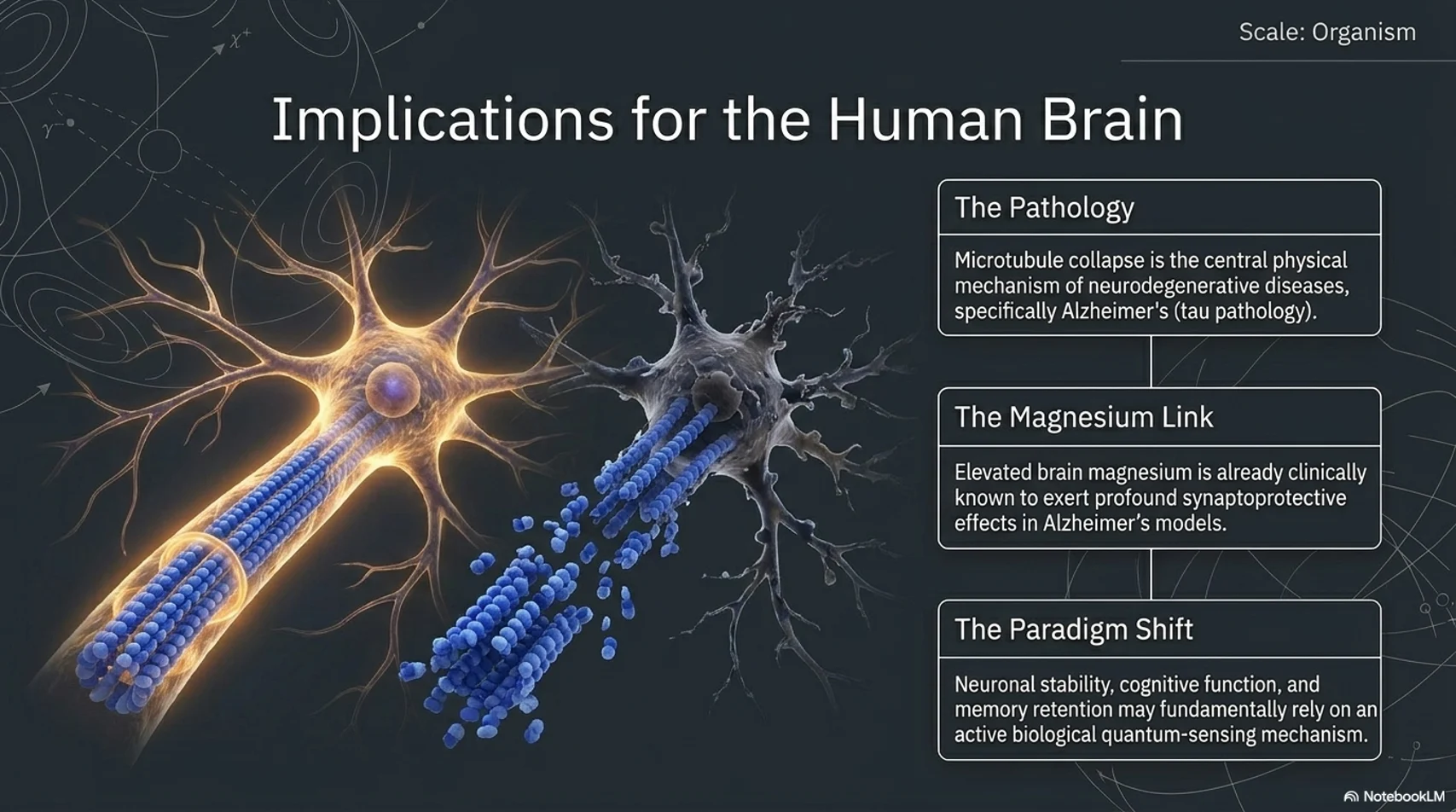
The implications are far-reaching. Microtubule dysfunction is centrally involved in neurodegenerative diseases such as Alzheimer’s, where tau protein pathology leads to microtubule disassembly and neuronal death. If microtubule assembly dynamics are genuinely sensitive to spin chemistry, then external magnetic fields or isotopic variations in cellular magnesium could influence neuronal stability through a quantum-sensing mechanism — a possibility the authors explicitly highlight.
More broadly, this work adds to a growing body of evidence — from avian magnetoreception to enzyme catalysis to photosynthesis — that quantum coherence, tunneling, and spin dynamics play functional roles in living systems, not just in carefully controlled laboratory environments. Biology, it seems, has been exploiting quantum mechanics for far longer than physicists have been studying it.
ISF Perspective: Vacuum Fluctuations, Spin, and the Architecture of the Cell
From the perspective of ISF’s research program, this study resonates deeply with several active lines of investigation.
We have previously discussed the role of microtubules as more than passive structural elements — they are ordered polymer lattices rich in aromatic chromophores, capable of supporting exciton transport, mechanical wave propagation, and potentially coupling to electromagnetic vacuum fluctuations. The fact that microtubule assembly itself is now shown to be influenced by quantum spin dynamics adds a new dimension to this picture. It suggests that the cytoskeleton is not merely a passive scaffold that quantum effects might act upon, but that quantum processes are integral to how the scaffold is built in the first place.
The Craddock study also reinforces a theme we have been exploring in the context of mitochondrial biophysics. Mitochondria are among the most prolific sites of free-radical generation in the cell, producing a steady stream of unpaired-electron intermediates as a routine byproduct of oxidative phosphorylation. That makes them an unusually rich substrate for spin-dependent chemistry — and they generate it precisely where information and energy converge, at the metabolic nexus on which nearly every cellular process depends. Our work has focused on how this radical-rich environment couples to the local electromagnetic vacuum: the folded geometry of the cristae shapes the local density of states (LDOS) for vacuum-field modes, which in turn modifies the quantum dynamics of any spin-active chemistry occurring there. (Loosely, LDOS is the number of “parking spots” available for electromagnetic energy at a given point in a material — a quantity that depends sensitively on local geometry. The folded architecture of cristae can therefore create hotspots where quantum interactions proceed readily and dead zones where they are suppressed.) We see a significant parallel to Craddock’s results at the level of network behavior: the radical-pair chemistry the Craddock group has localized inside the microtubule lattice, and the radical-rich, LDOS-structured chemistry distributed across the cristae, are both candidate nodes of a quantum mesoscopic Field Bus — a coupled network in which spin-active sites synchronize through shared, geometry-filtered modes of the electromagnetic vacuum rather than acting as isolated quantum events. In that view, microtubules and mitochondria are not two separate places where spin chemistry happens to occur, but two organelle-scale antennas on the same long-range substrate.
The connection between microtubules and mitochondria is not incidental. In the living cell, these two systems are physically coupled — mitochondria are anchored to the microtubule network, and their positioning, transport, and local metabolic activity are regulated by cytoskeletal dynamics. A quantum spin sensitivity at both sites would create a deeply integrated quantum-biological signaling layer, with implications for everything from cellular energy metabolism to neuronal function and cognitive processes [6].
Finally, it is worth noting that the applied field strength in this study — 3 mT — is extremely weak by conventional standards. It corresponds to an energy per magnesium nucleus that is roughly a million times smaller than the thermal energy at body temperature. The fact that it produces statistically overwhelming effects (P < 10−7) on a macroscopic biochemical outcome is a powerful demonstration that quantum coherent processes can amplify weak signals into biologically meaningful responses — precisely the kind of sensitivity that a vacuum-fluctuation-coupled biological system would be expected to exhibit.
Looking Forward
Several important questions remain open. The identity of the specific radical species involved in the microtubule system has not yet been determined — the theoretical model is deliberately generic. Candidates include intermediates of GTP hydrolysis (phosphate radicals, hydroxyl radicals) or photoinduced radical pairs involving tryptophan or superoxide, but direct experimental identification — perhaps through electron paramagnetic resonance spectroscopy during microtubule assembly — would be a critical next step.
The authors also note that experiments under deoxygenated or dark conditions would help distinguish between different radical pair formation pathways, and that extending the results to in vivo systems will be essential for assessing the broader biological relevance.
The theoretical groundwork for the Craddock experiment was laid four years earlier by Zadeh-Haghighi and Simon, who modeled radical pair effects on microtubule reorganization and predicted that the influence of divalent metal ions on microtubule density should exhibit isotopic dependence — specifically for zinc, in addition to magnesium [7]. They explicitly framed this as a bridge between two previously separate quantum theories of consciousness: microtubule-based proposals (e.g., the Penrose–Hameroff Orch-OR model) and radical-pair-based proposals (which had until then been associated mainly with anesthesia and magnetoreception). The 2026 Craddock result is the first direct experimental confirmation of that bridge for magnesium, and it elevates the zinc prediction to a high-priority test. If zinc isotopes show the same spin-selective signature, the case that microtubule assembly is a spin-chemical process — and that the cytoskeleton is one of the substrates through which spin dynamics could shape neural function — becomes considerably harder to dismiss.
This dovetails with a broader theoretical program we have been developing at ISF, in which the magnetic microenvironments generated by spin-active biomolecules — receptor-bound neurotransmitters, radical-pair intermediates, microtubule lattices — are treated not as isolated quantum events but as a coupled, ligand-gated magnetic network distributed across cellular and tissue scales [8]. In that picture, the radical pair chemistry now confirmed inside microtubules is one node of a much larger architecture: spin-sensitive pockets synchronizing under neural-band modulation, parametrically coupled to filtered modes of the electromagnetic vacuum, and producing the kind of multiscale coherence that would be required if quantum processes are to play any functional role in cognition. The Craddock result is therefore not just a confirmation of spin chemistry in a non-sensory tissue; it is evidence that the cytoskeletal scaffold itself is built by, and remains responsive to, the same spin-magnetic substrate that other lines of work have implicated in anesthesia, magnetoreception, and possibly consciousness.
For those of us interested in the interface between quantum physics and living systems, however, the message is already clear: the quantum world doesn’t stop at the cell membrane. It reaches deep into the molecular machinery of life — all the way to the cytoskeleton itself.
References
1. Zadeh-Haghighi, H., Siguenza, C.R., Smith, R.P., Simon, C. & Craddock, T.J.A. Tubulin polymerization dynamics are influenced by magnetic isotope effects consistent with the radical pair mechanism. Science Advances 12, eady8317 (2026). DOI: 10.1126/sciadv.ady8317
2. Hore, P.J. & Mouritsen, H. The radical-pair mechanism of magnetoreception. Annual Review of Biophysics 45, 299–344 (2016). doi:10.1146/annurev-biophys-032116-094545
3. Wang, K. et al. Electron spin dynamics guide cell motility. arXiv preprint (2025). doi:10.48550/arXiv.2503.02923
4. Smith, J., Zadeh-Haghighi, H., Salahub, D. & Simon, C. Radical pairs may play a role in xenon-induced general anesthesia. Scientific Reports 11, 6287 (2021). doi:10.1038/s41598-021-85673-w
5. L. Gassab, O. Pusuluk, and T. J. A. Craddock, “Quantum Information Flow in Microtubule Tryptophan Networks,” arXiv.org. Accessed: May 20, 2026. [Online]. Available: https://arxiv.org/abs/2602.02868v1
6. Brown, W.D., “The Quantum‑Resonance Symphony of Life,” Harmonic Science Perspectives, vol. 1, no. 1, pp. 32–37, Nov. 2025, doi: https://www.harmonic-science.org/journals/vol-1-issue-1.
7. Zadeh-Haghighi, H. & Simon, C. Radical pairs may play a role in microtubule reorganization. Scientific Reports 12, 6109 (2022). https://doi.org/10.1038/s41598-022-10068-4
8. Brown, W. Collective Network Dynamics Underlying Consciousness. International Space Federation (video, 2026).