


In our interconnected quantum universe, the boundary between information and matter may be far more fluid than we ever imagined. A study published by physicists Michael R. R. Good, Evgenii Ievlev, and Eric V. Linder has achieved something remarkable: they’ve shown mathematically how information encoded in the entanglement entropy of physical quantum systems can directly create particles from the quantum vacuum [1]. Entanglement entropy measures how much quantum information is shared between different parts of a physical system—imagine two coins that are mysteriously linked so that flipping one instantly affects the other, no matter how far apart they are. In quantum physics, particles and fields can become “entangled” in similar ways, and entropy quantifies just how intertwined these quantum relationships have become.
This research provides a concrete theoretical demonstration of John Wheeler’s famous “it from bit” hypothesis—the idea that all physical systems encode information [2]. Whether it is the geometric relationship of orientations in spacetime or the energy exchanges involved in interactions: in a real way information is ineluctable and in certain conditions is the source itself of certain physical properties of material systems.
The implications are profound. Rather than viewing particle creation as solely the result of physical acceleration or gravitational effects—see our previous articles Unruh Effect Confirmed and Hawking Radiation Confirmed—this work suggests that manipulating the information content of quantum systems could generate real, measurable particles. As the researchers note, “If information truly gives rise to matter, then the creation of particles from the dynamics of entanglement should not only be possible but inevitable.”
Understanding the Physics: How Information Becomes Matter
The research builds upon well-established phenomena in quantum field theory, including the Davies-Unruh effect, where uniformly accelerated observers detect thermal radiation in empty space, and Hawking radiation from black holes. These effects have long hinted at deep connections between information, entropy, and particle creation. However, until now, no one had developed a mathematical framework that could directly count particles based purely on information content.
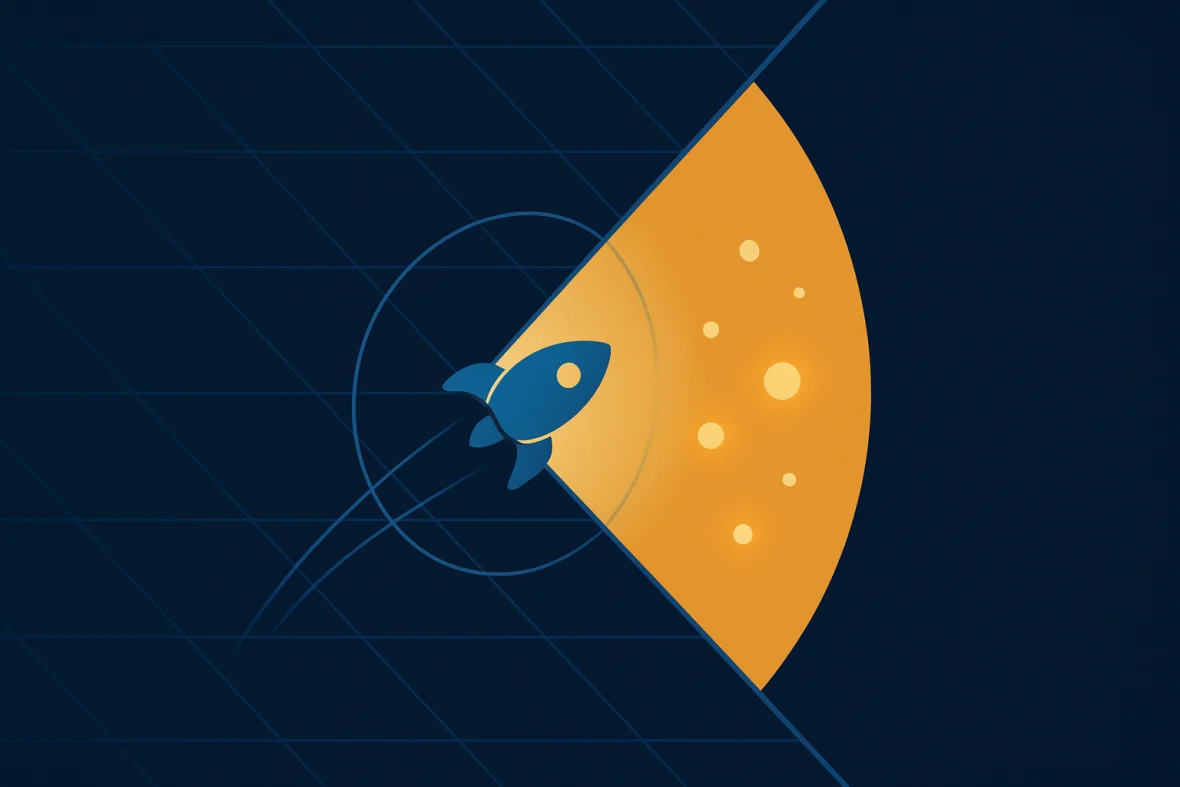
The team’s breakthrough came through examining time-dependent von Neumann entanglement entropy—a measure of quantum information that changes over time. This entropy quantifies how much quantum information is shared between different regions or subsystems of a quantum field, and crucially, how these entanglement patterns evolve dynamically. To describe it in non-technical terms, entanglement entropy is a bit like a cosmic dance: imagine quantum fields as an intricate network where different regions are “waltzing” together but the dance choreography is occurring with near instantaneous synchrony, this represents quantum correlations. The von Neumann entropy measures how much coupled movements are occurring in this entangled dance between these regions at any given moment. When this entropy changes over time—perhaps as the system undergoes acceleration, experiences gravitational effects, or transitions between different quantum states—it reflects the shifting patterns of which quantum degrees of freedom are becoming entangled or disentangled with each other. Using sophisticated mathematical techniques involving Fourier transforms and beta Bogolyubov coefficients, they derived explicit formulas connecting entropy variations to both the number of particles created and their energy spectrum.
The key insight is surprisingly elegant: when entanglement entropy varies with time, it generates particles according to precise mathematical relationships. Think of it like a cosmic symphony (that the entanglement duet is dancing to): when the “information music” of quantum entanglement changes tempo or volume, it literally shakes particles into existence from “empty” space (keeping in mind that seemingly empty space is a quantum vacuum, which has a substantive energy density). The faster and more dramatic these information changes, the more particles get created—and the more energetic they become. The researchers developed precise mathematical “sheet music” that can predict exactly how many particles will emerge from any given pattern of information flow.
Validating the Theory: From Black Holes to Beta Decay
To test their framework, the researchers examined several well-understood physical scenarios. In the case of black hole evaporation, their entropy-based calculations perfectly reproduced the known result that the total energy of Hawking radiation equals the black hole’s mass. For a black hole analog model, they found that complete evaporation yields exactly E = Mc2, where M represents the black hole’s mass parameter.
Perhaps even more remarkably, when applied to beta decay—the process where neutrons transform into protons, electrons, and neutrinos—their approach correctly predicted both the total energy radiated by accelerating electrons and the thermal distribution of emitted photons. The electron’s acceleration during beta decay creates a characteristic entropy profile that, when processed through their formulas, yields the experimentally observed Planck spectrum of electromagnetic radiation—the characteristic thermal radiation pattern emitted by a perfect blackbody radiator, which depends only on temperature. This thermal radiation from accelerated electrons is reminiscent of the Unruh effect, where a uniformly accelerated observer detects thermal radiation even in empty space.
The research also explored scenarios of large particle production through harmonic entropy variations, building on theoretical frameworks established by the dynamical Casimir effect. The dynamical Casimir effect—first observed experimentally in 2011 in superconducting circuits [4]—demonstrates that real particles can be generated from vacuum fluctuations through rapidly changing boundary conditions [5]. This fundamental quantum field theory prediction shows that pairs of real particles or photons emerge from the vacuum when system parameters undergo non-adiabatic (rapid) changes. When boundaries or system parameters change non-adiabatically (rapidly), the quantum vacuum fluctuations can’t smoothly readjust to the new conditions. This “mismatch” between the old and new quantum states creates real particles from the vacuum—it’s like the sudden change rips virtual particle pairs apart before they can annihilate each other.
The current entropy-based research extends this principle exemplified by the dynamical Casimir effect by connecting particle creation directly to information dynamics rather than mechanical boundaries. When entanglement entropy oscillates periodically, the particle creation scales dramatically with the number of oscillations—precisely the scaling behavior observed in dynamical Casimir systems. For n complete cycles, they found approximately N ≈ 12ns² particles are created, where s represents the maximum entropy amplitude. This mirrors the correlated photon pair generation seen in dynamical Casimir experiments, where photons are created at symmetric frequencies with specific energy conservation relationships.
What makes this connection particularly profound is that the dynamical Casimir effect operates through parametric amplification of quantum field fluctuations—the same underlying mechanism driving cosmological particle creation. The new research suggests that carefully orchestrated information dynamics could potentially generate substantial amounts of matter from pure quantum information, providing a concrete experimental pathway for testing Wheeler’s “it from bit” hypothesis using established laboratory techniques.
The “It from Bit” Connection: Wheeler’s Vision Realized
John Wheeler’s “it from bit” hypothesis, proposed decades ago, suggested that all physical entities are fundamentally information-theoretic in origin. Wheeler envisioned a universe where every particle, every field, and every force emerges from bits of information, in which fundamentally every emergent physical property can be reduced down to fundamental binary yes/no states. This new research provides a concrete theoretical demonstration—within the moving-mirror model—of how time-dependent entanglement entropy S(t) can determine particle creation; showing explicitly how information flow creates matter.

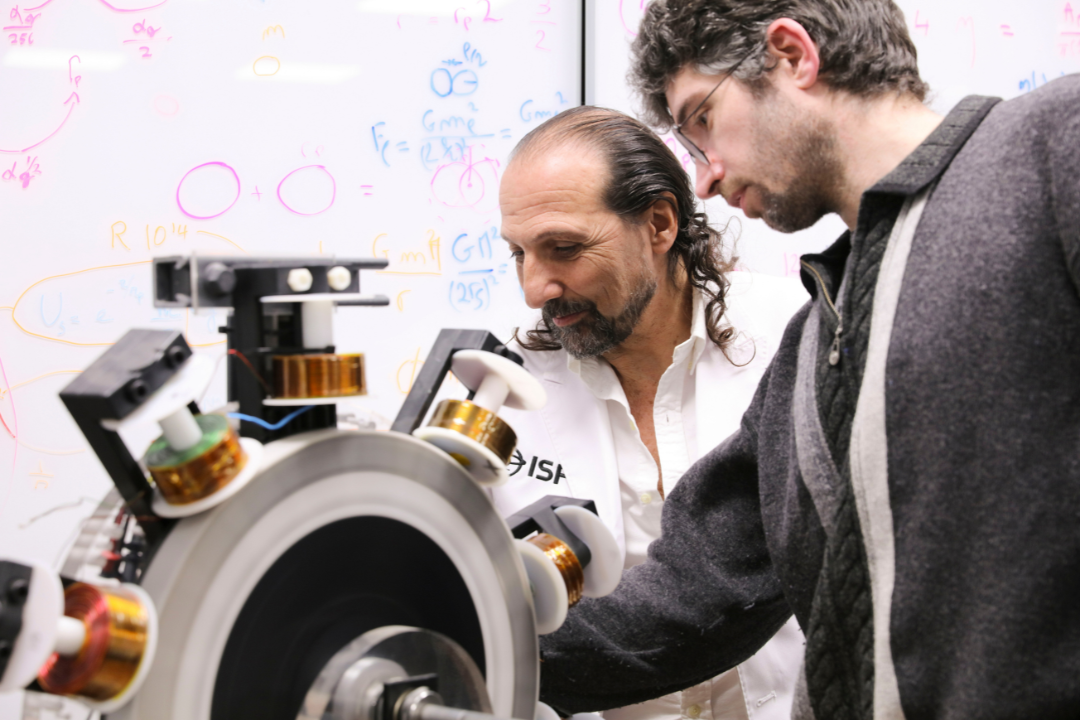
This research shows strong equivalents with other works investigating similar concepts; the connection extends beyond Wheeler’s original vision to encompass modern holographic theories of quantum gravity. For example, researchers like Nassim Haramein, founder of the International Space Federation (ISF), have developed a generalized holographic approach that demonstrates remarkable parallels to Wheeler’s “it from bit” hypothesis [6]. Haramein’s model considers both surface and volume entropy of fundamental systems, using discrete spacetime structures known as Planck Spherical Units (PSUs) that represent both bits of information and quanta of electromagnetic oscillation.
In Haramein’s framework, the holographic ratio Φ—defined as the surface-to-volume entropy—represents the information potential transfer or rate of information exchange between the volume and surface of a system. This surface entropy measures the amount of information from vacuum fluctuations geometrically encoded on the surface of stable structures, with gravity emerging as a geometric response to the loss of surrounding coherence or increase of holographic entropy.
Most remarkably, when applied to proton-sized systems, Haramein’s holographic mass solution reveals that each PSU represents both a quantum of electromagnetic oscillation and a bit of information, with the surface entropy of a proton-sized cavity determining the magnitude of decoherence. This decoherence manifests as Hawking-like radiation that produces the observed rest-mass energy of hadrons—providing a concrete operational demonstration of how information structure directly generates matter, exactly as Wheeler’s “it from bit” principle suggests.
The mathematical framework reveals that the fundamental mass ratio between vacuum oscillations on the surface horizon and oscillations within the volume of a proton solves the gravitational coupling constant to the strong interaction, showing that information encoded on boundary surfaces doesn’t merely describe physical systems—it actively generates their mass and the forces that bind them together.
This latest work bridges these concepts by demonstrating that entropy variations—whether from accelerating boundaries, evaporating black holes, or other information-processing systems—directly translate into particle creation. The mathematical framework reveals that “quantum information may be as fundamental as geometry or dynamics in governing particle creation.”
Future Implications: Information-Driven Technology
The practical implications of this research extend far beyond theoretical physics. If entanglement entropy can indeed drive particle creation, it opens possibilities for entirely new forms of technology based on information manipulation rather than mechanical acceleration. The researchers note that “this raises the intriguing possibility of particle production in systems without acceleration, driven purely by time-dependent entanglement structure.”
Such capabilities could revolutionize our understanding of energy generation, quantum computing, and fundamental physics experiments. Rather than requiring massive accelerators or extreme gravitational fields to study particle creation, future experiments might achieve similar results through carefully controlled quantum information processing. Researchers developing technologies that directly harness quantum vacuum energy, via processes like the Casimir and Unruh-Davies effects, might augment energy extraction via boosting time-varying entanglement. Such auxiliary augmentation could even find applications at the ISF where zero-point energy technologies are being demonstrated.
The work also provides new tools for studying black hole physics and cosmology. By connecting particle spectra directly to entropy profiles, researchers can now analyze radiation patterns from astrophysical objects through an information-theoretic lens. This could lead to deeper insights into the nature of spacetime, the information paradox of black holes, and the fundamental structure of reality itself.
Concluding Thoughts: A New Chapter in Physics?
This research represents a significant milestone in our understanding of the relationship between information and physical reality. By providing explicit mathematical connections between entanglement entropy and particle creation, it validates Wheeler’s visionary “it from bit” hypothesis while opening new avenues for both theoretical investigation and practical application.
The work demonstrates that information is not merely a way of describing physical systems—it may be an integral element of the fundamental substrate of reality that gives rise to particles and even the seeming substantive quality of physical matter. As the researchers conclude, their findings “establish an explicit operational link between information flow and matter creation,” suggesting that the ancient philosophical question of how something comes from nothing may have a surprisingly modern answer: through the dynamics of quantum information itself.
Future research will undoubtedly explore the full implications of these discoveries, potentially leading to revolutionary advances in our understanding of consciousness, cosmology, and the deepest nature of existence. The boundary between information and matter, once thought absolute, appears increasingly permeable—and that permeability may hold the key to unlocking some of the universe’s most profound mysteries.
References
[1] Good, M. R. R., Ievlev, E., & Linder, E. V. (2025). Particle creation from entanglement entropy. arXiv:2508.17067v1 [quant-ph]. https://doi.org/10.48550/arXiv.2508.17067.
[2] Wheeler, J. A. (1989). “Information, Physics, Quantum: The Search for Links.” In Proceedings of the 3rd International Symposium on Foundations of Quantum Mechanics in the Light of New Technology (pp. 354-368). Tokyo.
[3] M. H. Lynch, E. Ievlev, and M. R. R. Good, “Accelerated electron thermometer: observation of 1D Planck radiation,” Prog Theor Exp Phys, vol. 2024, no. 2, p. 023D01, Feb. 2024, doi: 10.1093/ptep/ptad157.
[4] Moore, G. T. (1970). Quantum theory of the electromagnetic field in a variable-length one-dimensional cavity. Journal of Mathematical Physics, 11(9), 2679-2691.
[5] Wilson, C. M., Johansson, G., Pourkabirian, A., Simoen, M., Johansson, J. R., Duty, T., Nori, F., & Delsing, P. (2011). Observation of the dynamical Casimir effect in a superconducting circuit. Nature, 479(7373), 376-379. https://doi.org/10.1038/nature10561.
[6] N. Haramein, C. Guermonprez, and O. Alirol, “The Origin of Mass and the Nature of Gravity,” Sep. 2023, doi: 10.5281/zenodo.8381114.