
By using this site, you agree to the Privacy Policy.
Accept
The International Space Federation (ISF)The International Space Federation (ISF)The International Space Federation (ISF)
  • Science News
    • All Articles
    • Physics
    • Astronomy
    • Biology
    • Technology
    • Other
  • Research
    • Research Papers
    • Physicists Testimonials
  • Technology
  • About
    • About us
  • ISF News
  • Events
    • Events
  • Get Involved
    • Invest
    • Donate – Zero Point Foundation
  • Careers
  • Contact Us
Reading: A Nanophotonic Structure Used to Entangle Photosynthetic Bacteria
Share
The International Space Federation (ISF)The International Space Federation (ISF)
Search
  • Science News
    • Physics
    • Astronomy
    • Biology
    • Technology
  • Research Papers
    • Physicists Testimonials
  • About
    • ISF News
  • Events
  • Get involved
    • Invest
  • Translations
    online pharmacy https://worldneurologyonline.com/ no prescription pharmacy
Follow US
© 2022 International Space Federation. All Rights Reserved.
The International Space Federation (ISF) / Explore / Biology / A Nanophotonic Structure Used to Entangle Photosynthetic Bacteria
Biology

A Nanophotonic Structure Used to Entangle Photosynthetic Bacteria

There is an obvious flaw in the current predominant physics model of the fundamental behavior and nature of the universe: current physics theory is a contentious amalgamation of two separate models that seem to be incompatible in characterizing a couple of important properties, like gravity and time. One of the greatest challenges to unifying the description of the microscale, described by quantum physics, with the macroscale, described by Einsteinian mechanics—is delineating the transition between what is considered non-classical, or quantum behavior, and classical behavior that seems characteristic of the macroscale. If “stuff” behaves differently when it is at molecular scales and below, then two different models are needed to describe the “stuff” that comprises the universe; one for the microscopic scale and the other for the macroscopic.

Dr. William Brown
Last updated: 2024/04/11 at 5:07 PM
Dr. William Brown
Share
5 Min Read
SHARE

There is an obvious flaw in the current predominant physics model of the fundamental behavior and nature of the universe: current physics theory is a contentious amalgamation of two separate models that seem to be incompatible in characterizing a couple of important properties, like gravity and time. One of the greatest challenges to unifying the description of the microscale, described by quantum physics, with the macroscale, described by Einsteinian mechanics—is delineating the transition between what is considered non-classical, or quantum behavior, and classical behavior that seems characteristic of the macroscale. If “stuff” behaves differently when it is at molecular scales and below, then two different models are needed to describe the “stuff” that comprises the universe; one for the microscopic scale and the other for the macroscopic.

An interesting turn of events in the past decade is the indication that the living system may be able to shed light on the quantumness of matter under different conditions and at different scales—an important step towards a fully agreed upon unification of the two regimes of physics. Living organisms and their associated biomolecules are an extremely unique state of matter, and therefore offer a unique opportunity to study quantum mechanical behavior in large multi-particle systems in the field of quantum biology.

Already, quantum behavior within the biological system has been observed in photosynthesis, electron transport, enzyme kinetics, magnetoreception, and in large macromolecules like microtubules. Additionally, novel quantum behavior has been observed such as the stabilization of quantum coherence—via quantum zeno dynamics—in the important laboratory biomolecule green fluorescent protein (isolated from bioluminescent organisms like jellyfish). The special arrangement of matter comprising fluorescent proteins protects quantum states within them from decoherence (entanglement with the environment).

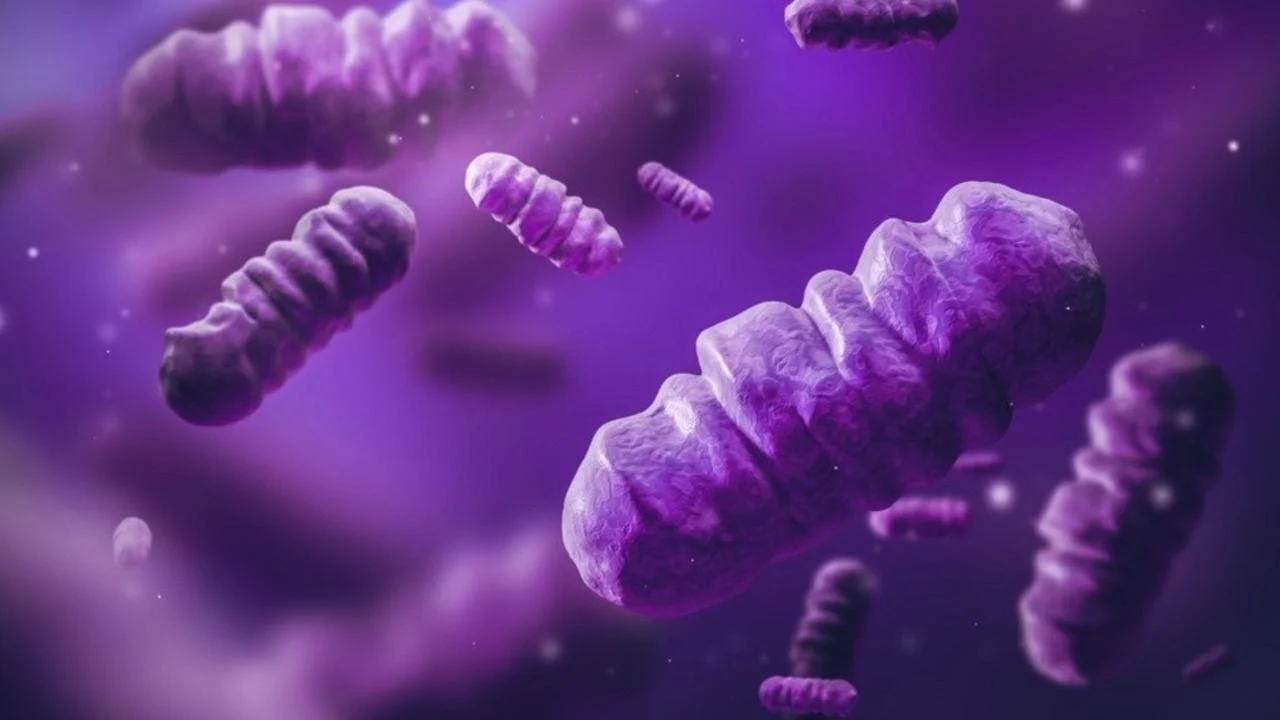
In a significant “step-up” from large bio-macromolecular systems, researchers from the University of Oxford have surprised the scientific community with the announcement of successful entanglement of entire bacteria organisms with photons. The study published in the Journal of Physics Communications and led by quantum physicist Chiara Marletto involved the sequestration of hundreds of photosynthetic green sulfur bacteria between two mirrors separated by a few hundred nanometers. Similar to the methodology employed in light amplified stimulated emission (LASER) technology, the research team fed white photons into the optical cavity, causing the photons to bounce between the two mirrors. By causing the bacteria within to continuously absorb, emit and reabsorb the bouncing photons the entire photosynthetic machinery of the organisms become strongly coupled with the photonic microcavity, such that the bacteria are veritably entangled.

Indeed, the researchers explain that the energy signature of the photons interacting with the bacteria’s photosynthetic systems indicate that there is strong entanglement occurring between the bacteria and the optical cavity. Tristian Farrow, a physicist at Oxford University who reviewed the work commented that “It certainly is key to demonstrating that we are some way toward the idea of a ‘Schrödinger’s bacterium,’ if you will,”.

Subsequent experimentation will attempt to place the multicellular organism the tardigrade into a quantum state. The tardigrade is several hundred times larger than the bacteria used in previous entanglement experiments, and indications of a quantum state in such an organism would be the largest amount of “stuff” ever shown to be quantum entangled. Farrow says. “This is about understanding the nature of reality, and whether quantum effects have a utility in biological functions. At the root of things, everything is quantum”. And it is undoubted that after 3.8 billion years of evolution (or even 8 billion + years if you consider possibilities of panspermia) that the ingenuity of the living system has enabled life to utilize the intrinsic properties of matter that we characterize as “quantum”, ever refining the living system’s adaptability and ability to grow and thrive.

Original Report: A Nanophotonic Structure Containing Living Photosynthetic Bacteria

Learn more in our free Unified Science Course

Sign Up For Daily Newsletter

Be keep up! Get the latest breaking news delivered straight to your inbox.
loader

loader

loader

By signing up, you acknowledge the data practices in our Privacy Policy. You may unsubscribe at any time.
En vous inscrivant, vous reconnaissez les pratiques en matière de données dans notre politique de confidentialité. Vous pouvez vous désinscrire à n'importe quel moment.
Al registrarse, reconoce las prácticas de datos en nuestra política de privacidad. Puedes darte de baja en cualquier momento.
Share This Article
Facebook Twitter Copy Link Print
By Dr. William Brown
William Brown is a biophysicist, investigating the physics operational at the cellular and molecular level of the biological system. He presents lectures (Unified Science Review), talks, and Q&A forums to teach the syncretic theories of unified science. He is a part of the research team at The International Space Federation where he applies his extensive knowledge of cellular and molecular biology to an exploration of the biological system from a unified physics perspective; developing an understanding of life from the most fundamental level.
Previous Article Unusual Seismic Phenomenon Heard Around the World
Next Article Quantum Physics Working at the Macroscopic Scale

Stay Connected

981k Like
18.7k Follow
7.7k Follow
7.3k Subscribe

Categories

  • Astronomy106
  • Biology69
  • ISF News25
  • ISF Research14
  • Other22
  • Physics168
  • Technology36

You Might also Like

Biology

Quantum Spin Controls Microtubule Assembly, Study Finds

20. May 2026.
Biology

Cognition Without Brains: How Memory Emerges in Polymers, Cells, and Spacetime.

23. March 2026.
Biology

Where Biology Meets Resonance: Light, Vibration, and Living Order

19. February 2026.
BiologyPhysics

Do Cells Use a Quantum Compass to Heal Wounds?

2. December 2025.
The International Space Federation (ISF)The International Space Federation (ISF)

Harnessing quantum vacuum energy for sustainable solutions – a unified approach to science, technology and education.

Quick links

  • About
  • Research Papers
  • Events
  • Invest

Explore

  • ISF Research
  • Physics
  • Technology
  • Astronomy
  • Biology
  • ISF News

Sign Up for Our Newsletter

Subscribe to our newsletter to get our newest articles instantly!

loader

Follow US
© 2023 International Space Federation. All Rights Reserved. INTERNATIONAL SPACE FEDERATION is a trademark of ISFS SA. The mark is registered in the United States under Registration No. 7772313. The ®️ symbol is used exclusively in the U.S.
  • Press
  • Careers
  • Privacy policy
  • Carrieres
  • Presse
  • Prensa
Join Us!

Subscribe to our newsletter and never miss our latest news.

loader

Welcome Back!

Sign in to your account

Lost your password?