
By using this site, you agree to the Privacy Policy.
Accept
The International Space Federation (ISF)The International Space Federation (ISF)The International Space Federation (ISF)
  • Science News
    • All Articles
    • Physics
    • Astronomy
    • Biology
    • Technology
    • Other
  • Research
    • Research Papers
    • Physicists Testimonials
  • Technology
  • About
    • About us
  • ISF News
  • Events
    • Events
  • Get Involved
    • Invest
    • Donate – Zero Point Foundation
  • Careers
  • Contact Us
Reading: A Two Layers Graphene Superconductor Material
Share
The International Space Federation (ISF)The International Space Federation (ISF)
Search
  • Science News
    • Physics
    • Astronomy
    • Biology
    • Technology
  • Research Papers
    • Physicists Testimonials
  • About
    • ISF News
  • Events
  • Get involved
    • Invest
  • Translations
    online pharmacy https://worldneurologyonline.com/ no prescription pharmacy
Follow US
© 2022 International Space Federation. All Rights Reserved.
The International Space Federation (ISF) / Explore / Physics / A Two Layers Graphene Superconductor Material
Physics

A Two Layers Graphene Superconductor Material

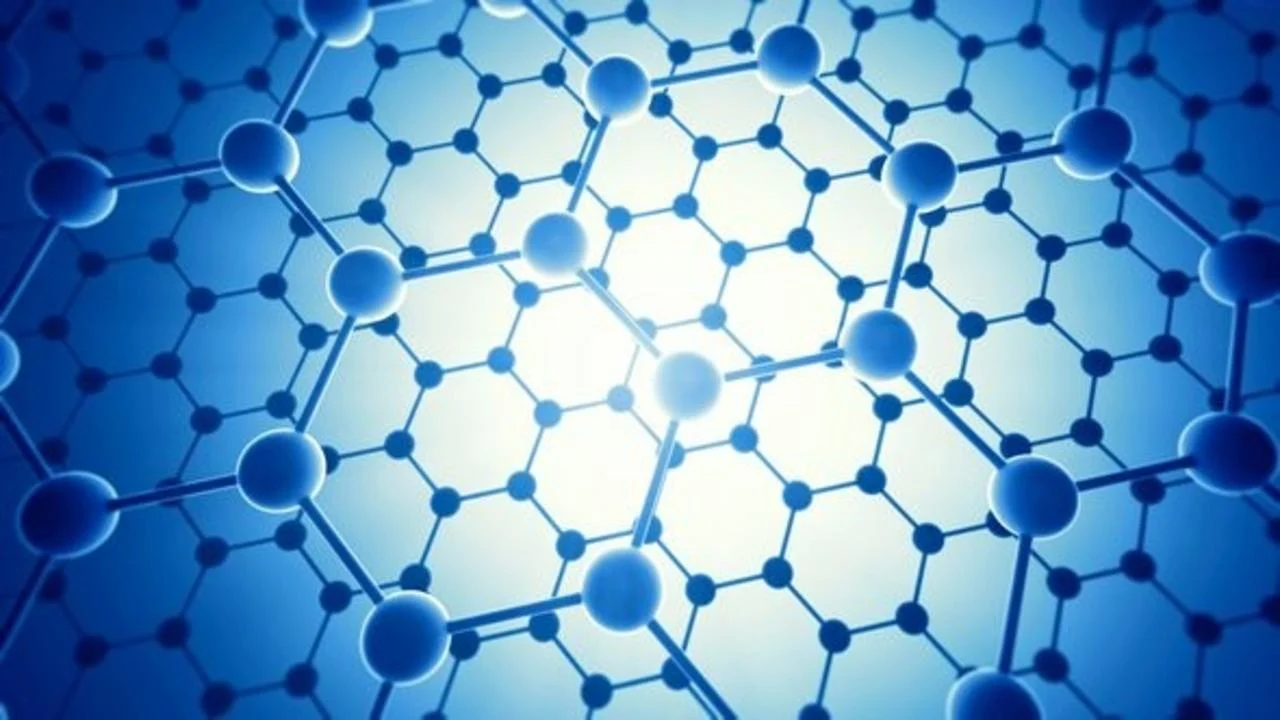
cientists have discovered that a two graphene layers can conduct electrons showing superconductivity if the two hexagonal nets are twisted against each other at a 1.1 degree angle. This finding could lead to room-temperature superconductors, a hypothetical material exhibiting superconductivity at temperatures above 0 °C (273.15 K). Most superconductors work only at temperatures close to absolute zero.

Olivier Alirol
Last updated: 2024/08/28 at 8:00 PM
Olivier Alirol
Share
3 Min Read
SHARE

Scientists have discovered that a two graphene layers can conduct electrons showing superconductivity if the two hexagonal nets are twisted against each other at a 1.1 degree angle. This finding could lead to room-temperature superconductors, a hypothetical material exhibiting superconductivity at temperatures above 0 °C (273.15 K). Most superconductors work only at temperatures close to absolute zero. Even ‘high-temperature’ superconductors are workiang in reality at  −140 ºC. A material that displayed the property at room temperature — eliminating the need for expensive cooling — could revolutionize energy transmission, medical scanners and transport.

Potential Technological Applications of Room-Temperature Superconductors

Increasing the temperature at which superconductivity occurs could have phenomenal technological applications. A current that could flow forever without losing any energy means transmission of power with virtually no losses in the cables. When renewable energy sources start to dominate the grid and high-voltage transmission across continents becomes important to overcome intermittency, lossless cables will result in substantial savings.

 After a first discovery in April 2018, showing superconductivity in a system of two layers of graphene under very specific conditions, physicists now report their conclusions in understanding the mechanism beyond this conperconductivity. Bilayer graphene (BLG) has, along with related two-dimensional (2D) materials, extensively been studied by both transport and photoemission measurements. It is a material with an energy gap that opens as soon as an asymmetry is imposed on the two graphene layers.

The Role of Electron-Phonon Coupling and Flat Bands in Superconductivity

The team from Helmholtz-Zentrum in Germany explained the mechanism of the flat band appearance and show that, by influencing sublattice and interlayer asymmetries, one can radically control the band shape and its properties.

“One of the bottlenecks of high-temperature superconductivity has been the fact that we don’t understand, even now, what’s really gluing the electrons into pairs.”

Highlights:

Indications of enhanced electron-phonon coupling, and the creation and control of the flat band, are related to the question of high-temperature superconductivity in graphene opening the door of possible room temperature superconductors easily produced.

Learn more at:

  • Phys.org: Graphene on the way to superconductivity
  • Scientificamerican.com: Surprise Graphene Discovery Could Unlock Secrets of Superconductivity
  • Sciencemag.org: Extremely flat band in bilayer graphene

Learn more in our free Unified Science Course

Sign Up For Daily Newsletter

Be keep up! Get the latest breaking news delivered straight to your inbox.
loader

loader

loader

By signing up, you acknowledge the data practices in our Privacy Policy. You may unsubscribe at any time.
En vous inscrivant, vous reconnaissez les pratiques en matière de données dans notre politique de confidentialité. Vous pouvez vous désinscrire à n'importe quel moment.
Al registrarse, reconoce las prácticas de datos en nuestra política de privacidad. Puedes darte de baja en cualquier momento.
Share This Article
Facebook Twitter Copy Link Print
Previous Article 13.5-Billion-Year-Old Star Sheds Light On Star Formation
Next Article Electromics – The Double-Aspect of Life

Stay Connected

981k Like
18.7k Follow
7.7k Follow
7.3k Subscribe

Categories

  • Astronomy106
  • Biology69
  • ISF News25
  • ISF Research14
  • Other22
  • Physics168
  • Technology36

You Might also Like

Physics

Gravitational Waves Leave Their Mark on Atomic Light: A New Window into Vacuum Field Physics

22. April 2026.
BiologyPhysics

Do Cells Use a Quantum Compass to Heal Wounds?

2. December 2025.
Physics

Space-Memory Experiments: Quantum Memory Matrix Results Explained

3. October 2025.
Physics

From Bit to Quanta: New Theory Links Entanglement to Particle Creation

17. September 2025.
The International Space Federation (ISF)The International Space Federation (ISF)

Harnessing quantum vacuum energy for sustainable solutions – a unified approach to science, technology and education.

Quick links

  • About
  • Research Papers
  • Events
  • Invest

Explore

  • ISF Research
  • Physics
  • Technology
  • Astronomy
  • Biology
  • ISF News

Sign Up for Our Newsletter

Subscribe to our newsletter to get our newest articles instantly!

loader

Follow US
© 2023 International Space Federation. All Rights Reserved. INTERNATIONAL SPACE FEDERATION is a trademark of ISFS SA. The mark is registered in the United States under Registration No. 7772313. The ®️ symbol is used exclusively in the U.S.
  • Press
  • Careers
  • Privacy policy
  • Carrieres
  • Presse
  • Prensa
Join Us!

Subscribe to our newsletter and never miss our latest news.

loader

Welcome Back!

Sign in to your account

Lost your password?