
By using this site, you agree to the Privacy Policy.
Accept
The International Space Federation (ISF)The International Space Federation (ISF)The International Space Federation (ISF)
  • Science News
    • All Articles
    • Physics
    • Astronomy
    • Biology
    • Technology
    • Other
  • Research
    • Research Papers
    • Physicists Testimonials
  • Technology
  • About
    • About us
  • ISF News
  • Events
    • Events
  • Get Involved
    • Invest
    • Donate – Zero Point Foundation
  • Careers
  • Contact Us
Reading: The Casimir Torque Validated Experimentally for the First Time
Share
The International Space Federation (ISF)The International Space Federation (ISF)
Search
  • Science News
    • Physics
    • Astronomy
    • Biology
    • Technology
  • Research Papers
    • Physicists Testimonials
  • About
    • ISF News
  • Events
  • Get involved
    • Invest
  • Translations
    online pharmacy https://worldneurologyonline.com/ no prescription pharmacy
Follow US
© 2022 International Space Federation. All Rights Reserved.
The International Space Federation (ISF) / Explore / Physics / The Casimir Torque Validated Experimentally for the First Time
Physics

The Casimir Torque Validated Experimentally for the First Time

The so-called Casimir torque, predicted more than 40 years ago, has been verified experimentally .

Dr. Inés Urdaneta
Last updated: 2025/01/07 at 10:17 PM
Dr. Inés Urdaneta
Share
4 Min Read
SHARE

The Casimir effect, responsible for the attraction of two neutral metallic plates separated 1 micron apart, is one of the most outstanding features of the quantum vacuum influence on the macroscopic world, and has been discussed in former articles. The effect has been measured in a variety of experimental setups, but this is the first time its associated torque has been verified experimentally [1]. The so-called Casimir torque, predicted more than 40 years ago, is a mechanical torque between two optically anisotropic materials, and depends on the electromagnetic fluctuations (EM) of the vacuum -known as vacuum fluctuations- as well as on the dielectric function of the materials, which describes the capacity of an internal charge reorganization property within the material. Optically anisotropic means that the refractive index of the material depends on the polarization and propagation direction of the electromagnetic field. Materials obeying this condition are named birefringent.

Mechanics of Casimir Torque

When the materials are optically anisotropic, different polarizations of light experience different refractive indices and a torque is expected to occur that causes the materials to rotate to a position of minimum energy

The charge reorganization, also known as polarizability, allows a material to respond to the EM fluctuations with small but sufficient strength to spin mechanically and align to the source of polarization. Through the choice of the materials, researchers at the University of Maryland achieved control over the direction -or sign- of the torque, its strength, and its dependence on the rotation angle and the separation distance between the materials.

Applications and Implications

The interaction through vacuum fluctuations is commonly associated to phenomena such as intramolecular and adhesive forces, Casimir effect, among others. The applications range from atomic and nanoscopic manipulations, up to the controversial impossible drive.

Fig 1: The experimental setup used in this research. The solid birefringent crystal (calcite, lithium niobite, rutile or yttrium vanadate) and a liquid crystal (5CB). Image and caption taken from [1].

These results published in Nature are of ultimate importance as they can be directly related to the Planck field using the generalized holographic model (GHM) derived by N. Haramein [2,3]. In the GHM, the vacuum is composed of Planck Voxels -referred to as Planck Spherical Units (PSU)- which are vortexes at the Planck scale, moving coherently creating a collective effect that can induce a torque arising from angular-momentum transfer from the vortexes to the birefringent plates.

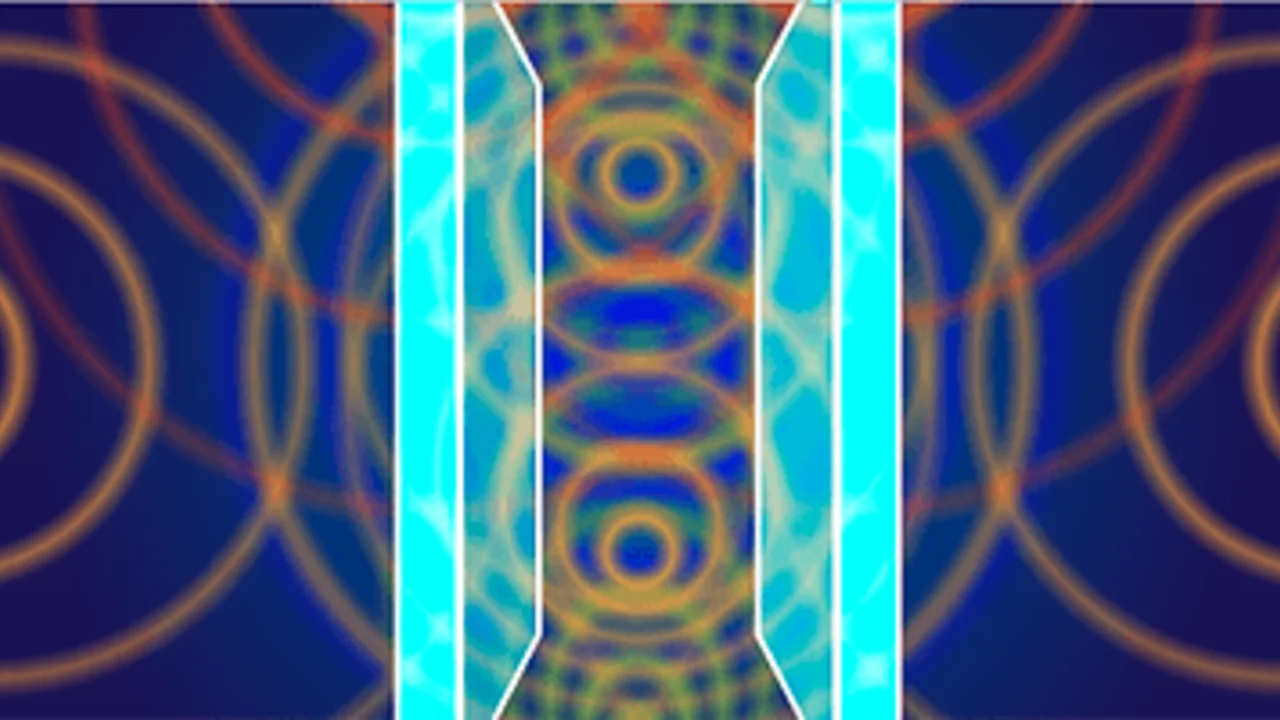
Landing page image Credit: APS/Alan Stonebraker

References

[1] David A. T. Somers et al, Measurement of the Casimir torque, Nature (2018). DOI: 10.1038/s41586-018-0777-8

[2] Haramein, N. (2012). Quantum Gravity and the Holographic Mass, Physical Review & Research International, ISSN: 2231-1815, Page 270-292 

[3] Haramein, N. (2013). Addendum to “Quantum Gravity and the Holographic Mass” in view of the 2013 Muonic Proton Charge Radius Measurement, Hawaii Institute for Unified Physics.

Sign Up For Daily Newsletter

Be keep up! Get the latest breaking news delivered straight to your inbox.
loader

loader

loader

By signing up, you acknowledge the data practices in our Privacy Policy. You may unsubscribe at any time.
En vous inscrivant, vous reconnaissez les pratiques en matière de données dans notre politique de confidentialité. Vous pouvez vous désinscrire à n'importe quel moment.
Al registrarse, reconoce las prácticas de datos en nuestra política de privacidad. Puedes darte de baja en cualquier momento.
Share This Article
Facebook Twitter Copy Link Print
By Dr. Inés Urdaneta
Dr. Inés Urdaneta is a multi-published research physicist in the domain of light-matter interaction at the atomic, molecular, and nano/solid-state scales. In her more than 20 years of research she participated in national and international research projects throughout France, USA, México and Venezuela, on an extensive variety of topics. At present, as part of our research staff at the International Space Federation, Inés focuses on developing physical-chemical models in the frame of the generalized holographic model (GHM) and unification theory developed by Nassim Haramein, together with quantum information processes and their connection to black holes and to proto-consciousness.
Previous Article Crossing the Event Horizon with Loop Quantum Gravity
Next Article The Importance of Mindfulness

Stay Connected

981k Like
18.7k Follow
7.7k Follow
7.3k Subscribe

Categories

  • Astronomy106
  • Biology69
  • ISF News25
  • ISF Research14
  • Other22
  • Physics168
  • Technology36

You Might also Like

Physics

Gravitational Waves Leave Their Mark on Atomic Light: A New Window into Vacuum Field Physics

22. April 2026.
BiologyPhysics

Do Cells Use a Quantum Compass to Heal Wounds?

2. December 2025.
Physics

Space-Memory Experiments: Quantum Memory Matrix Results Explained

3. October 2025.
Physics

From Bit to Quanta: New Theory Links Entanglement to Particle Creation

17. September 2025.
The International Space Federation (ISF)The International Space Federation (ISF)

Harnessing quantum vacuum energy for sustainable solutions – a unified approach to science, technology and education.

Quick links

  • About
  • Research Papers
  • Events
  • Invest

Explore

  • ISF Research
  • Physics
  • Technology
  • Astronomy
  • Biology
  • ISF News

Sign Up for Our Newsletter

Subscribe to our newsletter to get our newest articles instantly!

loader

Follow US
© 2023 International Space Federation. All Rights Reserved. INTERNATIONAL SPACE FEDERATION is a trademark of ISFS SA. The mark is registered in the United States under Registration No. 7772313. The ®️ symbol is used exclusively in the U.S.
  • Press
  • Careers
  • Privacy policy
  • Carrieres
  • Presse
  • Prensa
Join Us!

Subscribe to our newsletter and never miss our latest news.

loader

Welcome Back!

Sign in to your account

Lost your password?