

Ever wondered why the universe seems perfectly tuned for life? Scientists have long puzzled over the seeming precisely calibrated values of certain physical parameters, which otherwise would not permit the formation of a universe with complex organized matter, like life. Physicist Nassim Haramein offers a straight-forward solution to this “problem of fine-tuning” by flipping the question on its head: the universe isn’t fine-tuned for life, rather life fine-tunes itself to the universe. This insight is supported by discoveries of extremophiles thriving in conditions once thought impossible, from nuclear reactor cooling pools to deep-sea vents, and hence life’s ability to “fine-tune” to extreme conditions is easily observable right here on Earth across a spectrum of environments— many of which were presumed to be totally hostile to life “as we know it”. Through his groundbreaking research on universal scaling laws and holographic principles, Haramein shows how the constants of nature emerge naturally from deeper mathematical relationships, rather than requiring precise calibration. This revolutionary perspective not only resolves the fine-tuning paradox but highlights life’s remarkable adaptability across a vast range of conditions.
What is the Fine-Tuning Problem?
As conventionally formulated, the fine-tuning problem in cosmology refers to the observation that certain fundamental constants and parameters of the universe appear to be precisely tuned to values that allow for the existence of life and the formation of complex structures, such as stars, planets, and galaxies. In terms of the historical development of the issue, which has been framed as a problem for naturalistic science, the thinking has been that deviations in fundamental parameters could lead to a universe where life, as we know it, would not be possible. The fine-tuning problem raises the question of why these constants have the specific values that they do, and whether this is due to chance, necessity, or some underlying principle.
Here are the key aspects of the fine-tuning problem:
1. Examples of Fine-Tuned Constants
The argument of fine-tuning is often focused on a few fundamental constants that naively seem to require specific values for there to be conditions suitable for life, including:
- Cosmological Constant (Λ): The cosmological constant controls the rate of the universe’s expansion. It is extraordinarily small but positive, allowing galaxies to form while still driving the accelerated expansion of the universe. If it were much larger, the universe would have expanded too quickly for galaxies to form; if it were much smaller or negative, the universe would have collapsed back on itself.
- Astrophysicist E.J. Chaisson has claimed that life ultimately depends on the expansion of the universe and the “flow of energy derived therefrom” [1], so, according to Chaisson, without a slightly positive Lambda there would not be the necessary and sufficient conditions for the evolution of complexity that leads to life.
- Gravitational Constant (G): The force of gravity is precisely balanced with other fundamental forces to allow stars and planets to form. One often utilized assumption of the fine-tuned argument is that a stronger gravitational force would cause stars to burn out too quickly, while a weaker force would prevent them from forming altogether.
- Electromagnetic Force Strength (α): The electromagnetic force governs atomic interactions. If it were slightly stronger or weaker, atoms wouldn’t form correctly, leading to a universe without complex chemistry.
- Ratio of Matter to Antimatter: During particle creation matter and antimatter are generated in equal (balancing) proportion. Why is it that all matter and antimatter did not immediately recombine in which case the universe would be dominated by radiation. In conventional theory, it is thought that there was some imbalance generating more matter than antimatter. What charge, parity, time-symmetry (CPT) violation could have allowed for this?
- Inflation Parameters: The early rapid expansion (inflation) is required to explain the observed large-scale structure and homogeneity of the universe. The initial conditions for inflation appear fine-tuned to produce the universe we see.

2. The Fine-Tuning Problem
The fine-tuning problem, as conventionally conceptualized, is essentially about probability: it is believed that the range of values for these constants that would permit a life-supporting universe is incredibly narrow compared to the range of possible values. This apparent fine-tuning leads to a puzzle because:
- Why do these constants take on such precise values?
- The range of values that presumably would not support life (as we know it) is astronomically larger than the narrow band that does; so probabilistically the universe should not be as it is. As such, it should be exceedingly improbable that we, as living agents, are alive and aware in a biophilic cosmos.
- Is this fine-tuning a coincidence, or does it point to deeper principles?
On Deeper Principles: Dirac’s Large Number Hypothesis
In the 1930s, physicist Paul Dirac proposed his “large number hypothesis” as a potential explanation for some aspects of fine-tuning [2] Dirac noticed that certain very large dimensionless numbers that appear in physics seemed to be related to each other and to the age of the universe. He hypothesized that these relationships were not coincidental but reflected some deeper connection between microphysics and the large-scale structure of the universe.
Around the same time, Arthur Eddington was exploring similar ideas about the significance of the dimensionless constants [3]. Eddington believed that the values of the fundamental constants could potentially be derived from pure mathematics, rather than being arbitrary.
Both Dirac and Eddington’s salient identification of seemingly non-random connections among physical parameters of the universe and the physical constants were largely overlooked by the scientific community and even reduced to “numerology”, contributing to a decades-long stasis of further development in this critically important question of the nature and relationship of the values of physical constants. It wasn’t until 1961 that physicist Robert Dicke made a significant advancement to the developmental trajectory of this consideration of the peculiar values of the fundamental constants and other universal physical parameters.
Dicke argued that certain forces in physics, particularly gravity and electromagnetism, must be finely tuned within very narrow ranges to allow for the existence of life as we know it. This idea became a cornerstone of the anthropic principle in cosmology, but it is important to point out that he was considering life as we know it, which is an ever-expanding range of possibilities and—as we will discuss—may not be such a narrow range that it requires highly fine-tuned parameters.
Dicke’s work provided a different perspective on Dirac’s large number hypothesis. While Dirac had proposed that the fundamental constants might vary over time to maintain their observed relationships, Dicke suggested that their values were constrained by the requirements for life to exist. In his 1961 paper “Dirac’s Cosmology and Mach’s Principle,” Dicke argued that the apparent coincidences Dirac had noticed were a necessary consequence of the fact that life can only exist during certain cosmic epochs [4].
The fine-tuning problem remains an active area of research and debate in modern cosmology. Some physicists continue to search for fundamental explanations, while others have proposed ideas like the multiverse hypothesis, which suggests our universe is one of many with different physical constants, and we will examine this idea in more detail and how it relates to the anthropic principle and fine-tuning. The work of Dirac, Eddington, and Dicke laid important groundwork for these ongoing discussions about the nature of our cosmos and our place within it.
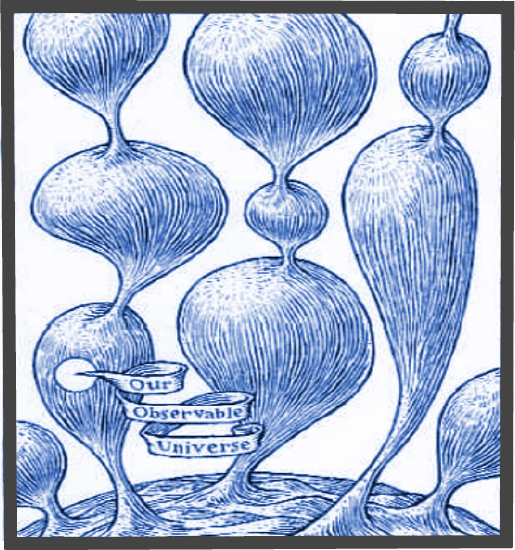
This debate highlights the tension between two approaches to explaining fine-tuning: one that seeks a fundamental physical explanation (as Dirac and Eddington did), and another that invokes anthropic reasoning (as Dicke did). The anthropic approach suggests that we observe a universe with these particular constants precisely because they allow for our existence as observers.
The Anthropic Principle
“Most physicists will always prefer to say that when we have our final theory of physics that it will predict the constants of nature uniquely and there is no need for any of these other semi-metaphysical interpretations; and in some sense even when me and Rees wrote our paper we always regarded anthropic arguments as a kind of stop-gap…” -Bernard Carr, (2024) Philosophy of Fine-tuning.
In their seminal 1979 Nature paper, physicists Bernard Carr and Martin Rees explored the anthropic principle and its relationship to the apparent fine-tuning of fundamental physical constants [5]. Their work highlights how the basic structure of the physical world, from subatomic particles to galaxies, seems to depend delicately on several microphysical constants and gravitational effects.
Carr and Rees’ analysis reveals several key insights into the nature of our universe. They demonstrate that most natural scales in the cosmos can be expressed using just a few physical constants, primarily the electromagnetic and gravitational fine structure constants, along with the electron-to-proton mass ratio. This observation leads to the realization that many seemingly coincidental relationships between different cosmic scales are, in fact, direct consequences of these fundamental constants. The researchers also highlight how various aspects of our universe that appear necessary for life’s evolution depend sensitively on apparent “coincidences” among these physical constants.
Central to their work is the anthropic principle, and while this principle doesn’t provide a physical explanation for the constants’ values, it may offer insight into why we observe them to have their measured values. To illustrate these concepts, Carr and Rees discuss several examples of anthropic coincidences, such as the size of planets being the geometric mean of the universe’s size and an atom’s size, and the mass of a human being the geometric mean of a planet’s mass and a proton’s mass. They also explore the intriguing relationship between stellar lifetimes and the age of the universe.

They also explore how slight changes in fundamental constants could dramatically alter the universe’s ability to support life as we know it, such as changes affecting stellar evolution, element production, and galaxy formation.
While acknowledging the limitations of the anthropic principle as an explanation, Carr and Rees’ work laid important groundwork for future discussions on fine-tuning in physics and cosmology. Their paper continues to be influential in debates about the apparent fine-tuning of the universe and its implications for our understanding of fundamental physics, and because of the significance that is seen in the ratios between alpha (α) and alpha-g (αg), it has been foundational in pointing towards theory that can explain the deeper principles of fundamental constants based not on happenstance but on explainable physics.
A Universal Scaling Law: Evidence of Deeper Principles Emerging from Unified Physics
The scaling law for organized matter proposed by Haramein et al. [6] offers an intriguing new perspective on the anthropic principle and fine-tuning problem in cosmology. By demonstrating that organized matter across all scales— from the Planck length to the cosmic— follows a consistent mathematical relationship between frequency and radius (Figure 4), this model suggests an underlying organizational principle to the universe that may help explain why fundamental physical constants have the specific values that are measured, such that they are not random but based on deeper physical principles.
The scaling law shows that systems from atomic to universal scales can be described as various stages of black hole dynamics, with similar plasma behaviors and field topologies appearing at each level. This self-similarity across vastly different scales indicates that rather than being a collection of coincidentally “life-friendly” constants, the universe may operate according to an intrinsic organizational pattern that naturally gives rise to the specific values that underlie the structure and order of our universe, to which life “fine-tunes”.

Of particular significance is how the scaling law relates to the strong nuclear force and gravity— two forces whose relative strengths have long been considered an example of apparent fine-tuning. Haramein’s calculations suggest that when accounting for vacuum energy density in atomic nuclei, the strong force may actually be a gravitational effect at the quantum scale. This potentially eliminates the need to explain why these forces differ in strength by exactly the amount needed for stable atoms and chemistry.
The model’s prediction of “spin horizons” at all scales, from atomic to galactic, further suggests that angular momentum and torque are fundamental organizing principles of space-time itself. This may help explain why universal constants related to spin and rotation appear calibrated to allow for stable orbital systems necessary for life.
Rather than requiring multiple universes or a cosmic “fine-tuner” to explain apparent anthropic coincidences, the scaling law points to an inherent organizational structure of space-time that naturally produces the conditions for complexity across all scales. Note, Haramein’s cosmology describes a multiverse, since the “pattern of division” repeats infinitely inward and outward, however because there are a priori principles explaining the source of the specific values of fundamental constants there is no requirement of a probabilistic explanation; there may be an infinite number of universes but because they emerge via a similar process they may not have wildly different properties and hence would not have the infinite combination of values of the constants to satisfy the probabilistic argument. The solution finds deeper meaning and natural regularity at the fundamental level, which Haramein’s work like the universal scaling law is describing. The mathematical regularity revealed by the law suggests this is not random but rather an essential feature of how the universe operates.
Haramein’s scaling law has offered a promising new framework for understanding why the universe appears fine-tuned for life. By revealing an underlying organizational principle that operates consistently across all scales, it suggests the anthropic coincidences may be natural consequences of the fundamental geometry and dynamics of space-time itself. Haramein’s recent work (Scale invariant unification of forces, fields, and particles in a Quantum Vacuum plasma) is further elucidating these naturally occurring intrinsic relationships that give rise to precise values of the fundamental constants, not based on coincidence or probability, but based on first-principles of universal mechanisms of organization (as revealed in the scaling law).
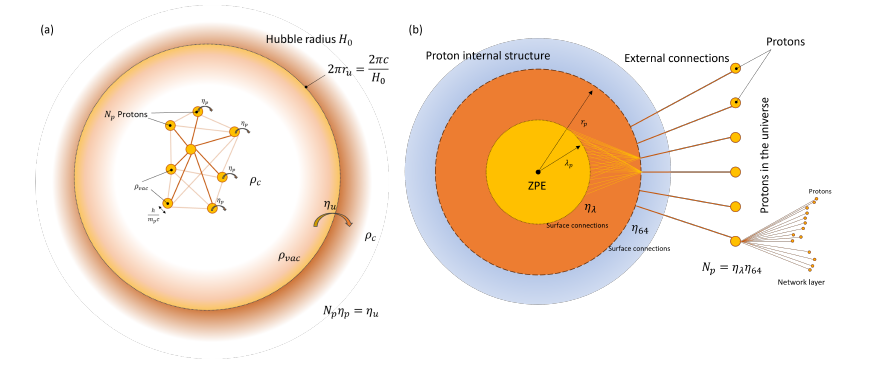
Moreover, in the study on The Origin of Mass and the Nature of Gravity [7], we see that the scaling law proposed by Haramein reveals a profound relationship between quantum and cosmological scales that may resolve longstanding questions about the apparent fine-tuning of fundamental physical constants. For example, by demonstrating that the surface information of all protons (Nₚηₚ) equals the surface information of the universe’s horizon (ηᵤ) when properly scaled, this framework demonstrates, in concordance with the scaling law, that these “constants” emerge naturally from the geometric relationships between scales rather than requiring arbitrary tuning.
This equivalence is shown in the beautiful equation:

Specifically, the equivalence shown in equation 5.5 (we will keep the convention of the labeling of the equations from the paper, so this will be referred to as equation 5.5) indicates that the collective surface information of protons matches the universe’s horizon information when pixelated at the Planck scale. This correspondence implies the fundamental constants that determine particle properties, like the fine structure constant α and gravitational coupling αg, arise from the holographic relationship between quantum and cosmic scales rather than being randomly selected values.
This insight directly challenges the anthropic principle argument that our universe’s constants must be inexplicably fine-tuned to allow for life. Instead, the scaling law suggests these values emerge inevitably from the mathematical relationships between different scale horizons in a holographic universe. The proton-to-universe ratio appears to be a natural consequence of how quantum vacuum fluctuations are screened across scales.
Furthermore, Haramein et al. calculations demonstrate that the quantum vacuum energy within a proton’s volume is equivalent to the total mass-energy of the universe, including dark energy and dark matter (Figure 5). This volumetric relationship complements the surface information correspondence, suggesting a deep fractal coherence between scales rather than arbitrary fine-tuning.
The framework also provides a physical basis for Dirac’s large number hypothesis by showing how the apparent “coincidences” between micro and macro scales reflect genuine geometric relationships in a holographic cosmos. Rather than requiring anthropic explanations, the fundamental constants appear to be necessary consequences of how vacuum energy is structured across scales through a network of holographic horizons. As well the universality of the scaling law indicates how this structured vacuum can be described in terms of a fractal-like scaling resulting in regularity that, again, is non-arbitrary for how fundamental parameters of the universe emerge. When fully elaborated, this will be able to explain all physical constants of the universe, starting with the six numbers of Martin Rees.
The Six Numbers of Martin Rees
Building upon the foundation laid by Carr and Rees, Martin Rees later expanded on the issues around fine-tuning in his book “Just Six Numbers: The Deep Forces That Shape the Universe” [8]. In this work, Rees identifies six fundamental constants, some of which we have already seen but are highlighted here for significance, as Rees argues they are crucial for the universe as we know it:
- N: The ratio of the electromagnetic force to the gravitational force
- ε: The strength of the nuclear force that binds atoms
- Ω: The relative density of the universe
- λ: The cosmological constant, related to dark energy
- Q: The ratio of the gravitational energy required to break up a galaxy to its rest mass energy
- D: The number of spatial dimensions in our universe
These six numbers, Rees argues, are finely tuned to allow for the existence of stable atoms, stars, planets, and ultimately, life. Even slight variations in these constants could result in a dramatically different universe, potentially one incapable of supporting complex structures or life (The Role of Fundamental Constants, Fine Tuning and the Anthropic Principle in the Evolution of our Universe).
For instance, if N were slightly smaller, stars wouldn’t be able to exist. If ε were different, nuclear fusion in stars wouldn’t produce the variety of elements necessary for life. The value of Ω determines whether the universe expands forever or collapses back on itself, while λ influences the rate of cosmic expansion and the formation of large-scale structures.
Rees’ work on these six numbers further emphasizes the apparent fine-tuning of our universe and continues to fuel discussions about the anthropic principle, multiverse theories, and the fundamental nature of reality.
The multiverse theory, which we will next consider, enters into the fine-tuning argument as a potential solution, often referred to as it is thought that multiple universes, each with different physical laws, could explain why our universe seems fine-tuned for life.
Enter the Fractal Multiverse
The theory of the multiverse proposes that our universe is just one of many universes that exist. This concept has gained traction among some physicists and cosmologists as a potential explanation for the apparent fine-tuning of our universe.

It is argued that multiverse theory offers a potential resolution to the fine-tuning problem because, according to this theory, there exists a vast number of universes, each with its own set of physical laws and constants. In this scenario, our universe is simply one among countless others, and its apparent fine-tuning is a result of the anthropic principle – we observe these specific conditions because they are necessary for our existence as observers.
Max Tegmark, a prominent proponent of the multiverse theory [9], has proposed a hierarchy of four levels of parallel universes:
- Level I: An extension of our observable universe, where the same physical laws apply but initial conditions vary.
- Level II: Universes with different physical constants, arising from cosmic inflation.
- Level III: The many-worlds interpretation of quantum mechanics, where every possible outcome of quantum measurements is realized in some universe.
- Level IV: The ultimate ensemble where all mathematically possible universes exist.

This highlights how the multiverse resolution of the fine-tuning argument is essentially a probabilistic argument: with infinite universes it is probabilistically certain that a few will have exactly the conditions we observer, conditions that are optimally biophilic. This idea also sparks debates about Occam’s razor and whether a multiverse or a single universe is simpler. Some scientists, like Tegmark, argue that the multiverse is actually simpler and more elegant. Related concepts, such as the many-worlds interpretation of quantum mechanics (also known as Everettian quantum mechanics) and modal realism—the belief that all possible worlds exist and are as real as our own, which is Level IV in Tegmark’s hierarchy—are also seen as corollaries of the multiverse theory of the weak anthropic argument variety. Since all possible configurations exist, of course there are some that have life, and we happen to be in one of those.
In the context of the multiverse, the fine-tuning problem becomes less mysterious, albeit a probabilistic explanation is not exactly a satisfying one scientifically, supplanting mechanistic understanding with the rolling of dice (which is not great for formulating predictions and engineering applications). Nevertheless, multiverse theory continues to be an active area of research and debate in theoretical physics and cosmology. It represents an ambitious attempt to extend our understanding of the cosmos beyond the observable universe and to grapple with some of the most fundamental questions about the nature of reality.
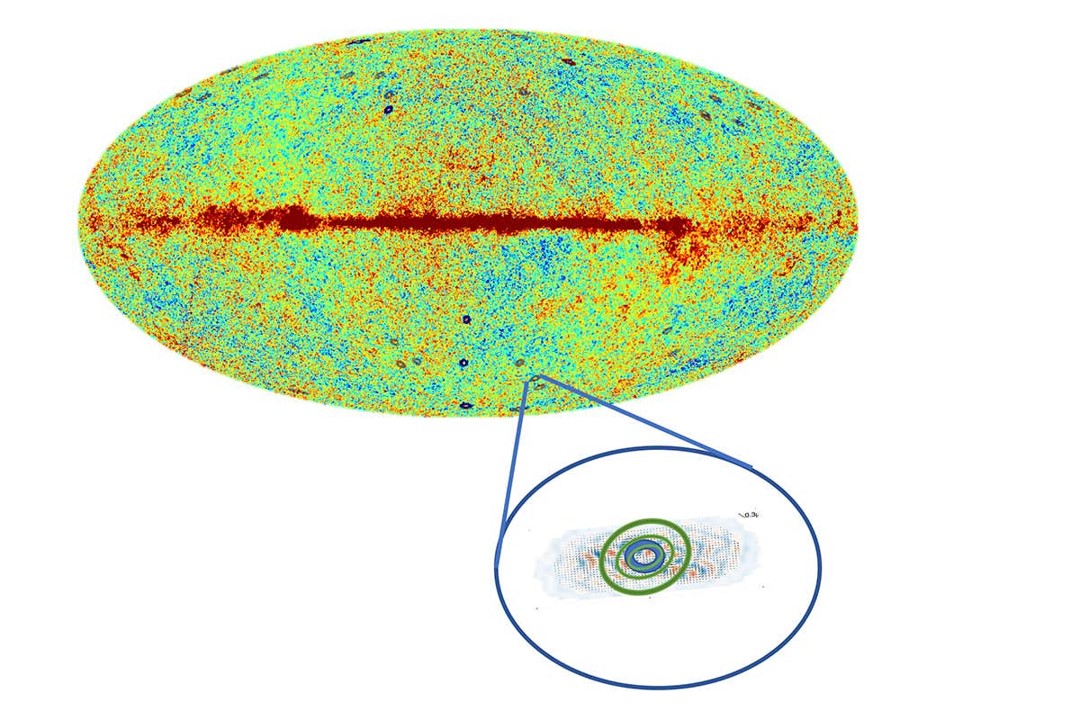
It was just a little over 100 years ago that we learned there are other galaxies beyond our own (1923 — Edwin Hubble resolves the Shapley–Curtis debate by finding Cepheids in the Andromeda Galaxy, definitively proving that there are other galaxies beyond the Milky Way), now we know there are hundreds of billions of other galaxies. The idea that there are parallel universes to our own is just another step in expanding the horizon of existence that humans comprehend. The multiverse emerges from the science that is ultimately based on empirical data, and recently tentative observational evidence has been mounting for parallel universes like circular spots in the cosmic microwave background (CMB), which are thought to be black hole remnants from a previous cycle of the universe (called Hawking points, Figure 7) [10], or places were parallel “bubble universes” have collided with our own, and a similarly generated anomaly in the CMB called the cold spot (Could Cold Spot in the Sky Be a Bruise from a Collision with a Parallel Universe?).
Haramein’s Cosmogenesis Describes a Multiverse
Based on the unified spacememory network model described by Haramein et al. [12] cosmogenesis can be understood as an evolutionary process where new universes emerge from preexisting ones through protons escaping the particle horizon. Rather than universes emerging from nothing or from a singular point of infinite density, the Unified Spacememory Network model suggests our universe may be one of many within a continuous multiverse landscape, however unlike conventional multiverse theories (inflationary cosmogenesis) the new universes do not emerge with random arbitrary values of the nondimensional fundamental physical constants.
The key insight is that there is a pre-existing information structure encoded in the quantum geometry of spacetime itself, manifesting as a network of Planck-scale wormholes that connect all spacetime coordinates. This “spacememory network” contains the holographic information relationships and ratios that determine fundamental constants and forces, propagated through the entire holofractal multiverse.
When protons escape the particle horizon of one universe, they carry this encoded information structure with them. The spacememory network’s self-organizing properties and capacity for information encoding (with non-zero hysteresis) allow the fundamental parameters necessary for a new universe to emerge in an ordered way, rather than randomly. The daughter universe inherits key characteristics from its parent universe through this information preservation and transfer process. Haramein et al. further elaborates on the information structure of this system and the process of cosmogenesis:
I: The constants of nature are not arbitrarily or randomly generated at the onset of the Big Bang. They are defined by specific relationships and ratios of the holographic and quantum information structure of the Universe (such as the general holographic information relationship).
- There is a certain conceptual framework within which this postulate is formulated, which has a couple of notable assumptions. The Universe did not emerge from nothing, nor from an indescribable point of singularity. It may have been generated as one of a multitude within a continuous multiverse landscape. As such, there may have been a pre-existing information structure, which is the product of holographic information relationships and ratios.
II: Following that the Planck-scale architecture of spacetime is comprised of polarizable electromagnetic quanta, which may have the capacity to encode information as Planck bits, or Planck voxels as we have defined them… and the information encoding capacity of spacetime has non-zero hysteresis.
- With the specific values of the strength of forces and interactions emerging from the fundamental spacetime architecture at the onset of the Big Bang, and the memory encoding function of spacetime quanta, there is a self-ordering and self-organizational characteristic to physical systems, engendering an “initial” capacity for the formation of higher orders of complexity and organizational synergy.
III: Planck voxels are wormholes… forming a filamentous Planckian network connecting all spacetime coordinates and quanta – mediating quasi-instantaneous (EPR, or nonlocal) correlations.
- The Planck-length-sized wormholes provide communication paths between spacetime coordinates, and quanta (such as baryons) in a quasi-instantaneous manner.
- This is a ‘binding’ principle, correlating subsystems across the Universe such that the information content of events are intercommunicated nonlocally.
- The communication between manifold subsystems or reference frames, information encoding (memory), and responsiveness (evolution or adaptability) naturally engender an awareness and sentience inherent to the spacememory network.
Memory and recursive information feedback-feedforward processes between organized matter and the quantum vacuum allow for learning and evolutionary behavior of physical systems in general. So, there is “fine-tuning” not only at the mesoscale of the biological organism—the living system fine-tuning to the universe— but to physical systems ranging from the Planckian to the cosmological scale, and the Universe as a whole. As such, the process of cosmogenesis can be equated with a living, or biological process of iterative evolutionary development, which could even be considered as a kind of biological cosmogenesis. In this sense, there are living processes occurring at all scales of the Universe, and with memory and learning being functions of awareness—life and consciousness become intrinsic ubiquitous characteristics— embedded in the very dynamics and mechanics of physical processes of spacetime. Hence, it is not surprising that a universe that has adaptability, similar to the Autodidactic Universe conjecture, would fine-tailor to generating living systems as such a function is naturally emergent in an interconnected network of subsystems exchanging information, responding to feedback, and feeding-forward intelligent responses (some of which involve sentient agents like humans).
In a similar vein to Wheeler’s participatory universe, the Unified Spacememory Network implicates active agents (and sentient processes of the information structure of the quantum vacuum itself, like a universal neural network) in evolutionary and developmental cosmological processes that are related to the fundamental physical parameters, perhaps even shaping them (for example, the coupling constants might turn out to be dynamical variables) so that the entire system emerges—past and present—as a coherent whole.
Wheeler’s Participatory Universe
John Archibald Wheeler was a seminal physicist whose legacy in physics is indelible. He trained Richard Feynman and Hugh Everett, the latter of which developed the Everett Many Worlds Interpretation of quantum mechanics (what we mentioned previously as Everettian quantum mechanics), highly germane to our discussion of the multiverse and the anthropic principle of fine-tuning. With Richard Feynman, Wheeler developed the Wheeler-Feynman Absorber theory of quantum mechanics, which retains the time-symmetric solutions of Maxwell wave equations for electromagnetic radiation and hence every emitter source for retarded potentials (photons that go “forward” in time) is matched with an absorber source for advanced potentials (photons that go “backwards” in time). This time-symmetry became a feature of Wheeler’s foray into the fine-tuning problem with his formulation of the participatory universe, as expounded in his publication Genesis and Observership [13] (such trans-temporal information exchanges are a factor in the Unified Spacememory Network model as well).
Regarding the fine-tuning arguments raised by Hawking, Dicke, and others Wheeler expatiated:
“This line of reasoning raises a central question. Could the universe only then come into being, when it could guarantee to produce ‘observership’ in some locality and for some period of time in its history-to-be? Is ‘observership’ the link that closes the circle of interdependences?”.
Wheeler outlined 4 lines of reasoning regarding his solution to the fine-tuning argument:
- Mutability of Physical Laws: Wheeler argued that gravitational collapse (in big bang, black holes, or big crunch scenarios) demonstrates that all physical laws are mutable. As we approach extreme conditions, our current understanding of physics breaks down, suggesting that laws themselves may change or cease to apply.
- No Ultimate Underpinning: While each physical law can be derived from symmetry principles, these principles conceal the deeper structures that make the laws mutable. Wheeler posited that there may not be an “ultimate underpinning” or “bottom” to physics, but rather a circular structure that leads back to the observer.
- Anthropic Principle: Building on work by Dicke and Carter, Wheeler explored the idea that the universe’s properties seem fine-tuned to allow for the existence of life and consciousness. He questioned whether this is mere coincidence or if the universe could only come into being if it could produce observers.
- Observer-Participancy: Drawing from quantum mechanics, Wheeler emphasized the role of the observer in defining reality. He argues that the act of observation not only affects the present but also influences the past, even to the point of the universe’s origin. This 4th point, which underpins Wheeler’s participatory universe theory, is based on the quantum erasure experiment, which he devised, and that some interpret as empirically demonstrating that choices have retrocausal influences.
Wheeler synthesizes these 4 theses into a central theme: the universe might be a “self-excited circuit” where observership gives meaning to the universe, and the universe brings observership into being (Figure 8). This participatory model suggests that the observer is not just a passive spectator but an active participant in the creation and definition of reality.
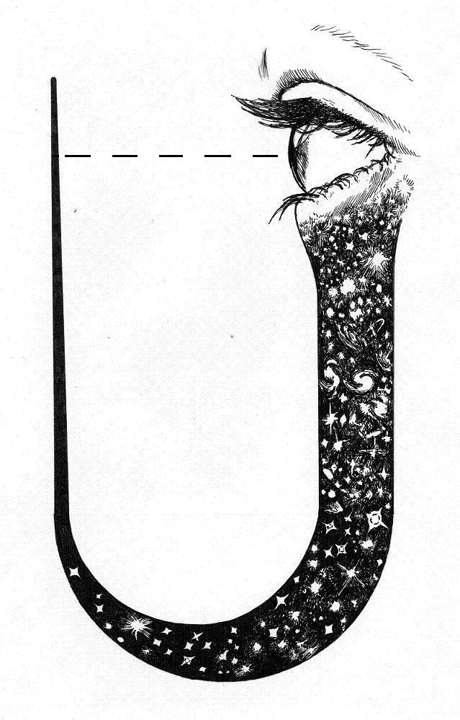
While acknowledging the speculative nature of this theory, Wheeler argued that it provides a framework for understanding the apparent fine-tuning of the universe and the strange role of observation in quantum mechanics. He sees this as a starting point for further exploration, comparing our current understanding of observership to the early stages of electricity research.
Wheeler’s participatory universe theory challenges traditional views of cosmology and the nature of reality, proposing a deeply interconnected relationship between observers and the cosmos they inhabit. It is important not to conflate Wheeler’s viewpoint with the Copenhagen interpretation, especially of the Von Neumann-Wigner variety, because Wheeler did not promote the idea that reality must have its primary existence in the observer nor in the subject of observation, but rather in the connection between the two; and hence, the participatory universe. This distinction is salient because it is important to note that both putative wavefunction reduction and retrocausality influenced by intentionality in delayed choice quantum erasure experiments, which are the rational basis for Wheeler’s conjecture, are both interpreted incorrectly in terms of the significance of the role of the observer (The Notorious Delayed-Choice Quantum Eraser).
Do we Even Know what the Minimal or Optimal Parameters for Life Are?
“The laws of science, as we know them at present, contain many fundamental numbers, like the size of the electric charge of the electron and the ratio of the masses of the proton and the electron. … The remarkable fact is that the values of these numbers seem to have been very finely adjusted to make possible the development of life” – Stephen Hawking [14].
As conventionally formulated, the fine-tuning problem is focused on the quandary: why is the universe seemingly fine-tuned to have conditions that allow for living systems? Note, this is only a quandary in the sense that natural constants seemingly set at specific functional values is a problematic condition for a scientific worldview that assumes randomness. However, the formulation of the problem in this way presupposes that life has a narrow range of conditions under which it can exist. As we have come to find in the myriad of extreme environments in which life persists—and even thrives—here on our very own planet, this presupposition is most likely erroneous in regards to the sensitivity of the conditions it presupposes are suitable for living systems. As described by Haramein, the solution to the specific fine-tuning problem addressing a universe with fundamental physical constants that are seemingly fine-tuned for life is readily resolved: as Haramein states it “the universe is not finely tuned for life; life is finely tuned for the universe” (and is continually fine-tuning via life’s remarkable adaptability).
In a more general sense, understanding the issue in this way gives some elucidation to the question of what is life: it is possible the state of being alive is not merely defined by the composition or even the characteristic timescales of the systems under consideration, see for example Michael Levin’s Patterns are Alive, and we are Living Patterns article. Hence, if there was large variability in the constants, it wouldn’t necessarily be that life could not develop in a universe with fundamental parameters largely divergent from our own. There could still be conscious or aware agents, just the living systems may not be life as we know it—see my article on why agency is the defining criterion of life, and not a system’s composition (e.g., organic molecules) or necessarily characteristic traits like growth or reproduction.
Moreover, the fine-tuning problem is not just restricted to the specific consideration of the suitability of fundamental parameters to be conducive for the formation, emergence, and sustainability of living systems. But, rather, it addresses the more general question of why “these” values for the fundamental constants of nature and not some others? This situation becomes problematic when one presupposes that all fundamental constants are intrinsically unrelated—something the physicists Dirac and Eddington certainly disagreed with as we saw with the Large Number Hypothesis—and that their values are randomly happened upon by ultimately unrelated and meaningless coincidences at the Big Bang. The conventional way out of this more generalized quandary for the fine-tuning problem is to posit endless cosmogenesis so that new universes are being formed all the time, which we saw previously is often discussed as a solution to this more general issue since any erroneous notion of fine-tuning is due to selection bias and the weak anthropic principle.
This may, however, be a non-issue because with the holofractal organization that can be seen across scales and subsystems of the universe, it is most logical that a fractal organization extends beyond scales that we have been able to directly observe, and hence the multiverse is a fractal structure so it is scale-invariant and mostly “self-similar” across the infinite architecture (see infinite zooms of any fractal system). This points to the potential of deeper principles and interrelationships that define the universal physical constants—and hence they are not just randomly happened upon—and that it is a fallacy of logic to presume that these values are set or fine-tuned for the universe to be able to generate life. What if conscious agents are possible within a wide-range of possible physical configurations? (see Michael Levins “core creatures”, which are highly dense agents that only see in the gamma ray spectrum yet come to Earth’s surface and after careful measurements formulate, in the spirit of Ilya Prigogine, the astonishing hypothesis that temporary patterns in a thin gaseous medium, which is how we appear to them, might actually be real and active agents in their own right). First though, lets examine to what extent the universe is “fine-tuned”, if it even is so.
Is Fine-Tuning a Fallacy?
“We don’t know whether some of those constants are linked deep down. If we had a deeper theory, we’d find that they’re not actually independent of each other,” explains Paul Davies, a theoretical physicists at Arizona State University. “But we don’t have that theory at the moment, we’ve just got all these numbers.” –article
So, fine-tuning arguments suggest that intelligent life couldn’t have emerged in a universe with slightly different physical properties. However, recent astronomical calculations indicate that intelligent life might have arisen in a universe with vastly different properties, potentially invalidating these arguments (that life in the universe arose thanks to extremely lucky circumstances may be a misconception). Some researchers propose that:
- Carbon production in stars might be possible in universes with different properties
- Silicon-based life could evolve in a carbon-free universe
- Life could have developed earlier in our universe, regardless of dark energy strength
Moreover, the conception of fine-tuning is often based on assumptions that seem reasonable but that often have not been fully run through analysis. This is what researcher Fred Adams did [15] and found that in many instances the degree of sensitivity of a given parameter is not as extreme as may be incorrectly presumed. For example, star formation is often given as an example of the sensitivity of fine-tuning parameters (because if there are no stars then the universe is very different than what we are familiar with) and it is often thought that small deviations in the strength of gravity or the strong force (as well as potentially other parameters) would make stable star formation impossible. Adams, however, found that the strength of gravity can deviate in some cases by a factor of a billion and his calculations indicate that stars will still form. As such, it is not entirely justified that many of the dimensionless universal physical constants even need an extremely high level of “fine-tuning” in regard to forming a universe that is permitting to the formation of living systems.
Critics also point out that fine-tuning calculations typically only consider varying one physical parameter while keeping others constant. In such cases, tweaking one parameter may irrevocably perturb conditions presumed to be suitable for life. However, it’s suggested that if multiple parameters are adjusted simultaneously, conditions for life might be met again. Sure, if you crank up the strength of the electromagnetic force while keeping all other forces constant than electrostatic repulsion / attraction may destabilize the atom and hadrons would have too much repulsion to form multi-nucleon elements. However, if you increase the “strong force”—which from the study The Origin of Mass and the Nature of Gravity by Haramein et al., we know is ultimately a Planck force unified with gravitation— then the confinement force within the nucleus will increase in a harmonic ratio that compensates electrostatic interaction and there may very well be no issue to forming metals and the elements “necessary” for life (as we know it).
Life Defies Our Expectations
“The question that the fine-tuning problem poses, ‘why is the Universe seemingly fine-tuned for Life?’, is the wrong question and in fact it is an inversion of the answer! Clearly, life is fine-tuning to the Universe, not the other way around. The Universe is not human-centric. You don’t need to postulate an infinite number of universes to get life” -Nassim Haramein
As we have explored, the “fine-tuning problem” suggests that the fundamental constants and laws of our universe are exquisitely calibrated to allow for the existence of life. Change these values even slightly, the argument goes, and life as we know it would be impossible. But what if this entire framing is misguided? Recent research suggests that life may be far more resilient and adaptable than we’ve assumed, thriving under a much wider range of conditions than previously thought. This insight forces us to reconsider the very foundations of the fine-tuning argument.
Considering this, as we noted, Haramein has elucidated how the very way the fine-tuning argument is posed is incorrect, and actually all one need do is invert the question into a statement to arive at the answer: so instead of asking “why is the universe seemingly fine-tuned for life?”, we can state that “life is fine-tuned to the universe”. This highlights the remarkable adaptability of known living systems and the physical states that may be able fit the definition of life—particularly of being sentient systems—potentially span a wide range of consitutions and configurations.
To demonstrate why we should be careful in presuming that life requires a narrow-range of conditions, we can see how the understanding of where life can thrive even on our own planet has continuously expanded and life has been found in some of the most extreme conditions imaginable—resulting in an entire clade of organisms called extremophiles: which literally means organisms that love extreme environments. Note, the discovery of extremophiles made possible inventions like Polymerase Chain Reaction (PCR), which requires a high-temperature DNA Polymerase enzyme that is only produced by thermophiles (heat-loving prokaryotes), and which has enabled virtually all modern gene sequencing technologies.
The discovery of life in extreme environments on Earth and the potential for life elsewhere in our solar system has revolutionized our understanding of the adaptability and resilience of organisms. We will just briefly touch on three fascinating areas where life has been found or may exist: deep-sea hydrothermal vents, nuclear reactor cooling pools, and potentially in the atmosphere of Venus or the subterranean oceans of Europa. While the latter is being actively investigated, and showing promising evidence that may lead to confirmation of extraterrestrial life, the former are known examples of how life can thrive under conditions that were previously considered impossible, and hence it is not clear exactly what “fine-tuning” parameters are necessitated for a habitable universe.
Deep-sea hydrothermal vents: In 1977, scientists made the groundbreaking discovery of thriving ecosystems around hydrothermal vents on the ocean floor. These vents, located along mid-ocean ridges, release geothermally heated water rich in minerals and chemicals. Despite the extreme conditions— high pressure, complete darkness, and temperatures reaching 400°C— a diverse array of organisms have adapted to live in these environments. These constitute ecosystems that are entirely independent from the Sun as a source of energy because they are based on chemosynthesis rather than photosynthesis, with microorganisms converting chemicals from the vent fluid into energy, forming the base of a unique food chain.
The discovery of life in these extreme conditions expanded our understanding of the limits of life and suggested that similar environments on other celestial bodies could potentially harbor life.
Nuclear reactor cooling pools: In a surprising turn of events, researchers have discovered microbial life thriving in the highly radioactive water used to cool nuclear reactor cores. A study published in 2020 in the journal Microorganisms revealed the presence of diverse microorganisms in the cooling pool of the French Osiris nuclear reactor [16]. Using advanced techniques like DNA metabarcoding and proteotyping, researchers identified 25 genera of bacteria in water with radionuclide activity higher than 3 × 10⁹ Bq/m3.
The dominant genera found during reactor operation were Variovorax and Sphingomonas, which were replaced by Methylobacterium, Asanoa, and Streptomyces during shutdown. These microorganisms have likely developed mechanisms to withstand extreme radiation, high temperatures, and the presence of toxic elements. This discovery not only pushes the boundaries of our understanding of life’s resilience but also has potential implications for nuclear waste management and bioremediation.
Potential life on Venus and Europa: Recent findings have reignited interest in the possibility of life beyond Earth, particularly on Venus and Jupiter’s moon Europa.
Venus: In 2020, scientists detected phosphine in Venus’s atmosphere, a gas that on Earth is produced by microbes. While subsequent studies have debated this finding, it has sparked renewed interest in Venus as a potential harbor for microbial life. The planet’s upper atmosphere, between 48 to 60 km above the surface, has temperatures and pressures similar to Earth’s surface. Theoretical studies suggest that microbial life could potentially survive in this zone, possibly within sulfuric acid droplets in the clouds.
Europa: Jupiter’s moon Europa is considered one of the most promising places in our solar system to search for extraterrestrial life. Beneath its icy surface lies a global ocean of liquid water, kept warm by tidal heating. NASA’s Europa Clipper mission, launched in 2024, aims to investigate whether Europa’s ocean could harbor the conditions necessary for life. The mission will study the moon’s composition, geology, and potential for habitability through multiple flybys, providing unprecedented data on this intriguing world.
The discovery of life in extreme environments on Earth and the potential for life on other celestial bodies challenges our preconceptions about the limits of life. From the scorching depths of hydrothermal vents to the radioactive waters of nuclear reactors, life has shown a remarkable ability to adapt and thrive.
Inverting the Fine-tuning Problem to Produce the Answer
Now, we can re-examine the idea that life requires “fine-tuning”. The fine-tuning problem rests on several key assumptions:
- That we can accurately predict what conditions are necessary for life
- That life as we know it is the only possible form of life
- That our current understanding of physics is complete enough to make definitive claims about fine-tuning
Each of these assumptions is increasingly being called into question.
First, our ability to predict what conditions are necessary for life is limited by our imagination and our single sample size of one – Earth life. Time and again, we’ve discovered life thriving in environments we once thought impossible, from deep sea hydrothermal vents to the stratosphere. Each discovery expands our understanding of life’s potential.
Second, focusing solely on carbon-based, water-dependent life like our own ignores the vast possibilities of alternative biochemistries. Silicon-based life, for instance, remains a theoretical possibility that could thrive under very different conditions than Earth life. As well, there are alternative biochemistries that could theoretically support life [17]. Prebiotic chemistry may even be favorable in water-independent conditions, since hydrolysis by water is problematic for amino and nucleic acid polymers. Hence, an environment like Saturn’s moon Titan, with only liquid hydrocarbons and no liquid water, could theoretically support life.
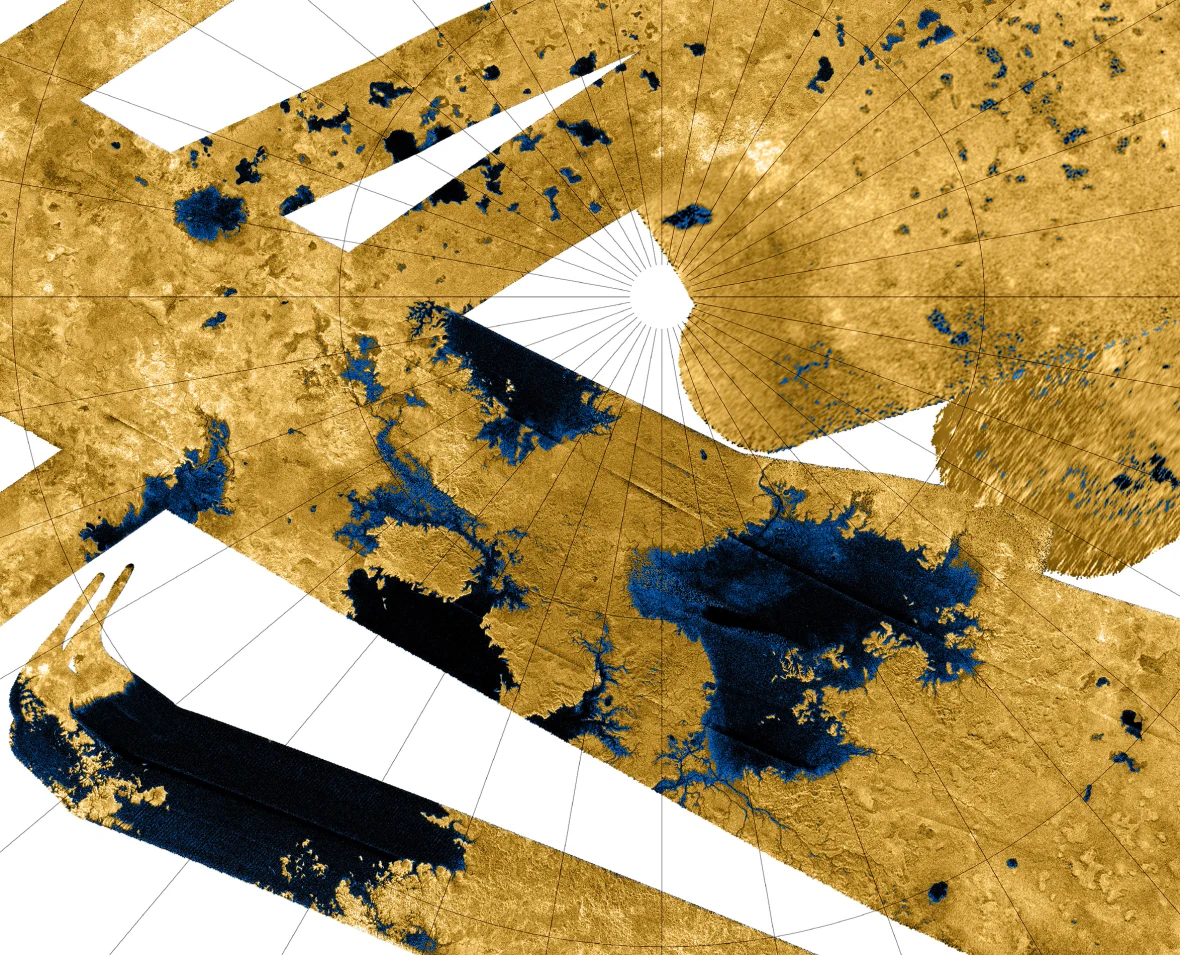
“The existence of lakes of liquid hydrocarbons on Titan opens up the possibility for solvents and energy sources that are alternatives to those in our biosphere and that might support novel life forms altogether different from those on Earth.“—NASA Astrobiology Roadmap 2008 [18].
Also, theoretical investigation of the possibilities for nonplanetary, non-chemical-based life (inorganic living matter) has been expounded in several studies. For example, researcher Vadim Tsytovich and colleagues proposed that lifelike behaviors could be exhibited by dust particles suspended in a plasma, under conditions that might exist in space [19] and researchers Luis Anchordoqu and Eugene Chudnovsky hypothesized that life composed of magnetic semipoles connected by cosmic strings could evolve inside stars [20].
Complex plasmas may naturally self-organize themselves into stable interacting helical structures that exhibit features normally attributed to organic living matter. [ibid, Tsytovich 2007]
Finally, our understanding of fundamental physics remains incomplete. We don’t yet have a unified theory of quantum mechanics and gravity, and dark matter and dark energy remain mysterious. These gaps in our knowledge make it premature to claim we understand the full range of possible universes or the conditions necessary for life within them.
The main point, and the ultimate resolution of the so-called ‘fine-tuning problem’ is, as Nassim explains, that the universe is not fine-tuned for life, life is fine-tuned to the universe (and continually fine-tuning to the universe via the living system’s remarkable ability to adapt to a wide range of environments and conditions). This holds even for the multiverse: although it is most likely that the many parallel universes of the multiverse are mostly similar since it is a holofractal organization (daughter universes emerge from each other), even under significant differences in the nondimensional physical constants life can emerge, just not necessarily in the form that we know conceptualize since we are prone to only regard “life as we know it” in terms of what is possible, which is a problematic limitation.
Moreover, from Haramein’s scaling law we begin to see how fundamental constants emerge naturally from the mathematical relationships between quantum and cosmic scales in a holographic universe. Again, highly suggestive that our universe’s parameters are not arbitrarily tuned but rather reflect an inevitable geometric harmony between different scales of physical reality.
And as we saw, even if one does not immediately accept that there the fundamental constants can be derived from underlying physical mechanisms, as shown by Haramein, recent theoretical work has still suggested that even if there were universes with different fundamental constants they might still be capable of supporting complex structures and potentially life. For instance, even if the strong nuclear force were significantly different, alternative stable atomic nuclei might still form, allowing for complex chemistry.
The anthropic principle also reminds us that we shouldn’t be surprised to find ourselves in a universe capable of supporting life— after all, we could only exist in such a universe to begin with. This observation selection effect means we should be cautious about drawing broad conclusions from our local cosmic environment.
None of this is to say that our universe isn’t remarkable or that the question of why it has the properties it does isn’t worth investigating. But framing this as a “problem” of fine-tuning for life may be misleading. Instead, we should approach these questions with humility, recognizing the limits of our current knowledge and remaining open to the vast possibilities that may exist beyond our earthbound imaginations.
As we continue to explore our cosmos and push the boundaries of our understanding of physics and biology, we may find that life is not a fragile accident balancing on a cosmic knife-edge, but a robust and diverse phenomenon capable of emerging under a wide array of conditions. This perspective not only resolves the supposed fine-tuning problem but also opens up exciting new avenues for scientific exploration and discovery.
References
[1] E. J. Chaisson, “A unifying concept for astrobiology,” International Journal of Astrobiology, vol. 2, no. 2, pp. 91–101, Apr. 2003, doi: 10.1017/S1473550403001484.
[2] P. A. M. Dirac, “The Cosmological Constants,” Nature, vol. 139, no. 3512, pp. 323–323, Feb. 1937, doi: 10.1038/139323a0.
[3] A. Eddington, “Preliminary Note on the Masses of the Electron, the Proton, and the Universe”. Proceedings of the Cambridge Philosophical Society. 27 (1): 15–19, 1931 doi:10.1017/S0305004100009269.
[4] R. H. Dicke, “Dirac’s Cosmology and Mach’s Principle,” Nature, vol. 192, no. 4801, pp. 440–441, Nov. 1961, doi: 10.1038/192440a0.
[5] B. J. Carr and M. J. Rees, “The anthropic principle and the structure of the physical world”, Nature vol. 278, 605–612 (1979). https://doi.org/10.1038/278605a0.
[6] Haramein, N., Rauscher, E.A., and Hyson, M. (2008). Scale unification: a universal scaling law. Proceedings of the Unified Theories Conference. ISBN 9780967868776.
[7] N. Haramein, C. Guermonprez, and O. Alirol, “The Origin of Mass and the Nature of Gravity,” Sep. 2023, doi: 10.5281/zenodo.8381114.
[8] Martin Rees, Just Six Numbers: The Deep Forces That Shape the Universe (1st American ed.) New York: Basic Books. p. 4. (May 3, 2001).
[9] M. Tegmark, “Parallel Universes,” Feb. 07, 2003, arXiv: arXiv:astro-ph/0302131. doi: 10.48550/arXiv.astro-ph/0302131.
[10] D. An, K. A. Meissner, P. Nurowski, and R. Penrose, “Apparent evidence for Hawking points in the CMB Sky,” Aug. 09, 2022, arXiv: arXiv:1808.01740. doi: 10.48550/arXiv.1808.01740.
[11] D. An, K. A. Meissner, P. Nurowski, and R. Penrose, “Apparent evidence for Hawking points in the CMB Sky,” Aug. 09, 2022, arXiv: arXiv:1808.01740. doi: 10.48550/arXiv.1808.01740.
[12] N. Haramein, W. D. Brown, and A. Val Baker, “The Unified Spacememory Network: from Cosmogenesis to Consciousness,” Neuroquantology, vol. 14, no. 4, Jun. 2016, doi: 10.14704/nq.2016.14.4.961.
[13] Wheeler, J.A. (1977) Genesis and Observership. In: Butts, R.E. and Hintikka, J., Eds., Foundational Problems in the Special Sciences. The University of Western Ontario Series in Philosophy of Science, Vol. 10, Springer, Dordrecht, 3-33.
https://doi.org/10.1007/978-94-010-1141-9_1.
[14] Stephen Hawking, 1988. A Brief History of Time, Bantam Books, pp. 7, 125.
[15] F. C. Adams, “The degree of fine-tuning in our universe — and others,” Physics Reports, vol. 807, pp. 1–111, May 2019, doi: 10.1016/j.physrep.2019.02.001.
[16] P. C. M. Petit et al., “Direct Meta-Analyses Reveal Unexpected Microbial Life in the Highly Radioactive Water of an Operating Nuclear Reactor Core,” Microorganisms, vol. 8, no. 12, Art. no. 12, Dec. 2020, doi: 10.3390/microorganisms8121857.
[17] A. F. Davila and C. P. McKay, “Chance and Necessity in Biochemistry: Implications for the Search for Extraterrestrial Biomarkers in Earth-like Environments,” Astrobiology, vol. 14, no. 6, p. 534, Jun. 2014, doi: 10.1089/ast.2014.1150.
[18] David J. Des Marais; et al. (2008). “The NASA Astrobiology Roadmap”. Astrobiology. 8 (4): 715–730. doi:10.1089/ast.2008.0819.
[19] Tsytovich, V. N.; Morfill, G. E.; Fortov, V. E.; Gusein-Zade, N. G.; Klumov, B. A.; Vladimirov, S. V. (2007). “From plasma crystals and helical structures towards inorganic living matter”. New Journal of Physics. 9 (8): 263. doi:10.1088/1367-2630/9/8/263.
[20] A. Anchordoqui, Luis; M. Chudnovsky, Eugene (31 March 2020). “Can Self-Replicating Species Flourish in the Interior of a Star?”. Letters in High Energy Physics. 2020: 166. doi:10.31526/lhep.2020.166.