
By using this site, you agree to the Privacy Policy.
Accept
The International Space Federation (ISF)The International Space Federation (ISF)The International Space Federation (ISF)
  • Science News
    • All Articles
    • Physics
    • Astronomy
    • Biology
    • Technology
    • Other
  • Research
    • Research Papers
    • Physicists Testimonials
  • Technology
  • About
    • About us
  • ISF News
  • Events
    • Events
  • Get Involved
    • Invest
    • Donate – Zero Point Foundation
  • Careers
  • Contact Us
Reading: A Deeper Look into Black Holes
Share
The International Space Federation (ISF)The International Space Federation (ISF)
Search
  • Science News
    • Physics
    • Astronomy
    • Biology
    • Technology
  • Research Papers
    • Physicists Testimonials
  • About
    • ISF News
  • Events
  • Get involved
    • Invest
  • Translations
    online pharmacy https://worldneurologyonline.com/ no prescription pharmacy
Follow US
© 2022 International Space Federation. All Rights Reserved.
The International Space Federation (ISF) / Explore / Astronomy / A Deeper Look into Black Holes
Astronomy

A Deeper Look into Black Holes

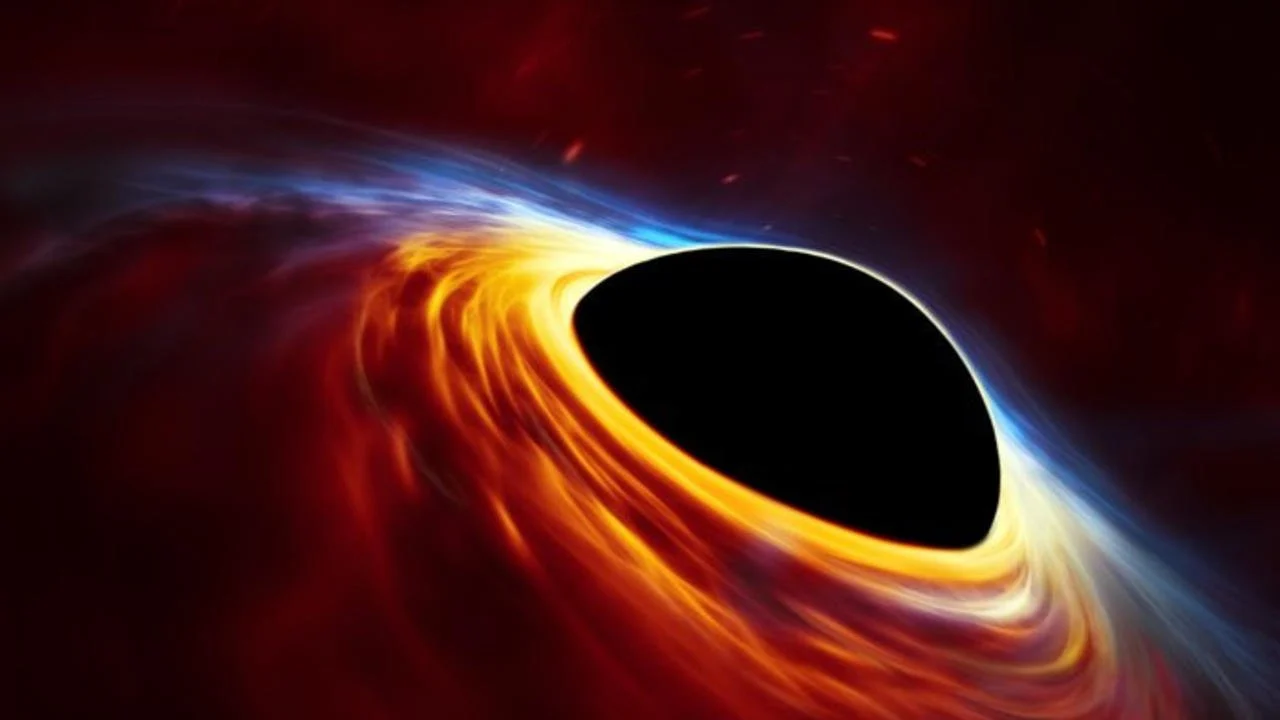
Black holes are typically observed by the light given off by the surrounding material, such as accretion disks or high velocity jets known as quasars. In 2015, this was extended to gravitational waves when the first gravitational wave was detected from the merger of a pair of black holes.

RSF Research
Last updated: 2024/08/27 at 5:26 AM
RSF Research
Share
4 Min Read
SHARE

A deeper look into one of the most intriguing objects has just been revealed.

Black holes are typically observed by the light given off by the surrounding material, such as accretion disks or high velocity jets known as quasars. In 2015, this was extended to gravitational waves when the first gravitational wave was detected from the merger of a pair of black holes.

Then, last year the first direct picture of a black hole was revealed which captured the shadow of the black hole on the accretion disc. Read more here.

X-ray Reverberation Mapping: A New Perspective

Now a recent international study, led by Dr William Alston of the Cambridge University, has taken it one step further, allowing us to peer into a black hole deeper than ever before.

Utilizing a technique known as X-ray reverberation mapping, the team of scientists set about observing the highly variable active galactic nuclei (AGN) IRAS 13224-3809. Located a mere billion light years away, the bright AGN hosts a relatively low-mass supermassive black hole (SMBH) surrounded by a disk of million-degree matter sheathed by an aura of X-ray plasma – known as an X-ray corona.

Due to its smaller mass, the SMBH accretes matter at an incredibly high rate, which is then irradiated by the X-ray corona. These X-rays irradiating the inflowing matter are then reprocessed and directed back towards the observer. The geometry of this inner-accretion flow is encoded in the distortions of the emerging spectral emission lines. As well, due to the separation between the corona and the accretion disk, a time lag will be observed between the intrinsic higher energy emission and the reflected lower energy emission, like an echo.

This echo, along with the spectral emission lines, reveals many important characteristics, including the spin rate and the mass of the black hole. Measuring this echo – or reverberation – is known as reverberation mapping.

Up until recently, this reverberation mapping had been carried out on individual observations, revealing only a static picture and thus an ambiguity in the mass of the black hole. To remove such an ambiguity, Alston and his team took advantage of the strong and short-timescale variability of IRAS 13224-3809, allowing them to create a movie of how the corona evolves.

Not only does this give us a better visual image of what is going on at the extremities of a black hole, it also allows for direct measurement of the black hole’s mass and spin.

Implications for Astrophysics and Unified Theory

“Understanding the spin distribution of black holes in many galaxies tells us about how we go from the early universe to the population we see today.”
~Dr .William Alston

Highlights:

It is now known that most galaxies are host to a supermassive black hole at their centre. The question is what fuels these super massive black holes and how did they grow to be the power houses that they are. Such a fundamental question not only has implications in our understanding of supermassive black holes, but it also has implications in understanding the interconnectedness with their host galaxies and the formation of all systems following a similar dynamic – such as a particle or the universe itself. Constraining the relationship between the galactic characteristics and dynamics and that of its central black hole are crucial to the evolution of this unified theory of physics.


Read more:
https://www.nationalgeographic.com/science/2020/01/astronomers-just-got-deep-peek-at-black-hole-xray-newton/

Explore more about the universe in our free Unified Science Course

Sign Up For Daily Newsletter

Be keep up! Get the latest breaking news delivered straight to your inbox.
loader

loader

loader

By signing up, you acknowledge the data practices in our Privacy Policy. You may unsubscribe at any time.
En vous inscrivant, vous reconnaissez les pratiques en matière de données dans notre politique de confidentialité. Vous pouvez vous désinscrire à n'importe quel moment.
Al registrarse, reconoce las prácticas de datos en nuestra política de privacidad. Puedes darte de baja en cualquier momento.
Share This Article
Facebook Twitter Copy Link Print
Previous Article The Rotating Universe
Next Article Tuning Cells for Health and Wellness

Stay Connected

981k Like
18.7k Follow
7.7k Follow
7.3k Subscribe

Categories

  • Astronomy106
  • Biology69
  • ISF News25
  • ISF Research14
  • Other22
  • Physics168
  • Technology36

You Might also Like

Astronomy

The Rotating Universe: Radio Galaxies and the Cosmic Dipole Anomaly

22. December 2025.
Astronomy

“Black Hole Stars” Detected at Cosmic Dawn

23. October 2025.
Astronomy

New Evidence Points to a Compact Object at the Sun’s Core

5. August 2025.
Astronomy

Image Reveals Coherently Ordered Spiral Vortex Around Milky Way’s Supermassive Black Hole

24. June 2024.
The International Space Federation (ISF)The International Space Federation (ISF)

Harnessing quantum vacuum energy for sustainable solutions – a unified approach to science, technology and education.

Quick links

  • About
  • Research Papers
  • Events
  • Invest

Explore

  • ISF Research
  • Physics
  • Technology
  • Astronomy
  • Biology
  • ISF News

Sign Up for Our Newsletter

Subscribe to our newsletter to get our newest articles instantly!

loader

Follow US
© 2023 International Space Federation. All Rights Reserved. INTERNATIONAL SPACE FEDERATION is a trademark of ISFS SA. The mark is registered in the United States under Registration No. 7772313. The ®️ symbol is used exclusively in the U.S.
  • Press
  • Careers
  • Privacy policy
  • Carrieres
  • Presse
  • Prensa
Join Us!

Subscribe to our newsletter and never miss our latest news.

loader

Welcome Back!

Sign in to your account

Lost your password?