
By using this site, you agree to the Privacy Policy.
Accept
The International Space Federation (ISF)The International Space Federation (ISF)The International Space Federation (ISF)
  • Science News
    • All Articles
    • Physics
    • Astronomy
    • Biology
    • Technology
    • Other
  • Research
    • Research Papers
    • Physicists Testimonials
  • Technology
  • About
    • About us
  • ISF News
  • Events
    • Events
  • Get Involved
    • Invest
    • Donate – Zero Point Foundation
  • Careers
  • Contact Us
Reading: A Virtual Telescope the Size of the Earth!
Share
The International Space Federation (ISF)The International Space Federation (ISF)
Search
  • Science News
    • Physics
    • Astronomy
    • Biology
    • Technology
  • Research Papers
    • Physicists Testimonials
  • About
    • ISF News
  • Events
  • Get involved
    • Invest
  • Translations
    online pharmacy https://worldneurologyonline.com/ no prescription pharmacy
Follow US
© 2022 International Space Federation. All Rights Reserved.
The International Space Federation (ISF) / Explore / Astronomy / A Virtual Telescope the Size of the Earth!
Astronomy

A Virtual Telescope the Size of the Earth!

The Event Horizon Telescope (EHT) initiative is an international collaboration that aims to obtain the first image of the event horizon of a black hole, using a virtual telescope the size of the earth.

Dr. Inés Urdaneta
Last updated: 2025/01/07 at 9:53 PM
Dr. Inés Urdaneta
Share
4 Min Read
SHARE

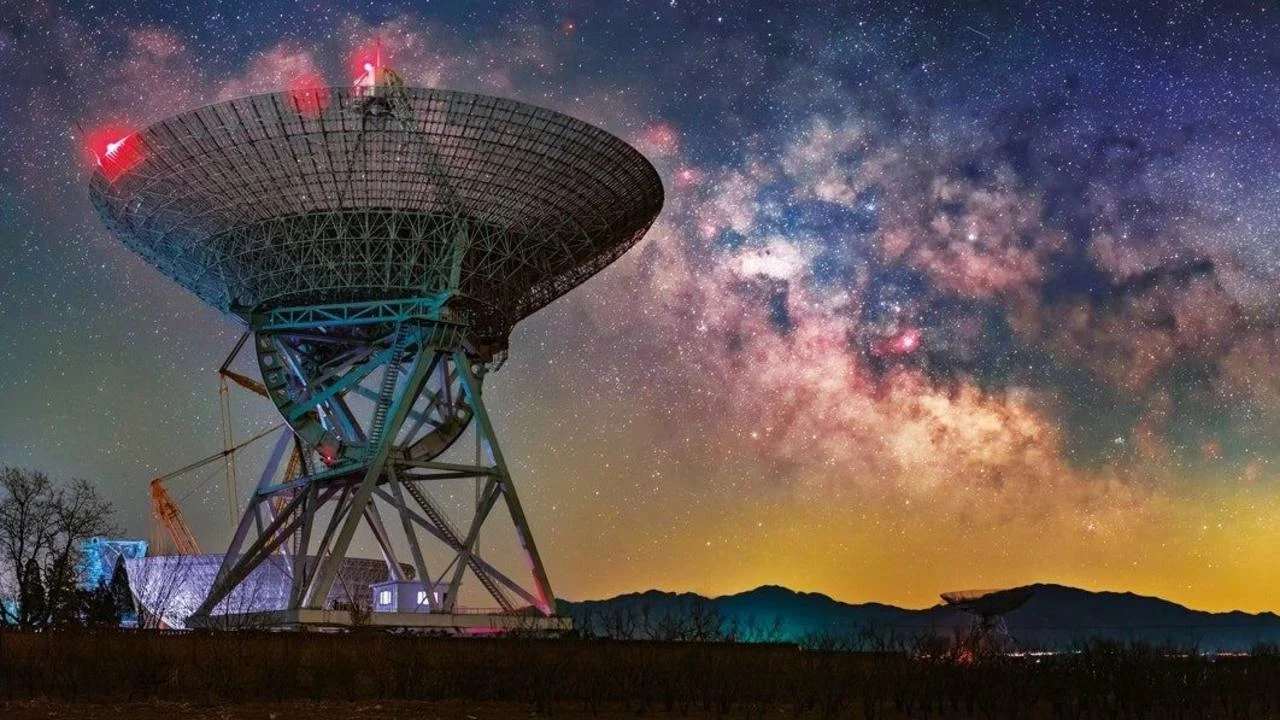
Up to 2016, the biggest telescopes were composed of an array of antennas located in a particular site, like the one at Atacama Desert, in Chile, called ALMA (Atacama Large Millimeter/ Submillimeter Array). Its construction dates from 2004 and consists of sixty-six 8-to-12-meter diameter antennas aiming to receive millimeter wavelengths. Among others things, ALMA is capable of performing deep space detection, what allows to obtain information about the first stars and galaxies that emerged billions of years ago at huge distances from us. Due to the universe expansion, most of these objects’ emissions have stretched out to the millimeter and sub-millimeter wavelengths.

Understanding Interferometry in Astronomy

Using a technique known as interferometry – or interference pattern between the signals received by each antenna, to recompose a complete unique image- the 66 antennas at ALMA work together as though they were a single telescope. These antennas capture electromagnetic and radio waves; the last ones penetrate clouds of dust and other material. Since supermassive black holes (SMBH) are surrounded by gas and dust, the radio waves are better suited, but then a huge limitation arises. Radio waves require a large region of detection, and the SMBH as the one located at the center of our galaxy – the milky way – is too far, and hence, too small to be detected by a single site on earth.

The Event Horizon Telescope: A Global Effort

The Event Horizon Telescope (EHT) initiative has been created for such an endeavor. EHT is an international collaboration that aims to obtain the first image of the event horizon of a black hole, using a virtual telescope the size of the earth.  Different telescopes scattered across the planet collect the data of the same object, which is then combined and processed by a supercomputer to produce a final image through the interferometry technique, just as the one used in ALMA, but this time at a global scale.  By triangulating the data from the nine telescope arrays – (ARO/SMT), (APEX), (IRAM), (JCMT), (LMT), (SMA), (ALMA), (SPT) -, the EHT works like one enormous antenna with a radio dish thousands of kilometers across.

Since April 2017 the EHT team have been collecting data on Sagittarius A* and comparing it to models of what GRT predicts the black hole to look like. Results are expected sometime between 2018 and 2019, which is pretty soon. The EHT will not only capture the image of the SMBH event horizon, but it will also serve to test general relativity theory (GRT). Following GRT, which describes gravitation, the event horizon should be spherical. If a different shape is observed, the theory would have to be revised. Either way, these are excited times to witness!

More at:

  • A telescope the size of the Earth
  • How an Earth-sized telescope will ‘see’ a supermassive black hole

Sign Up For Daily Newsletter

Be keep up! Get the latest breaking news delivered straight to your inbox.
loader

loader

loader

By signing up, you acknowledge the data practices in our Privacy Policy. You may unsubscribe at any time.
En vous inscrivant, vous reconnaissez les pratiques en matière de données dans notre politique de confidentialité. Vous pouvez vous désinscrire à n'importe quel moment.
Al registrarse, reconoce las prácticas de datos en nuestra política de privacidad. Puedes darte de baja en cualquier momento.
Share This Article
Facebook Twitter Copy Link Print
By Dr. Inés Urdaneta
Dr. Inés Urdaneta is a multi-published research physicist in the domain of light-matter interaction at the atomic, molecular, and nano/solid-state scales. In her more than 20 years of research she participated in national and international research projects throughout France, USA, México and Venezuela, on an extensive variety of topics. At present, as part of our research staff at the International Space Federation, Inés focuses on developing physical-chemical models in the frame of the generalized holographic model (GHM) and unification theory developed by Nassim Haramein, together with quantum information processes and their connection to black holes and to proto-consciousness.
Previous Article Electromics – The Double-Aspect of Life
Next Article From the Planck Constant to the Kilogram

Stay Connected

981k Like
18.7k Follow
7.7k Follow
7.3k Subscribe

Categories

  • Astronomy106
  • Biology69
  • ISF News25
  • ISF Research14
  • Other22
  • Physics168
  • Technology36

You Might also Like

Astronomy

The Rotating Universe: Radio Galaxies and the Cosmic Dipole Anomaly

22. December 2025.
Astronomy

“Black Hole Stars” Detected at Cosmic Dawn

23. October 2025.
Astronomy

New Evidence Points to a Compact Object at the Sun’s Core

5. August 2025.
Astronomy

Image Reveals Coherently Ordered Spiral Vortex Around Milky Way’s Supermassive Black Hole

24. June 2024.
The International Space Federation (ISF)The International Space Federation (ISF)

Harnessing quantum vacuum energy for sustainable solutions – a unified approach to science, technology and education.

Quick links

  • About
  • Research Papers
  • Events
  • Invest

Explore

  • ISF Research
  • Physics
  • Technology
  • Astronomy
  • Biology
  • ISF News

Sign Up for Our Newsletter

Subscribe to our newsletter to get our newest articles instantly!

loader

Follow US
© 2023 International Space Federation. All Rights Reserved. INTERNATIONAL SPACE FEDERATION is a trademark of ISFS SA. The mark is registered in the United States under Registration No. 7772313. The ®️ symbol is used exclusively in the U.S.
  • Press
  • Careers
  • Privacy policy
  • Carrieres
  • Presse
  • Prensa
Join Us!

Subscribe to our newsletter and never miss our latest news.

loader

Welcome Back!

Sign in to your account

Lost your password?