
By using this site, you agree to the Privacy Policy.
Accept
The International Space Federation (ISF)The International Space Federation (ISF)The International Space Federation (ISF)
  • Science News
    • All Articles
    • Physics
    • Astronomy
    • Biology
    • Technology
    • Other
  • Research
    • Research Papers
    • Physicists Testimonials
  • Technology
  • About
    • About us
  • ISF News
  • Events
    • Events
  • Get Involved
    • Invest
    • Donate – Zero Point Foundation
  • Careers
  • Contact Us
Reading: Do Galactic Haloes Have A Constant Density?
Share
The International Space Federation (ISF)The International Space Federation (ISF)
Search
  • Science News
    • Physics
    • Astronomy
    • Biology
    • Technology
  • Research Papers
    • Physicists Testimonials
  • About
    • ISF News
  • Events
  • Get involved
    • Invest
  • Translations
    online pharmacy https://worldneurologyonline.com/ no prescription pharmacy
Follow US
© 2022 International Space Federation. All Rights Reserved.
The International Space Federation (ISF) / Explore / Astronomy / Do Galactic Haloes Have A Constant Density?
Astronomy

Do Galactic Haloes Have A Constant Density?

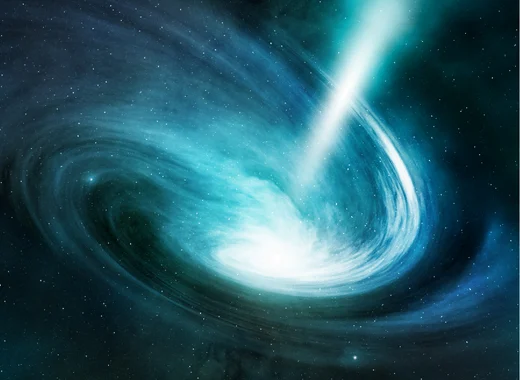
Galactic halos – comprising of the theorized dark matter halo– show an interesting characteristic in the constant nature of their volume density.

RSF Research
Last updated: 2024/08/27 at 8:26 AM
RSF Research
Share
3 Min Read
SHARE

Galactic halos – comprising of the theorized dark matter halo– show an interesting characteristic in the constant nature of their volume density.

The Mystery of Rotation Curves in Spiral Galaxies

Galaxies come in all shapes and sizes with the most common and well-studied being similar to our Milky way galaxy and known as disc or spiral galaxies. A well-known problem in physics is the observed rotation velocities of stars with respect to the distance from their galactic centre. These rotation curves, as they are known, intriguingly do not appear as expected – that is they appear flat instead of falling off and decreasing with distance. Read more here.

In the cold dark matter model of the universe these flat rotation curves are attributed to dark matter, hence the name ‘dark matter’ haloes.

Constant Volume Density in Galactic Haloes

In an effort to better understand this, scientists have been comparing the density profiles of these so-called dark matter haloes – those found from observations with those predicted by cosmological N-body simulations. Now in a recent study, led by American scientist Pengfei Li, the scaling relationship between these dark matter haloes and their galactic disks is explored. Utilizing data from the Spitzer Photometry and Accurate Rotation Curves (SPARC) database, 175 galaxies were analyzed and compared with cosmological N-body simulations. The results showed, that not only was there a strong correlation between the properties of dark matter haloes and their galactic discs, but also that the characteristic volume density of the dark matter halo is constant. So, although the different galaxies show quite different rotation curves, they all have a constant characteristic density.

This implies that the luminosity is independent of the volume density, which is instead found to correlate with the characteristic surface density. This has huge implications as not only does the constant volume density and scaling relations provide new insights into galaxy formation, they could also provide an empirical benchmark to cosmological simulations of galaxy formation.

In the unified physics approach the vacuum density along with the matter density is governed by a scale factor – the surface entropy. The galactic halo would thus be driven by a specific ratio maintaining a constant density, independent of its size. On the other hand, the luminosity – which is the amount of energy emitted per unit time – would depend on the surface entropy and would therefore scale accordingly.


Paper: https://arxiv.org/abs/1811.00553
Learn more in our free Unified Science Course

Sign Up For Daily Newsletter

Be keep up! Get the latest breaking news delivered straight to your inbox.
loader

loader

loader

By signing up, you acknowledge the data practices in our Privacy Policy. You may unsubscribe at any time.
En vous inscrivant, vous reconnaissez les pratiques en matière de données dans notre politique de confidentialité. Vous pouvez vous désinscrire à n'importe quel moment.
Al registrarse, reconoce las prácticas de datos en nuestra política de privacidad. Puedes darte de baja en cualquier momento.
Share This Article
Facebook Twitter Copy Link Print
Previous Article The Schwarzschild Proton
Next Article Quantum Gravity and the Holographic Mass

Stay Connected

981k Like
18.7k Follow
7.7k Follow
7.3k Subscribe

Categories

  • Astronomy106
  • Biology69
  • ISF News25
  • ISF Research14
  • Other22
  • Physics168
  • Technology36

You Might also Like

Astronomy

The Rotating Universe: Radio Galaxies and the Cosmic Dipole Anomaly

22. December 2025.
Astronomy

“Black Hole Stars” Detected at Cosmic Dawn

23. October 2025.
Astronomy

New Evidence Points to a Compact Object at the Sun’s Core

5. August 2025.
Astronomy

Image Reveals Coherently Ordered Spiral Vortex Around Milky Way’s Supermassive Black Hole

24. June 2024.
The International Space Federation (ISF)The International Space Federation (ISF)

Harnessing quantum vacuum energy for sustainable solutions – a unified approach to science, technology and education.

Quick links

  • About
  • Research Papers
  • Events
  • Invest

Explore

  • ISF Research
  • Physics
  • Technology
  • Astronomy
  • Biology
  • ISF News

Sign Up for Our Newsletter

Subscribe to our newsletter to get our newest articles instantly!

loader

Follow US
© 2023 International Space Federation. All Rights Reserved. INTERNATIONAL SPACE FEDERATION is a trademark of ISFS SA. The mark is registered in the United States under Registration No. 7772313. The ®️ symbol is used exclusively in the U.S.
  • Press
  • Careers
  • Privacy policy
  • Carrieres
  • Presse
  • Prensa
Join Us!

Subscribe to our newsletter and never miss our latest news.

loader

Welcome Back!

Sign in to your account

Lost your password?