
By using this site, you agree to the Privacy Policy.
Accept
The International Space Federation (ISF)The International Space Federation (ISF)The International Space Federation (ISF)
  • Science News
    • All Articles
    • Physics
    • Astronomy
    • Biology
    • Technology
    • Other
  • Research
    • Research Papers
    • Physicists Testimonials
  • Technology
  • About
    • About us
  • ISF News
  • Events
    • Events
  • Get Involved
    • Invest
    • Donate – Zero Point Foundation
  • Careers
  • Contact Us
Reading: From Somewhere … To Everywhere!
Share
The International Space Federation (ISF)The International Space Federation (ISF)
Search
  • Science News
    • Physics
    • Astronomy
    • Biology
    • Technology
  • Research Papers
    • Physicists Testimonials
  • About
    • ISF News
  • Events
  • Get involved
    • Invest
  • Translations
    online pharmacy https://worldneurologyonline.com/ no prescription pharmacy
Follow US
© 2022 International Space Federation. All Rights Reserved.
The International Space Federation (ISF) / Explore / Astronomy / From Somewhere … To Everywhere!
Astronomy

From Somewhere … To Everywhere!

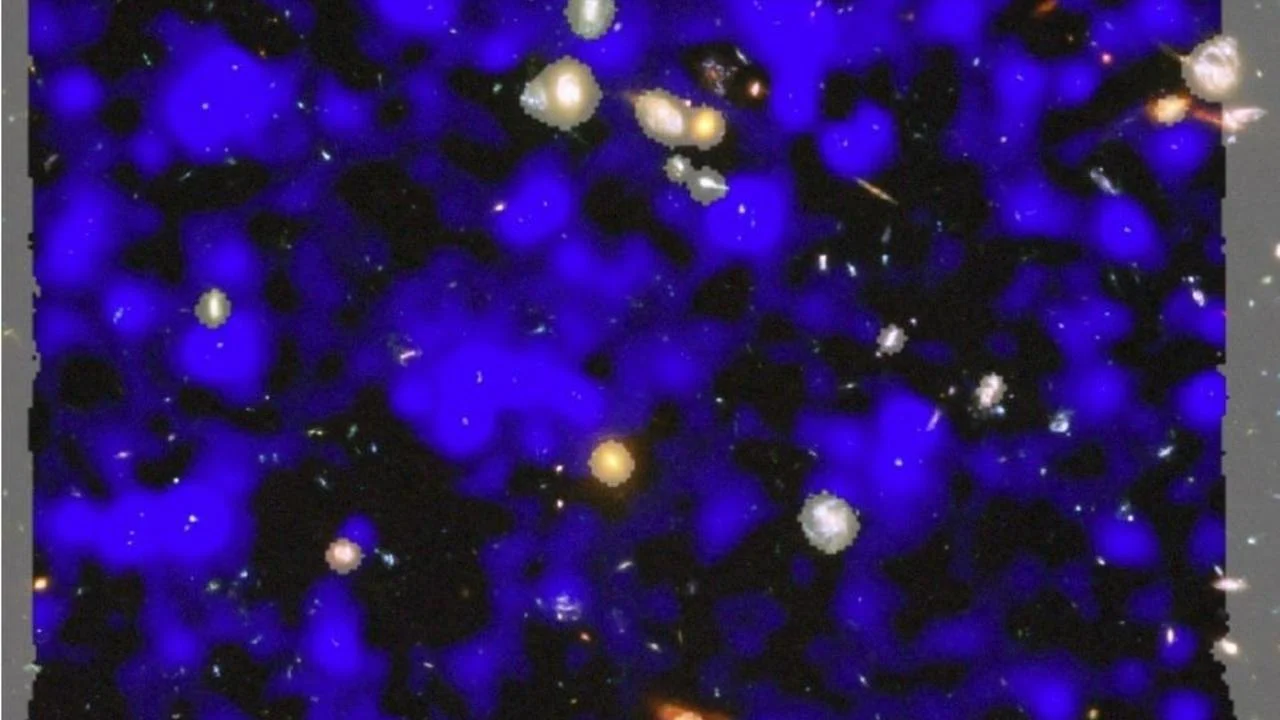
Atomic Hydrogen (H) – the first element in our periodic table – has made an unexpected and unprecedented apparition. A recent study by Lutz Wisotzki of the Leibniz Institute of Astrophysics in Potsdam with collaborators from different institutions reveals the presence of H all over the sky, including the apparently empty space between galaxies.

Dr. Inés Urdaneta
Last updated: 2025/01/07 at 9:33 PM
Dr. Inés Urdaneta
Share
3 Min Read
SHARE

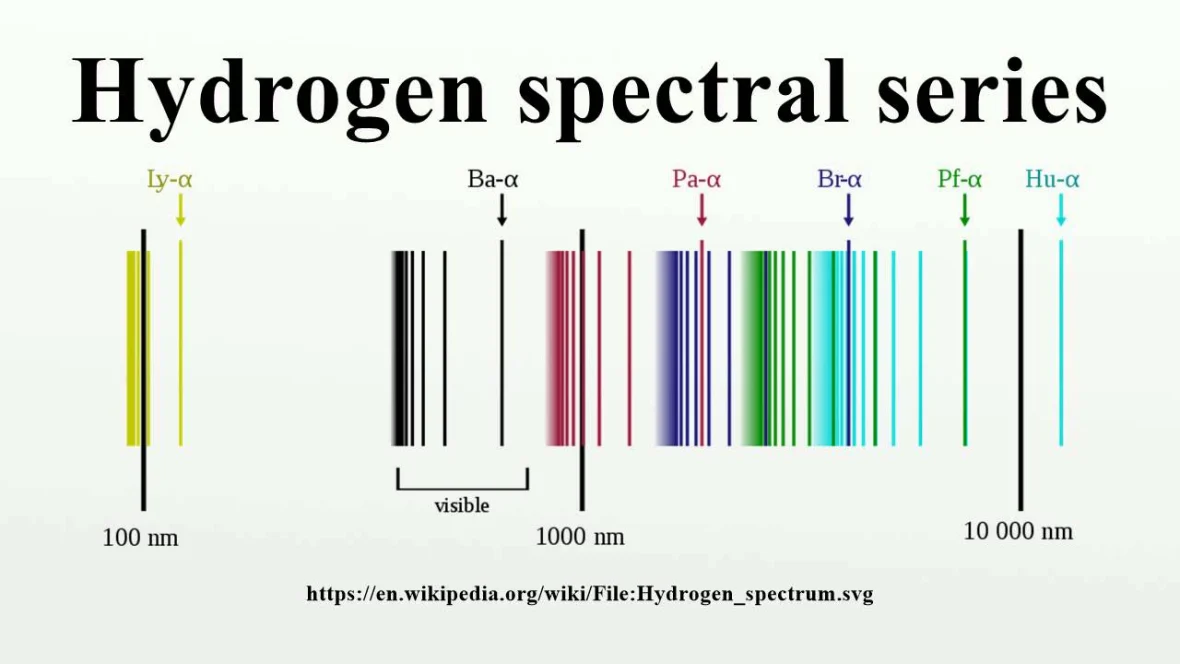
Atomic Hydrogen (H) – the first element in our periodic table – has made an unexpected and unprecedented apparition. A recent study by Lutz Wisotzki of the Leibniz Institute of Astrophysics in Potsdam with collaborators from different institutions reveals the presence of H all over the sky, including the apparently empty space between galaxies. This was concluded after detecting one of the traits that characterize the H element, part of the digital print of the atom, called the “spectrum.” We’re referring to the Lyman-alpha transition of atomic hydrogen at a wavelength of 121.6 nanometers [1].

The Lyman-alpha line is in the ultraviolet section of the electromagnetic spectrum. Because it is absorbed by air, its astronomical presence must be detected by satellite-borne instruments, unless the source is extremely far away, in which case the redshift allows the hydrogen line to penetrate the atmosphere. Such was the case in this study. The instrument behind this observation, MUSE, is located at the Very Large Telescope (VLT) of the European Southern Observatory, Cerro Paranal, Chile. It is designed to detect the distribution of wavelengths from astronomical objects with high sensitivity. Instead of looking at a single intense cosmological object, it offers a wide view of very faint signals from the entire cosmos. It also allows researchers to observe signals from galaxies that are too far away or too faint to be observed with the Hubble telescope.

It is a mind-expanding realization that almost the entire early universe shows a faint glow in the Ly-α line, which indicates previously undiscovered cosmic reservoirs of atomic hydrogen.
This study published in Nature [1] not only reveals the existence of extensive masses of gas all over space, it also confirms the idea that, depending on the glasses we wear, we see very different things. In this case, the fundamental element or building block of the universe – the H atom – is not only in stars or in a gaseous form surrounding early galaxies, it is everywhere!

Read more at: https://phys.org/news/2018-10-faint-cosmic-hydrogen.html#jCp

References

[1] L. Wisotzki et al, Nearly all the sky is covered by Lyman-α emission around high-redshift galaxies, Nature (2018). DOI: 10.1038/s41586-018-0564-6

Sign Up For Daily Newsletter

Be keep up! Get the latest breaking news delivered straight to your inbox.
loader

loader

loader

By signing up, you acknowledge the data practices in our Privacy Policy. You may unsubscribe at any time.
En vous inscrivant, vous reconnaissez les pratiques en matière de données dans notre politique de confidentialité. Vous pouvez vous désinscrire à n'importe quel moment.
Al registrarse, reconoce las prácticas de datos en nuestra política de privacidad. Puedes darte de baja en cualquier momento.
Share This Article
Facebook Twitter Copy Link Print
By Dr. Inés Urdaneta
Dr. Inés Urdaneta is a multi-published research physicist in the domain of light-matter interaction at the atomic, molecular, and nano/solid-state scales. In her more than 20 years of research she participated in national and international research projects throughout France, USA, México and Venezuela, on an extensive variety of topics. At present, as part of our research staff at the International Space Federation, Inés focuses on developing physical-chemical models in the frame of the generalized holographic model (GHM) and unification theory developed by Nassim Haramein, together with quantum information processes and their connection to black holes and to proto-consciousness.
Previous Article Particles Are Flying Out of Earth’s Poles!
Next Article A Physics Nobel Prize for a New Way of Manipulating Light

Stay Connected

981k Like
18.7k Follow
7.7k Follow
7.3k Subscribe

Categories

  • Astronomy106
  • Biology69
  • ISF News25
  • ISF Research14
  • Other22
  • Physics168
  • Technology36

You Might also Like

Astronomy

The Rotating Universe: Radio Galaxies and the Cosmic Dipole Anomaly

22. December 2025.
Astronomy

“Black Hole Stars” Detected at Cosmic Dawn

23. October 2025.
Astronomy

New Evidence Points to a Compact Object at the Sun’s Core

5. August 2025.
Astronomy

Image Reveals Coherently Ordered Spiral Vortex Around Milky Way’s Supermassive Black Hole

24. June 2024.
The International Space Federation (ISF)The International Space Federation (ISF)

Harnessing quantum vacuum energy for sustainable solutions – a unified approach to science, technology and education.

Quick links

  • About
  • Research Papers
  • Events
  • Invest

Explore

  • ISF Research
  • Physics
  • Technology
  • Astronomy
  • Biology
  • ISF News

Sign Up for Our Newsletter

Subscribe to our newsletter to get our newest articles instantly!

loader

Follow US
© 2023 International Space Federation. All Rights Reserved. INTERNATIONAL SPACE FEDERATION is a trademark of ISFS SA. The mark is registered in the United States under Registration No. 7772313. The ®️ symbol is used exclusively in the U.S.
  • Press
  • Careers
  • Privacy policy
  • Carrieres
  • Presse
  • Prensa
Join Us!

Subscribe to our newsletter and never miss our latest news.

loader

Welcome Back!

Sign in to your account

Lost your password?