
By using this site, you agree to the Privacy Policy.
Accept
The International Space Federation (ISF)The International Space Federation (ISF)The International Space Federation (ISF)
  • Science News
    • All Articles
    • Physics
    • Astronomy
    • Biology
    • Technology
    • Other
  • Research
    • Research Papers
    • Physicists Testimonials
  • Technology
  • About
    • About us
  • ISF News
  • Events
    • Events
  • Get Involved
    • Invest
    • Donate – Zero Point Foundation
  • Careers
  • Contact Us
Reading: Galaxies Lacking Dark Matter
Share
The International Space Federation (ISF)The International Space Federation (ISF)
Search
  • Science News
    • Physics
    • Astronomy
    • Biology
    • Technology
  • Research Papers
    • Physicists Testimonials
  • About
    • ISF News
  • Events
  • Get involved
    • Invest
  • Translations
    online pharmacy https://worldneurologyonline.com/ no prescription pharmacy
Follow US
© 2022 International Space Federation. All Rights Reserved.
The International Space Federation (ISF) / Explore / Astronomy / Galaxies Lacking Dark Matter
Astronomy

Galaxies Lacking Dark Matter

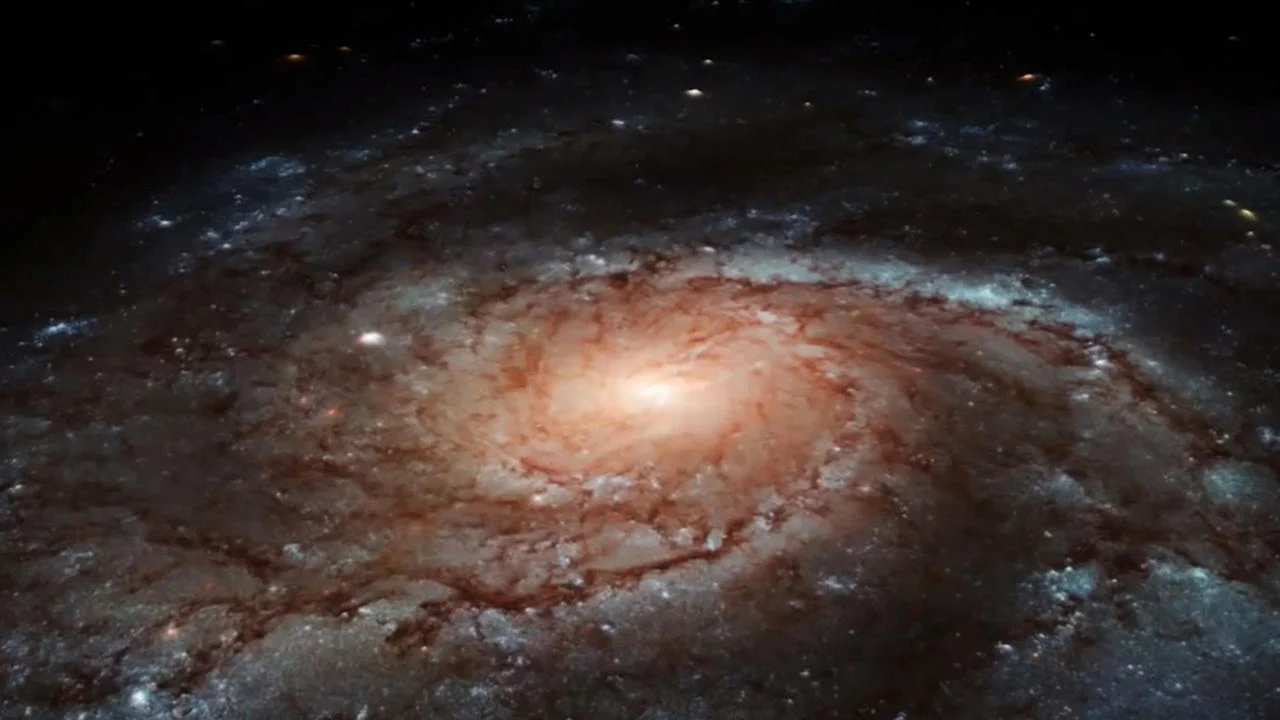
The main ingredient of galaxies does not seem to be so significant – as for the first time it seems the universe made a galaxy without dark matter.

RSF Research
Last updated: 2024/08/27 at 8:51 AM
RSF Research
Share
3 Min Read
SHARE

The main ingredient of galaxies does not seem to be so significant – as for the first time it seems the universe made a galaxy without dark matter.

Dark matter is a hypothetical form of matter theorized to explain the anomalous rotational velocities of galaxies. According to the laws of physics for a galaxy to exist it needs more mass than what is observed – this extra mass is in the form of dark matter. However, although thought to account for 27% of the Universe and be the significant ingredient in galaxies it still remains a mystery with no agreement on what it actually is. Find out more here.

The Mystery of NGC1052-DF2: A Galaxy Without Dark Matter

With more and more debate as to the actual existence of dark matter a new discovery has put a spanner in the works and discovered a galaxy lacking one ‘vital’ ingredient – dark matter!

Confirming the Discovery: Independent Studies on NGC1052-DF2

In 2015 a team of astronomers discovered the ultra-diffuse galaxy NGC1052-DF2. It was deemed a bizarre new type of galaxy that appeared to show no signs of dark matter. Initially skeptical, the team led by Pieter van Dokkum have recently confirmed their observations with two new independent studies.

Utilizing the Keck Cosmic Web Imager (KCWI) at the W. M. Keck Observatory, the team were able to gather precise measurements of the galaxy’s globular clusters. These densely packed spherical collections of ancient stars were found to be moving at a speed consistent with the galactic mass. If dark matter were present, then the globular clusters would be moving much faster.

If that wasn’t enough a second galaxy NGC1052-DF4 was found to exhibit the same results.

These galaxies are as large as the Milky Way but contain 100-1000 fewer stars making them much less dense as their name ‘ultra-diffuse galaxies’, suggests.

The hope is that more of these galaxies will be found and help in solving the mystery of dark matter. As stated in their paper “The origin of these large, faint galaxies with an excess of luminous globular clusters and an apparent lack of dark matter is, at present, not understood.”

These diffuse galaxies although as large as the milky way do not contain as many stars, making them much less dense. This follows the unified physics perspective where scale invariant physics is key.

Article: https://keckobservatory.org/df2-df4/

Learn more in our free Unified Science Course

Sign Up For Daily Newsletter

Be keep up! Get the latest breaking news delivered straight to your inbox.
loader

loader

loader

By signing up, you acknowledge the data practices in our Privacy Policy. You may unsubscribe at any time.
En vous inscrivant, vous reconnaissez les pratiques en matière de données dans notre politique de confidentialité. Vous pouvez vous désinscrire à n'importe quel moment.
Al registrarse, reconoce las prácticas de datos en nuestra política de privacidad. Puedes darte de baja en cualquier momento.
Share This Article
Facebook Twitter Copy Link Print
Previous Article Nature’s Effective Way of Conducting Electrons
Next Article Ancient Romans may have built structures that acted like seismic invisibility cloaks

Stay Connected

981k Like
18.7k Follow
7.7k Follow
7.3k Subscribe

Categories

  • Astronomy106
  • Biology69
  • ISF News25
  • ISF Research14
  • Other22
  • Physics168
  • Technology36

You Might also Like

Astronomy

The Rotating Universe: Radio Galaxies and the Cosmic Dipole Anomaly

22. December 2025.
Astronomy

“Black Hole Stars” Detected at Cosmic Dawn

23. October 2025.
Astronomy

New Evidence Points to a Compact Object at the Sun’s Core

5. August 2025.
Astronomy

Image Reveals Coherently Ordered Spiral Vortex Around Milky Way’s Supermassive Black Hole

24. June 2024.
The International Space Federation (ISF)The International Space Federation (ISF)

Harnessing quantum vacuum energy for sustainable solutions – a unified approach to science, technology and education.

Quick links

  • About
  • Research Papers
  • Events
  • Invest

Explore

  • ISF Research
  • Physics
  • Technology
  • Astronomy
  • Biology
  • ISF News

Sign Up for Our Newsletter

Subscribe to our newsletter to get our newest articles instantly!

loader

Follow US
© 2023 International Space Federation. All Rights Reserved. INTERNATIONAL SPACE FEDERATION is a trademark of ISFS SA. The mark is registered in the United States under Registration No. 7772313. The ®️ symbol is used exclusively in the U.S.
  • Press
  • Careers
  • Privacy policy
  • Carrieres
  • Presse
  • Prensa
Join Us!

Subscribe to our newsletter and never miss our latest news.

loader

Welcome Back!

Sign in to your account

Lost your password?