
By using this site, you agree to the Privacy Policy.
Accept
The International Space Federation (ISF)The International Space Federation (ISF)The International Space Federation (ISF)
  • Science News
    • All Articles
    • Physics
    • Astronomy
    • Biology
    • Technology
    • Other
  • Research
    • Research Papers
    • Physicists Testimonials
  • Technology
  • About
    • About us
  • ISF News
  • Events
    • Events
  • Get Involved
    • Invest
    • Donate – Zero Point Foundation
  • Careers
  • Contact Us
Reading: Brain is Far More Flexible Than Conventionally Thought
Share
The International Space Federation (ISF)The International Space Federation (ISF)
Search
  • Science News
    • Physics
    • Astronomy
    • Biology
    • Technology
  • Research Papers
    • Physicists Testimonials
  • About
    • ISF News
  • Events
  • Get involved
    • Invest
  • Translations
    online pharmacy https://worldneurologyonline.com/ no prescription pharmacy
Follow US
© 2022 International Space Federation. All Rights Reserved.
The International Space Federation (ISF) / Explore / Biology / Brain is Far More Flexible Than Conventionally Thought
Biology

Brain is Far More Flexible Than Conventionally Thought

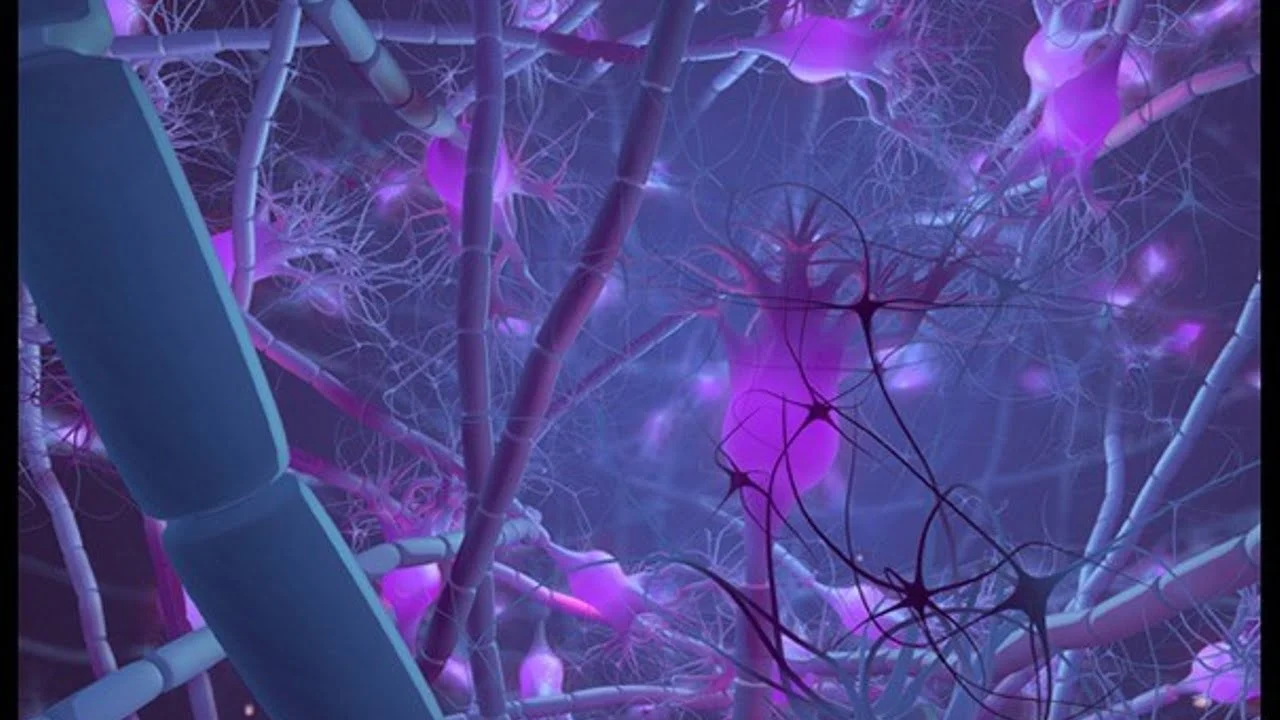
The human brain has a region of cells responsible for linking sensory cues to actions and behaviors and cataloging the link as a memory. Cells that form these links have been deemed highly stable and fixed.

RSF Research
Last updated: 2024/04/10 at 5:46 PM
RSF Research
Share
3 Min Read
SHARE
Study suggests balance between preserving memories and integrating new learning

By Greta Friar, Harvard Medical School Communications

The human brain has a region of cells responsible for linking sensory cues to actions and behaviors and cataloging the link as a memory. Cells that form these links have been deemed highly stable and fixed.

Now, the findings of a Harvard Medical School (HMS) study conducted in mice challenge that model, revealing that the neurons responsible for such tasks may be less stable, yet more flexible than previously believed.

The results, published Aug. 17 in the journal Cell, cast doubt on the traditional notion that memory formation involves hardwiring information into the brain in a fixed and highly stable pattern.

The researchers say their results point to a critical plasticity in neuronal networks that ensures easier integration of new information. Such plasticity allows neuronal networks to more easily incorporate new learning, eliminating the need to form new links to separate neurons every time. Furthermore, the researchers said, once a memory is no longer needed, neurons can be more easily reassigned to other important tasks.

“Our experiments point to far less stability in neurons that link sensory cues to action than we would have expected and suggest the presence of much more flexibility, and indeed a sort of neuronal efficiency,” said study senior author Chris Harvey, an assistant professor of neurobiology at HMS. “We believe this trade-off ensures the delicate balance between the ability to incorporate new information while preserving old memories.”

The Harvard Medical School study involved experiments with mice repeatedly running through a virtual maze over the course of a month. Analyzing images of brain activity in a brain region involved in navigational decision-making, the researchers noted that neurons did not stabilize into a pattern. Instead, the set of neurons forming the mice’s maze-running memories kept changing for the duration of the study. In fact, neurons kept switching roles in the memory pattern or left it altogether, only to be replaced by other neurons.

“Individual neurons tended to have streaks where they’d do the same thing for a few days, then switch,” Harvey said. “Over the course of weeks, we began to see shifts in the overall pattern of neurons.”

The experiments are part of the research team’s ongoing efforts to unravel the mysteries of memory formation and, specifically, how the brain captures external cues and behaviors to perform recurring tasks such as navigating a space using landmarks.


Article: https://news.harvard.edu/gazette/story/2017/08/brain-flexibility-changes-the-way-we-remember-and-learn/

Learn more in our free Unified Science Course

Sign Up For Daily Newsletter

Be keep up! Get the latest breaking news delivered straight to your inbox.
loader

loader

loader

By signing up, you acknowledge the data practices in our Privacy Policy. You may unsubscribe at any time.
En vous inscrivant, vous reconnaissez les pratiques en matière de données dans notre politique de confidentialité. Vous pouvez vous désinscrire à n'importe quel moment.
Al registrarse, reconoce las prácticas de datos en nuestra política de privacidad. Puedes darte de baja en cualquier momento.
Share This Article
Facebook Twitter Copy Link Print
Previous Article The Origin of Metabolism
Next Article New Methods For Investigating Nonlocality in Many-Body Systems

Stay Connected

981k Like
18.7k Follow
7.7k Follow
7.3k Subscribe

Categories

  • Astronomy106
  • Biology69
  • ISF News25
  • ISF Research14
  • Other22
  • Physics168
  • Technology36

You Might also Like

Biology

Quantum Spin Controls Microtubule Assembly, Study Finds

20. May 2026.
Biology

Cognition Without Brains: How Memory Emerges in Polymers, Cells, and Spacetime.

23. March 2026.
Biology

Where Biology Meets Resonance: Light, Vibration, and Living Order

19. February 2026.
BiologyPhysics

Do Cells Use a Quantum Compass to Heal Wounds?

2. December 2025.
The International Space Federation (ISF)The International Space Federation (ISF)

Harnessing quantum vacuum energy for sustainable solutions – a unified approach to science, technology and education.

Quick links

  • About
  • Research Papers
  • Events
  • Invest

Explore

  • ISF Research
  • Physics
  • Technology
  • Astronomy
  • Biology
  • ISF News

Sign Up for Our Newsletter

Subscribe to our newsletter to get our newest articles instantly!

loader

Follow US
© 2023 International Space Federation. All Rights Reserved. INTERNATIONAL SPACE FEDERATION is a trademark of ISFS SA. The mark is registered in the United States under Registration No. 7772313. The ®️ symbol is used exclusively in the U.S.
  • Press
  • Careers
  • Privacy policy
  • Carrieres
  • Presse
  • Prensa
Join Us!

Subscribe to our newsletter and never miss our latest news.

loader

Welcome Back!

Sign in to your account

Lost your password?