


As many theoretical and computational chemists and physicists know, quantum chemical calculations involving more than an electron and nuclei are very difficult to solve. They belong to a field called many body problems and require an extensive amount of computational infrastructure and hours of calculations depending on the size (the number of particles) of the system.
Here is where artificial intelligence – a combination of artificial neural networks and machine learning – comes into play. Neural networks have been around for more than 50 years, and they are more actualized than ever before. This is because they can learn through something called backward propagation, reaching a high level of predictability and increasing accuracy by training the network.
Limitations of Traditional Quantum Theoretical Models
Quantum theoretical models, together with their computational packages, have been outstandingly successful in describing the quantum regime. While these models and packages supply fast and accurate predictions of atomic chemical properties, they do not capture all the electronic degrees of freedom of a molecule, limiting their applicability in chemical reactions and chemical analysis. Molecules and nanoparticles also require much more time to reach convergence, as compared to atoms. Calculations may even take weeks or months!
Application of AI in Predicting Molecular Properties
Initially used to predict pattern recognition such as market behavior and facial recognition, AI is now used to predict physical-chemical molecular properties in order to design drugs or new materials, among others. In order to perform accurately, AI must incorporate the fundamental laws of quantum physics. Deep machine learning has met this challenge with the proper algorithm capable of predicting the quantum states of molecules – also known as wave functions – where all properties emerge. Such an algorithm allowing AI to solve the fundamental equations of quantum mechanics has been published in Nature Communications under the title, “Unifying machine learning and quantum chemistry with a deep neural network for molecular wavefunctions.” The work was done by researchers at the University of Warwick, the Technological University of Berlin and the University of Luxembourg. Their newly developed AI algorithm can supply accurate predictions within seconds on a laptop or mobile phone.
Their code, named SchNOrb, is available upon request.
Highlights:
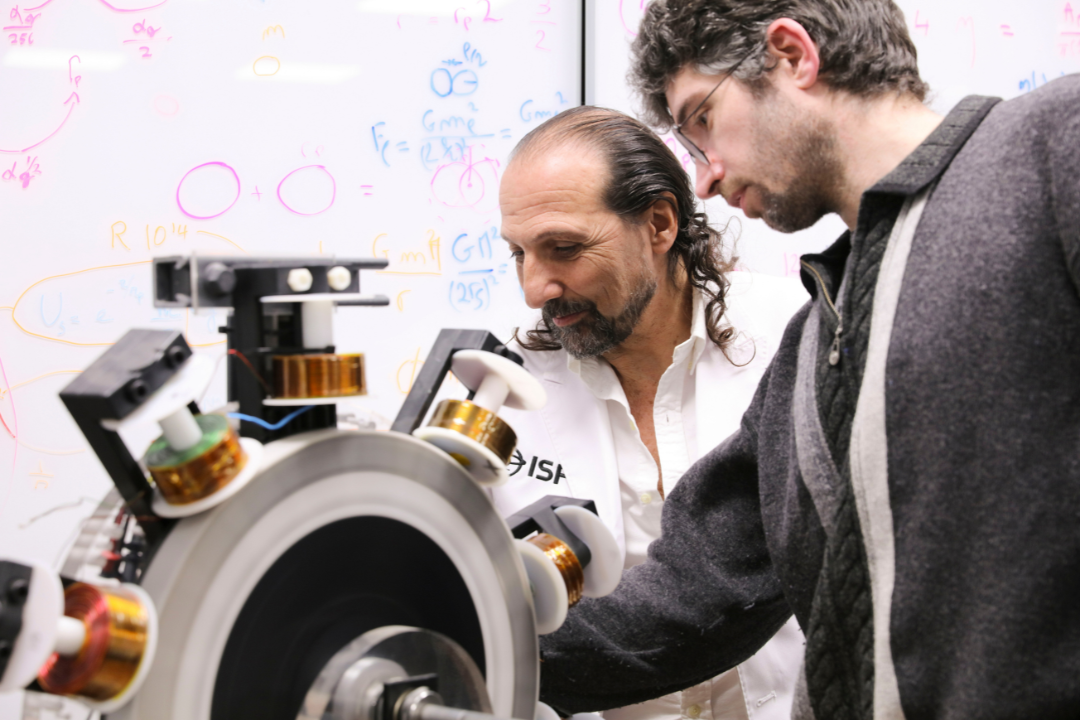
An example of this emerging capability of deep machine learning is the convergence of AI-mediated pattern recognition with advanced fluid dynamic simulations, which presents unprecedented opportunities for researchers like Nassim Haramein and his team. These computational approaches may unlock deeper insights into the fundamental nature of matter, particularly the intricate dynamics within protons that have remained elusive to conventional quantum mechanical models.
Haramein’s holistic approach to physics, which considers geometric patterns across scales of the universe, could benefit tremendously from AI’s ability to identify subtle patterns in quantum data. By leveraging neural networks trained on quantum measurements and applying them to fluid dynamic simulations that model subatomic behavior, researchers may bridge the gap between quantum field theories and unified physics frameworks.
The “many body problems” discussed earlier become particularly relevant when considering Haramein’s perspective on universal entanglement networks. AI algorithms capable of mapping quantum entanglement patterns might reveal how protons—traditionally viewed as discrete particles—function as nodes within vast interconnected networks that transcend conventional spacetime limitations. Such insights could potentially validate aspects of Haramein’s theories regarding the proton as a fundamental singularity with significant implications for our understanding of gravity, consciousness, and the fabric of reality itself.
As these AI-powered tools continue to evolve, they may help resolve longstanding questions about quantum gravity and the true nature of space—questions that lie at the heart of Haramein’s research program. The computational efficiency of algorithms like SchNOrb, when applied to these fundamental physics problems, could accelerate discoveries that might otherwise take decades through traditional means.
This frontier of AI-augmented quantum research not only promises technological advancements but may ultimately transform our most basic understanding of the physical universe—revealing it to be more interconnected, more fluid, and perhaps more conscious than our current paradigms suggest.