

Quantum entanglement is one of the most thought-provoking and counterintuitive ideas of modern physics. Two particles that are spatially well-separated in the spacetime network display a correlation among their properties and an act of measurement on one of the pairs can affect the other particle instantaneously despite the lack of a communication channel, which is remarkable and bizarre at the same time. Albert Einstein being a skeptic of the idea, referred to entanglement as “Spooky Action at a Distance” even though it was his work that led up to its realization [1].
Although there is a sense of mystery associated with the phenomenon, it has led to the development of numerous technologies that govern our modern world. For instance, it has led to the creation of quantum bits, or qubits, that are essential for quantum computing. Furthermore, there has been a lot of advancement in large-scale quantum communication through satellites and entanglement plays a significant role in the same. For example, experimental physicist Jian-Wei Pan applied quantum entanglement and displayed its distribution to two locations separated by about 1203 Km on the Earth [2]. This was achieved through a quantum satellite that had two ground stations in China, establishing a distance record for non-local correlations.
In recent work, physicists for the first time have discovered a new way to expedite the process of entanglement creation, especially for non-Hermitian quantum systems [3]. There is a distinctively new branch of quantum mechanics dedicated to the study of non-Hermitian systems and it is thus referred to as non-Hermitian quantum mechanics.
Consider a special class of non-Hermitian systems, systems that have non-Hermitian Hamiltonians, called parity-time (PT) symmetric systems. Such systems possess a nontrivial degeneracy known as an exceptional point (EP) wherein eigenenergies and eigenstates of the system are found to converge. Researchers discovered that if an EP is in proximity, it can lead to the generation of entanglement much more rapidly.

Figure shows an entanglement generation process. Strontium (purple dots) and Calcium ions (green dots) are trapped in two separate segmented Paul traps. Photons emitted by the Strontium ions are collected using high numerical aperture objectives and used to generate remote entanglement between the ions. Calcium ions are used as memory and processing qubits. Image source and description: Oxford University
Exceptional points have essentially been observed in numerous quantum systems such as ultracold atoms, trapped ions, superconducting circuits, etc [4, 5, 6]. They also offer interesting prospects for quantum technological applications such as in sensing and state control [7, 8].
Usually, entanglement between two coupled qubits occurs at a time scale of the inverse of the coupling strength between the qubits. Remarkably, in this work, the physicists involved have discovered that the entanglement between two weakly coupled non-Hermitian qubits can be established at a time scale that is essentially much smaller than the inverse of the coupling strength.
Furthermore, as you get closer to the exceptional point, it becomes possible to create a maximally entangled state with a weaker connection or coupling between the quantum components. This means that one doesn’t need as strong of an interaction between the quantum elements to achieve a highly entangled state. However, there’s a trade-off. While a weaker coupling is required for entanglement, it takes a longer period of time for this entangled state to fully develop or “build up.” So, approaching the exceptional point makes entanglement more attainable with less interaction strength, but it comes at the expense of a longer time for the entanglement to reach its maximum potential.
This recent breakthrough is a huge advancement for the realms of quantum information science and quantum technology. Not only does it open the possibility of applications in various other scientific domains, but it also holds the promise of pioneering the development of innovative quantum devices thus propelling this field to unprecedented heights.
Unified Science in Perspective:
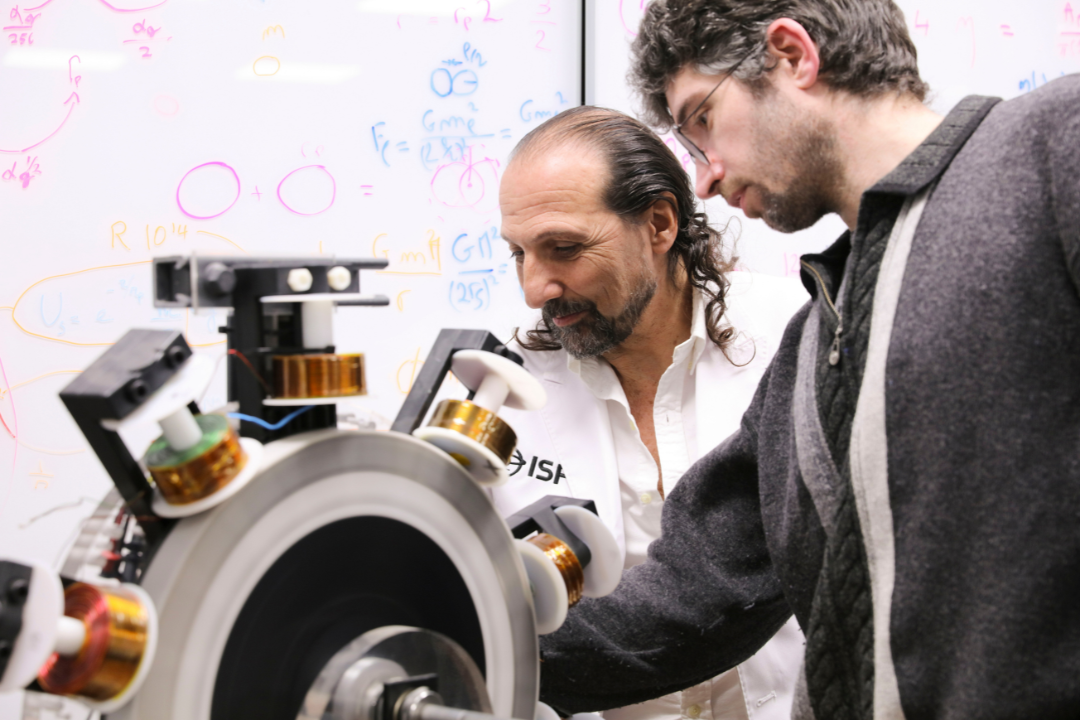
Entanglement is a captivating subject for physicists, and it is an honour that our research team at ISF has made substantial contributions to this field. The Unified Spacememory Network, propounded in 2016, provides a comprehensive framework describing, among other things, the intricate nature of our universe as a vast network of interconnected subsystems [9]. Within this network, time emerges through the entanglement of intricately connected spacetime geometries. Moreover, the USN model elucidates that the evolution of our universe is not a product of randomness but is intricately governed by trans-temporal entanglement. This work unveils a completely novel perspective on entanglement and its practical applications.
More recently, physicist Nassim Haramein in collaboration with physicists Dr. Olivier Alirol and Dr. Cyprien Guermonprez has released a paper entitled, “The Origin of Mass and the Nature of Gravity” which is available on the CERN preprint server [10]. In the discussion section of this paper, the authors reflect on a novel model of entanglement, inspired by the ER = EPR conjecture, shedding light on the connection between the quantum scale and the cosmological scale.
When we harness the most recent empirical advancements for generating entanglement between quantum systems and merge these capabilities with the foundational theories established by researchers worldwide, including our own team, we glimpse a promising future for those enthusiastic about pushing the boundaries of quantum mechanics and using it to boost quantum technology.
References
[1] A. Einstein, B. Podolsky and N. Rosen, “Can Quantum-Mechanical Description of Physical Reality be Considered Complete?” Phys. Rev. 47, 777-80 (1935).
[2] Jian-Wei Pan et al, Satellite-Based Entanglement Distribution Over 1200 kilometers, Science (2017). DOI: 10.1126/science.aan3211
[3] Zeng-Zhao Li et al, Speeding Up Entanglement Generation by Proximity to Higher-Order Exceptional Points, Physical Review Letters (2023). DOI: 10.1103/PhysRevLett.131.100202
[4] J. Li, A. K. Harter, J. Liu, L. de Melo, Y. N. Joglekar, and L. Luo, Observation of parity-time symmetry break- 6 ing transitions in a dissipative Floquet system of ultracold atoms, Nat. Commun. 10, 855 (2019).
[5] L. Ding, K. Shi, Q. Zhang, D. Shen, X. Zhang, and W. Zhang, Experimental determination of PT-symmetric exceptional points in a single trapped ion, Phys. Rev. Lett. 126, 083604 (2021).
[6] M. Naghiloo, M. Abbasi, Y. N. Joglekar, and K. W. Murch, Quantum state tomography across the exceptional point in a single dissipative qubit, Nat. Phys. 15, 1232 (2019).
[7] S. Yu et al., Experimental investigation of quantum PT-enhanced sensor, Phys. Rev. Lett. 125, 240506 (2020).
[8] M. Abbasi, W. Chen, M. Naghiloo, Y. N. Joglekar, and K. W. Murch, Topological quantum state control through exceptional-point proximity, Phys. Rev. Lett. 128, 160401 (2022).
[9] N. Haramein, W. D. Brown, and A. Val Baker, “The Unified Spacememory Network: from Cosmogenesis to Consciousness,” Neuroquantology, vol. 14, no. 4, Jun. 2016, doi: 10.14704/nq.2016.14.4.961
[10] Nassim Haramein, Cyprien Guermonprez, & Olivier Alirol. “The Origin of Mass and the Nature of Gravity”, (2023). DOI: 10.5281/zenodo.8381114