

An Ongoing Meta-analysis of Gravitational Wave Signals may soon Prove that Space Remembers: permanent memory imprints in spacetime may soon be detected, which will be a validation of Nassim Haramein and our research team’s prediction that space has the property of memory, in which we described how the informational imprint of memory in space is what holographically generates time—that is to say that 4D spacetime is a hologram of a 3D voxel information network—as well as ordering properties underlying dynamics of organized matter. The gravitational wave memory effect is a prediction of general relativity, and physicists have devised a test of this interesting spacememory effect via a meta-analysis of gravitational wave detector data. The presence of memory effects in gravitational wave signals not only provides the chance to test an important aspect of general relativity, but also represents a potentially non-negligible contribution to the waveform for certain gravitational wave events. As well, memory properties of space will have far-reaching implications, from probing theories of quantum gravity and unified physics to potential applications in telecommunications technologies.
Gravitational waves, oscillations or more colloquially “ripples” in the substantive medium of space-time, were predicted in the 19th century when scientists began analyzing gravitational phenomenon as analogous to electromagnetics [Heaviside O. A gravitational and electromagnetic analogy, Electromagnetic Theory, 1893, vol.1 455–466 Appendix B], in which case objects with mass undergoing asymmetric accelerations will radiate gravitational waves analogous to how an accelerating charged ion will radiate electromagnetic waves.
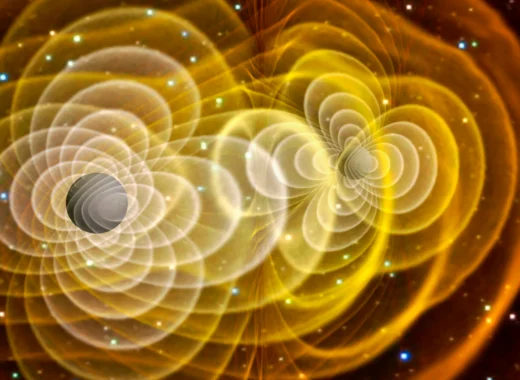
Such gravitational radiation inducing oscillations in spacetime geometry are now known to be ubiquitous, for example with the gravitational wave background (GWB) [Researchers Capture Gravitational-Wave Background with Pulsar “Antennae”], similar to the cosmic microwave background (CMB). The gravitational waves that have been detected to-date are generated by some of the most violent and energetic processes in the cosmos, such as the merging of black holes and neutron stars. The ability to detect and analyze gravitational waves opens an entire new observational field potentially enabling scientists to probe into some of the most enigmatic regions of our universe, like the surface of Neutron stars and the event horizons of black holes. Gravitational waves could even offer insight into fundamental questions in physics; one possible probe of gravitational waves is to see if space itself has memory, referred to as the gravitational memory effect. As a lesser-known phenomenon related to gravitational waves, the gravitational memory effect has recently gained attention within the scientific community, and proposals have been formulated to analyze gravitational waves to detect potential spacememory effects. This article delves into the intriguing concept of gravitational memory and its implications for our understanding of the fundamental forces of the universe.
Understanding Gravitational Waves
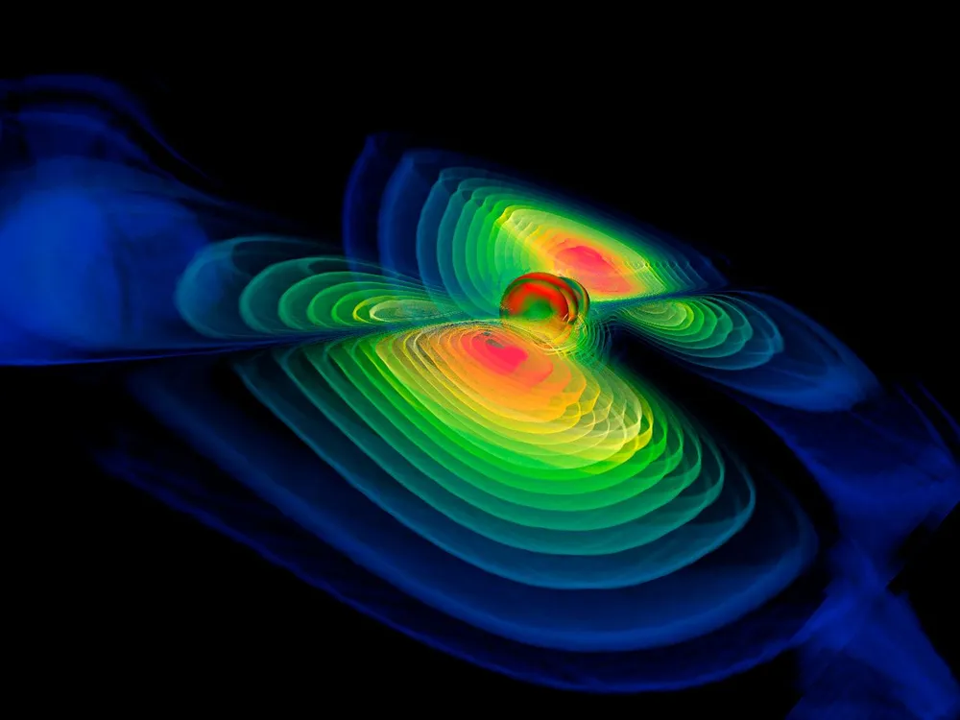
Gravitational waves are disturbances in the curvature of space-time, propagating as waves at the speed of light. They are generated when massive celestial objects accelerate asymmetrically, leading to oscillations in the gravitational field that radiate outwards. These ripples carry information about their origins and travel across the universe, allowing astronomers to probe the cosmos in a unique way.
The Gravitational Memory Effect
The gravitational memory effect is a manifestation of the persistent change in relative distances between test particles due to the passage of gravitational waves. Unlike the oscillatory nature of gravitational waves, the memory effect produces a permanent change in the separation of objects in its path. This phenomenon is a consequence of the non-linear nature of gravity in Einstein’s theory of general relativity.
Types of Gravitational Memory
The gravitational memory effect can be classified into two types: positive and negative. A positive memory results in an increase in the separation of test particles, while a negative memory leads to a decrease. These changes occur along the direction of propagation of the gravitational wave.
History of Empirical Analysis of Gravitational Waves and Prediction of Memory Effect
Joseph Weber, an American physicist, claimed to have discovered gravitational radiation in the 1960s [1]. He developed highly sensitive detectors known as Weber bars, which were designed to detect tiny vibrations caused by passing gravitational waves. His claim was based on the observations made using these detectors.
Weber’s work garnered significant attention and excitement within the scientific community and the media. The potential discovery of gravitational radiation was groundbreaking, as it would have provided experimental confirmation of a fundamental prediction of Albert Einstein’s theory of general relativity.
Weber’s experiments involved aluminum cylinders, or “Weber bars,” which were designed to resonate at specific frequencies when exposed to gravitational waves. Weber claimed to have detected gravitational waves emanating from various cosmic events, including supernova remnants and binary star systems.
However, over time, skepticism regarding the validity of Weber’s results began to grow. Other researchers attempted to replicate his findings but faced challenges in reproducing the results with the same level of consistency and statistical significance. Physicists such as Yakov Zeldovich, a prominent Soviet theoretical physicist and cosmologist—who was instrumental in the formulation of how wave resonance can convert electromagnetic waves to gravitational waves—ran calculations that explicitly demonstrated how Weber’s bars would need to be 100 million times more sensitive than reported in order to detect even the largest theoretically possible gravitational wave sources, like from a super-dense highly-interacting cluster of stars.
However, the analysis utilized in proving Weber wrong led to a remarkable prediction. In the 1970’s in collaboration with his colleague Alexander Polnarev, Zeldovich predicted that passing gravitational waves should result in a permanent change in the relative separation of test particles, like a record or memory of the passing gravitational radiation [Ya. B. Zel’dovich and A. G. Polnarev, “Radiation of gravitational waves by a cluster of superdense stars,” Astron. Zh. 51, 30 (1974) [Sov. Astron. 18 17(1974)]. Their work laid the foundation for the theoretical understanding of the gravitational memory effect, emphasizing its potential significance in the study of gravitational waves and the implications for fundamental physics. Zeldovich and Polnarev’s theoretical analysis provided a framework for subsequent researchers to explore this intriguing phenomenon in more detail.
Zeldovich’s insights into the behavior of gravitational waves and their impact on spacetime were instrumental in advancing our understanding of how these waves can induce lasting alterations in the geometry of space. This pioneering work contributed to the development of experimental efforts to detect and study the gravitational memory effect.
While Zeldovich’s role was primarily theoretical, his contributions have been fundamental in shaping our understanding of gravitational waves and their associated effects, including the gravitational memory. Subsequent experimental validations of the gravitational memory effect have further confirmed the accuracy of the predictions made by Zeldovich and Polnarev, solidifying their place in the history of gravitational wave research.
For Weber, several factors contributed to the doubts surrounding his claims:
- Replication Issues: Other research groups had difficulty replicating Weber’s results, leading to concerns about the reliability and reproducibility of his experimental findings.
- Statistical Significance: The statistical significance of Weber’s results was a subject of debate. The detected signals were often near the threshold of detectability, raising questions about the reliability of the data.
- Noise and Interference: The sensitivity of Weber’s instruments made them susceptible to various sources of noise and interference, including seismic activity and thermal fluctuations. Distinguishing true gravitational wave signals from noise proved to be a significant challenge.
- Lack of Correlation: Weber’s observations did not consistently correlate with expected astrophysical events that should have produced gravitational waves, casting doubt on the legitimacy of his detections.
As the years progressed, subsequent advancements in gravitational wave detection technologies, such as the Laser Interferometer Gravitational-Wave Observatory (LIGO), provided more accurate and reliable evidence for the existence of gravitational waves. LIGO’s success in directly detecting gravitational waves in 2015 through the observation of merging black holes effectively discredited Weber’s claims.
In retrospect, while Joseph Weber’s work was influential in laying the groundwork for gravitational wave detection, subsequent advancements in technology and the success of more precise experiments have reshaped our understanding of gravitational waves and reinforced the accuracy of Einstein’s general theory of relativity.
Black hole Memory Effect
The investigation of Weber’s claim of gravitational wave detection and subsequent elucidation and prediction of gravitational wave memory effects by Yakov Zeldovich and Alexander Polnarev led them to another related prediction of a similar effect occurring in the spacetime geometry of black hole’s event horizons—a “black hole memory effect”. This effect is a consequence of the non-linear nature of general relativity and arises when gravitational waves pass through a region of space near a black hole causes a distortion in the geometry of spacetime. This distortion leads to a change in the orbits and dynamics of particles in the vicinity of the black hole. Even after the gravitational waves have passed, this change persists, creating a lasting memory in the structure of spacetime.
In more technical terms, the black hole memory effect is related to the so-called “asymptotic symmetries” of gravity. These are transformations that affect the geometry of spacetime at infinity and can leave a permanent mark on the space surrounding a black hole. It is an important area of study in gravitational wave physics, helping researchers understand the lasting impact of gravitational waves on the fabric of the universe and its implications for astrophysics and fundamental physics.
Detecting the Non-linear Gravitational Memory Effect
By combining data from the gravitational wave detectors—large highly sensitive laser interferometers—LIGO, the Virgo detector in Italy, and the Kamioka detector in Japan it may be possible to tease out a tell-tale signal of gravitational wave memory effects from the meta-analysis of data [2]. Such analysis is underway, with new observations rolling in every week, pushing the current total to over 100 and counting. At this rate, experimentalists hope they will detect gravitational memory within a few years. There is as well recent proposals to detect the gravitational memory effect in LISA using triggers from ground-based detectors, which will obviate the signal-to-noise (SNR) problem that arises because the memory effect is one or two orders below the detector noise background level [3], and to use the TianQin proposed space-based gravitational wave observatory designed to detect and study gravitational waves with high precision and sensitivity [4].
TianQin is conceived as a space-based gravitational wave observatory that aims to observe gravitational waves with lower frequencies (millihertz to hertz range). This complements ground-based observatories like LIGO and Virgo, which detect higher-frequency gravitational waves. The TianQin observatory relies on a constellation of three spacecraft forming an equilateral triangle in space. These spacecraft will be equipped with highly sensitive lasers and accelerometers to measure the tiny displacements caused by passing gravitational waves. TianQin’s lower frequency range allows it to detect gravitational waves from different sources, such as massive binary systems (e.g., merging supermassive black holes), extreme mass ratio inspirals (e.g., a small compact object orbiting a massive black hole), and other astrophysical events.

TianQin is a proposed space-based gravitational wave detector, like the Laser Interferometer Space Antenna (LISA) pictured above in Artist’s impression. Credit: ESA
Being in space, TianQin is free from the seismic noise and other disturbances that can affect ground-based detectors. This enables it to detect lower frequency gravitational waves with greater sensitivity and accuracy. During its five years of operation, for the gravitational wave signals that could be detected by TianQin, about 0.5–2.0 signals may contain displacement memory effect with SNR ratios greater than 3. This suggests that the chance for TianQin to detect the displacement memory effect directly is low but not fully negligible.
Implications and Application
Studying the gravitational memory effect allows physicists to probe the fundamental nature of gravity and its behavior in extreme conditions. This phenomenon holds promise in enhancing our understanding of the intricate interplay between gravity and other fundamental forces in the universe.
Gravitational waves, including their memory effect, provide a powerful tool for studying astrophysical phenomena. They offer insights into the dynamics of compact binary systems, the properties of merging black holes, neutron stars, and the early universe. Gravitational memory can be a valuable addition to our observational toolkit for understanding cosmic events.
- Fundamental Physics and Gravity Understanding: The discovery and study of the gravitational memory effect could significantly contribute to our understanding of fundamental physics, particularly gravity. It provides an avenue to test and verify the non-linear nature of gravitational interactions, shedding light on the complexities of the gravitational field.
- Validation of General Relativity: Gravitational memory serves as an additional validation of Einstein’s theory of general relativity, which has already been remarkably successful in explaining the behavior of gravity and the curvature of space-time. Confirming the gravitational memory effect would further bolster the credibility of the theory.
- New Gravitational Wave Detection Techniques: Successfully detecting and characterizing the gravitational memory effect necessitates the development of sensitive measurement techniques. The pursuit of such techniques could lead to advancements in gravitational wave detection technologies, potentially enhancing our ability to study other aspects of these waves and the events that generate them.
- Insights into Extreme Astrophysical Events: The study of gravitational memory can provide valuable insights into the nature of extreme astrophysical events that generate gravitational waves, such as black hole mergers and neutron star collisions. Understanding the gravitational memory associated with these events could deepen our understanding of their dynamics and the properties of the celestial bodies involved.
- Cosmology and Early Universe Dynamics: Gravitational waves, including their memory effect, offer a unique observational tool to study the early universe and its dynamics. Insights gained from studying the gravitational memory could help researchers develop a more accurate and detailed understanding of the early cosmos, including its formation and evolution.
- Technological Innovation and Applications: The pursuit of gravitational memory research may drive technological advancements in instrumentation and measurement devices, potentially leading to applications beyond astrophysics. These innovations could find applications in precision sensing technologies and possibly influence fields such as telecommunications and navigation. As discussed in our previous article Gravity Control via Wave Resonance [4], high-frequency gravitational waves could be generated and utilized for absolutely unimpeded high-fidelity wireless communications, and understanding the subtle yet permanent perturbations induced in spacetime geometry by these energetic oscillations could have highly interesting corollary applications.
The Unified Spacememory Network:
The International Space Federation researchers posited the concept of Spacememory as an elaboration on the concept of spacetime and detailed many of the properties and consequences of having a memory property of space [6]. Detection of gravitational wave memory will be a kind of verification of their Spacememory Theory because it will prove that, indeed, space has the property of memory and it can be empirically and objectively measured. Although the gravitational wave memory effect is one particular example of the memory properties of space, the ISF research team postulate that there are other important memory-type functions of space that are highly significant: such that the fundamental voxelation (volumetric / 3D pixels, or information units are referred to as voxels) information architecture of space and its quantum entanglement network engender time, mass, and other elementary properties of nature.
The core elements of Spacememory Theory, proposed by Nassim Haramein and William Brown, is a theoretical framework that attempts to describe the nature of the universe, consciousness, and memory. Here are the key components of the theory:
- Unified Field Theory: The theory posits that the fabric of space-time itself is imbued with memory and information. It integrates aspects of quantum mechanics, general relativity, and the holographic principle to propose that all points in space are interconnected and contain the entirety of information about the universe.
- Holographic Principle: Building on the holographic principle, which suggests that information about a volume of space can be encoded on its boundary surface, the theory extends this idea to propose that every point in the universe contains a holographic record of all information.
- Quantum Vacuum and Plank Spherical Units (PSUs): The theory introduces the concept of Planck Spherical Units (PSUs) as the fundamental building blocks of the quantum vacuum. These PSUs are hypothesized to store information and contribute to the emergence of space-time and matter.
- Fractal Structure of the Universe: Haramein and Brown suggest that the universe has a fractal structure, meaning patterns repeat at different scales. This fractal nature allows for the scaling of information from the smallest Planck scale to the largest cosmic structures.
- Memory and Information Storage: The theory proposes that memory and information are fundamental properties of space. Every event and piece of information is accessible in the connectivity network of space (its multiply-connected geometry of Einstein-Rosen bridges), making memory a fundamental aspect of the universe. Time emerges from the memory function of space; the connectivity patterns of the voxel network preserve a causal ordering and the density matrix of connections engender a seeming directionality to time.
- Consciousness and Connectivity: Spacememory Theory posits that consciousness arises from the dynamic interaction and information exchange within the quantum vacuum. This interconnectedness means that consciousness is not localized but is a fundamental feature of the fabric of reality.
- Implications for Physics and Biology: The theory has broad implications, suggesting new ways to understand phenomena in both physics and biology. For instance, it implies that biological systems might access and interact with this spacememory field, potentially explaining phenomena like intuition and the interconnectedness of life.
In summary, Spacememory detailed by ISF scientists proposes a model where the universe is a vast interconnected network of information stored in the fabric of space. This model aims to unify various aspects of physics and consciousness, suggesting that memory and information are inherent properties of the universe, and may receive supporting corroboratory evidence from the experiment reviewed here in the event that the gravitational wave memory effect is detected.
The near-undetectable perturbation effect of gravitational wave memory is a relatively subtle indication of the memory attribute of space arising from the vacuum’s substantive properties as a physical medium, but it is not the only mechanism by which the memory properties of space can potentially be manifest. For example, gravitational interaction is proposed to mediate such quintessentially quantum mechanical behavior as entanglement, such as in the ERb=EPR holographic correspondence conjecture by Susskind and Maldacena [5]. As such, the entanglement nexus of spacememory may be integral in encoding naturally occurring qubit memory states of interacting systems all around us [7].
In terms of what investigating gravitational waves can help us to learn about astrophysics, cosmology, and quantum gravity, it is important to note that within our unified physics approach gravitational waves are not just being generated by massively high-energy events like black hole mergers. We predict that gravitational waves will be a quite ubiquitous phenomenon occurring at many scales. Gravitational waves probably emanate from fundamental particles like the proton and are even generated at the Planck scale. The role of such oscillatory radiation of spacetime itself will form a significant contribution to the energy dynamics of material systems, and the complex interplay of many-bodied radiative sources generating constructive and destructive interference wave forms and wave resonance may very well be a significant factor in the holographic memory properties of space.
The gravitational memory effect, a consequence of gravitational waves, remains a fascinating and relatively unexplored aspect of general relativity. As gravitational wave detection technology advances, scientists are eager to unravel the mysteries surrounding this phenomenon. Unveiling the gravitational memory effect not only expands our understanding of the fundamental forces shaping the cosmos but also holds promise for a deeper comprehension of the intricate dance of the universe.
References
[1] J. Weber, “Evidence for Discovery of Gravitational Radiation,” Phys. Rev. Lett., vol. 22, no. 24, pp. 1320–1324, Jun. 1969, doi: 10.1103/PhysRevLett.22.1320.
[2] P. D. Lasky, E. Thrane, Y. Levin, J. Blackman, and Y. Chen, “Detecting Gravitational-Wave Memory with LIGO: Implications of GW150914,” Phys. Rev. Lett., vol. 117, no. 6, p. 061102, Aug. 2016, doi: 10.1103/PhysRevLett.117.061102.
[3] S. Sun, C. Shi, J. Zhang, and J. Mei, “Detecting the gravitational wave memory effect with TianQin,” Phys. Rev. D, vol. 107, no. 4, p. 044023, Feb. 2023, doi: 10.1103/PhysRevD.107.044023.
[4] W. Brown, “Gravity Control via Wave Resonance.” Sep. 2023. Accessed: Oct. 16, 2023. [Online]. Available: https://www.resonancescience.org/blog/gravity-control-via-wave-resonance
[5] B. Kain, “Probing the Connection between Entangled Particles and Wormholes in General Relativity,” Phys. Rev. Lett., vol. 131, no. 10, p. 101001, Sep. 2023, doi: 10.1103/PhysRevLett.131.101001.
[6] N. Haramein, W. D. Brown, and A. Val Baker, “The Unified Spacememory Network: from Cosmogenesis to Consciousness,” Neuroquantology, vol. 14, no. 4, Jun. 2016, doi: 10.14704/nq.2016.14.4.961.
[7] W. Brown, “Unified Physics and the Entanglement Nexus of Awareness,” NeuroQuantology, vol. 17, no. 7, pp. 40–52, Jul. 2019, doi: 10.14704/nq.2019.17.7.2519.