


A 2021 paper by Giné and Luciano presented a groundbreaking theoretical framework for understanding the origin of inertia, offering a quantum-mechanical explanation for this fundamental property of matter [1]. Their work represents a significant advancement in our understanding of how quantum-scale phenomena give rise to classical physics behaviors, sharing notable parallels with Nassim Haramein’s holographic approach to quantum gravity [2-6], that we will discuss at the end of this article.
The theory builds upon several key concepts in modern physics. At its core, it treats the quantum vacuum not as empty space, but as a dynamic medium filled with quantum fluctuations – virtual particles that continuously pop in and out of existence according to quantum field theory. These fluctuations create a complex background of zero-point energy that interacts with matter at the most fundamental level.
The authors’ theoretical framework rests on two essential assumptions:
- 1. All macroscopic objects can be decomposed into resonant components at the Planck scale (approximately 10-35 meters). These components act as quantum oscillators that can interact with vacuum fluctuations.
- 2. Inertial mass emerges as a consequence of the interaction between these Planck-scale components and quantum vacuum fluctuations, specifically through energy exchange processes governed by quantum mechanics.
Their first theoretical approach develops a detailed mathematical framework based on Heisenberg’s Uncertainty Principle. Through this lens, they demonstrate that quantum fluctuations near an object can transfer energy to its Planck-scale components through a process similar to resonant energy transfer in quantum systems. The authors develop a sophisticated quantum mechanical operator formalism that describes the interaction between vacuum fluctuations and matter, showing mathematically how microscopic energy transfers sum up coherently to produce macroscopic inertial effects. They derive scaling laws demonstrating the effect’s consistency across different size scales and successfully integrate relativistic effects into their quantum mechanical framework.
The second approach examines inertia through the lens of what happens when an object accelerates. Through detailed calculations, they demonstrate that during acceleration, a boundary called the Rindler horizon appears behind the object, creating an asymmetric effect on quantum fluctuations – stronger from one direction than the other. The asymmetric or unbalanced distribution of quantum fluctuations across this horizon produces a force opposing acceleration, manifesting as inertia. The authors demonstrate mathematically how this “Rindler-scale Casimir effect” yields results consistent with their first approach. This seamlessly integration with the Casimir effect reveals how quantum vacuum fluctuations become constrained in accelerated reference frames. This second approach examines the relativistic aspects of acceleration and introduces a novel perspective on how acceleration affects the quantum vacuum. The authors analyze how acceleration creates a Rindler horizon effectively establishing an information boundary [7].
The Rindler’s Horizon
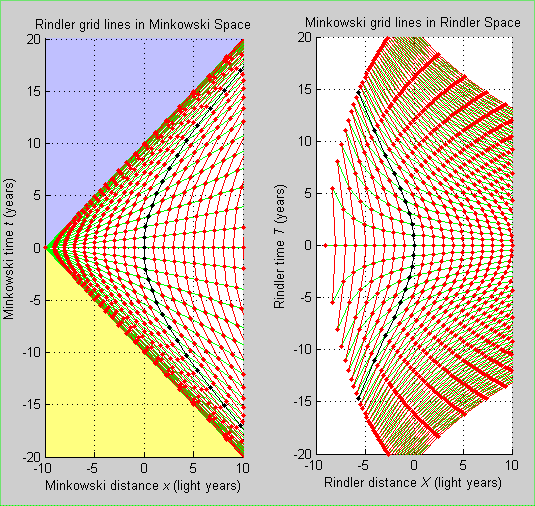
A Rindler horizon is a type of event horizon that appears in the reference frame of a uniformly accelerating observer in flat spacetime. Unlike the event horizon of a black hole, a Rindler horizon is observer-dependent and exists only from the perspective of the accelerating observer. The concept is named after Wolfgang Rindler, who first described these horizons in his seminal work on relativistic motion.
When an object undergoes constant proper acceleration, it follows a hyperbolic trajectory through spacetime. From the perspective of this accelerating observer, a horizon forms that divides spacetime into regions that can and cannot communicate with the observer. This horizon appears because light signals from certain regions of spacetime can never reach the accelerating observer due to their constant acceleration away from these regions.
The significance of Rindler horizons in inertia theory stems from their connection to quantum field theory in curved spacetime. An accelerating observer experiences the quantum vacuum differently than an inertial observer, leading to phenomena such as the Unruh effect, where the accelerating observer detects thermal radiation not seen by inertial observers [8,9].
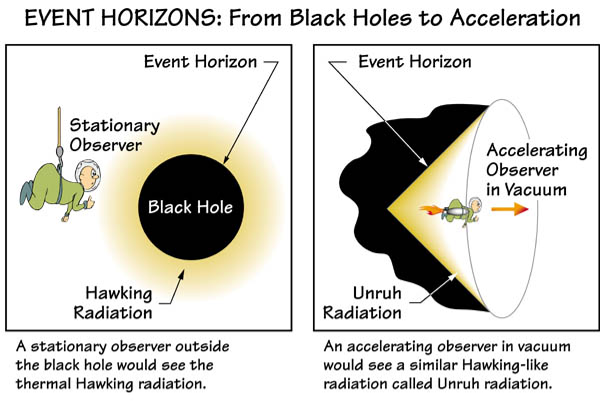
The connection between Rindler horizons and inertia suggests that the resistance to acceleration (inertia) might be understood as a quantum vacuum effect related to the formation of these horizons. When an object accelerates, the appearance of a Rindler horizon creates an asymmetry in the quantum vacuum fluctuations between the horizon and the accelerating object. This asymmetry may contribute to the phenomenon we experience as inertial mass.
The mathematical framework used by Giné and Luciano yields precise predictions about the relationship between an object’s mass and its interaction cross-section with vacuum fluctuations. It provides quantitative predictions that could be tested for the strength of inertial forces at different accelerations and establishes scaling relationships that demonstrate how inertial mass emerges from quantum-scale interactions.
The Mach Principle Revisited
The theory forges important connections with established physics concepts. It offers a local quantum mechanism that achieves the same effect as Mach’s Principle, which originally proposed that inertia arises from interaction with the rest of the universe. In this new framework, rather than distant stars, the quantum vacuum serves as the universal reference frame that Mach envisioned.
The theory naturally incorporates quantum field theoretical concepts, demonstrating how virtual particle interactions can produce real, observable forces. Perhaps most significantly, it provides a potential bridge between quantum mechanics and general relativity by showing how gravitational concepts like the equivalence principle might emerge from quantum-scale interactions.
Experimental validation of the theory could come through several avenues. Researchers could conduct precise measurements of inertial mass at different accelerations and investigate potential small-scale violations of the equivalence principle. Studies of quantum vacuum fluctuations in strong gravitational fields might provide additional insights, as could examination of anomalous inertial effects observed in various systems.
Looking forward, the work opens numerous promising research directions. Scientists can investigate possible modifications to quantum uncertainty relations and explore connections to other fundamental forces. The field requires more sophisticated mathematical tools for handling quantum vacuum interactions. Perhaps most excitingly, the theory suggests potential technological applications, particularly in the realm of space propulsion.
This work represents a significant theoretical advancement in our understanding of one of physics’ most fundamental properties. By providing a detailed quantum mechanical framework for understanding inertia, it opens new avenues for research into the foundations of physics and the relationship between quantum phenomena and classical mechanics.
Connection with Rueda and Puthoff’s Stochastic Electrodynamics (SED)
The theory’s foundation shares crucial conceptual ground with Rueda and Puthoff’s groundbreaking 1994 paper [10], which first proposed that inertia results from an object’s interaction with the quantum vacuum. Both approaches treat the quantum vacuum not as empty space, but as a dynamic medium filled with quantum fluctuations. However, while Rueda and Puthoff original insight suggested that inertial mass arises from the resistance force that charged particles experience when accelerating through the electromagnetic zero-point field, Giné and Luciano’s work broadens this concept by showing how all matter components, not just charged particles, interact with quantum vacuum fluctuations at the Planck scale. This represents a significant theoretical expansion of the ZPF inertia hypothesis, providing a more complete quantum mechanical framework.
The mathematical approach of both theories shows interesting parallels. Rueda and Puthoff’s work utilized stochastic electrodynamics (SED) to describe particle-ZPF interactions, expressing the force on an accelerating charged particle as a function of the zero-point field spectrum [11,12]. Giné and Luciano extend this mathematical framework using quantum field theory, incorporating not just electromagnetic interactions but all fundamental forces. Their approach maintains the core insight of the ZPF hypothesis while providing a more comprehensive theoretical foundation.
Where Rueda and Puthoff focused on the Lorentz force experienced by charged particles in the ZPF, Giné and Luciano’s first theoretical framework examines quantum mechanical energy transfers between matter and vacuum fluctuations through a more general operator formalism. This broader approach encompasses the electromagnetic interactions described in the ZPF hypothesis while extending to all forms of matter-vacuum coupling.
The second theoretical framework, involving Rindler horizons, provides an interesting complement to Rueda and Puthoff’s work. While the ZPF hypothesis examined local interactions between particles and fields, the Rindler horizon analysis shows how acceleration affects the quantum vacuum globally, creating asymmetries that manifest as inertial resistance. This offers a new perspective on how local and global vacuum effects combine to produce inertial mass.
Both theoretical approaches predict similar experimental signatures. Rueda and Puthoff’s work suggested that modifications to the zero-point field might affect inertial mass, while Giné and Luciano’s framework predicts similar effects through their more general quantum vacuum interaction model. The theories agree that extreme accelerations or modified vacuum states might reveal deviations from standard inertial behavior.
The technological implications suggested by both frameworks are particularly intriguing. Rueda and Puthoff’s work has been influential in discussions of potential vacuum engineering for propulsion, suggesting that modifying the zero-point field might affect inertial mass. Giné and Luciano’s broader framework supports these possibilities while suggesting additional approaches through their more comprehensive understanding of matter-vacuum interactions.
For a deeper understanding of the zero-point energy and its connection to mass, read Haramein’s article What is Zero Point Energy.
Connection with Haramein’s Holographic Mass Solution
The authors of this study propose that all macroscopic objects can be decomposed into resonant components at the Planck scale (approximately 10-35 meters), which act as quantum oscillators interacting with vacuum fluctuations. This aligns closely with Haramein’s concept of the quantum vacuum structure through his Planck Spherical Units (PSUs) framework [2-5]. While Giné and Luciano suggest that inertial mass emerges as a consequence of the interaction between Planck-scale components and the quantum vacuum fluctuations, Haramein’s most recent calculations prove that these Planck scale components (the PSUs) not only compose matter, but are the very essence of the quantum vacuum fluctuations. Haramein’s holographic mass solution posits that matter emerges from Planck-scale vacuum oscillations depicted as rotors that cohere collectively, as his latest work entitled The origin of mass and the Nature of Gravity clearly demonstrates [6]. In Haramein’s approach, vacuum and matter are different phases of the quantum vacuum structure, since it is the organization, coherent interaction and decoherence of the quantum vacuum fluctuations what creates the boundary conditions that give rise to mass. To be more precise, the thermodynamics coming from the interactions between the PSU’s creates boundary conditions in the Planck plasma flow at specific size ratios between the system and its Planck scale components, producing energy density gradients and pressure gradients that are unambiguously related to the confinement forces inside the proton, such as the color and the strong force, and that extend establishing a fine-tuned scaling law going from the Planck scale, up to cosmological structures, including the universe itself.
The mathematical foundation of Giné and Luciano’s first framework employs a sophisticated quantum mechanical operator formalism. They begin with the quantum harmonic oscillator Hamiltonian modified to include coupling terms with vacuum fluctuations. Through careful analysis of the resulting equations of motion, they demonstrate how quantum fluctuations transfer energy to Planck-scale components through resonant processes.
The theory develops a set of coupled differential equations that describe the energy transfer dynamics. These equations, when solved, reveal how microscopic quantum interactions sum coherently to produce macroscopic inertial effects. Using a similar reasoning, utilizing the correlation functions -that measure the level of coherency of the electromagnetic quantum vacuum fluctuations in a volume of space-, Haramein et al. demonstrated that it is the quantum vacuum what produces the mass of the proton [6].
Their second theoretical framework introduces a novel relativistic perspective by analyzing acceleration-induced Rindler horizons. The mathematical treatment here involves quantum field theory in curved spacetime. This framework shows how acceleration creates asymmetric quantum fluctuation distributions, producing opposition to acceleration that manifests as inertia.
The connection to Haramein’s work becomes particularly relevant in the treatment of boundary conditions and scaling relationships. While Giné and Luciano focus on Rindler horizons, Haramein’s generalized holographic model emphasizes spherical boundaries and surface-to-volume relationships that create event horizon of black holes. Both theories suggest that fundamental physical properties emerge from boundary dynamics at the Planck scale, though they express these relationships through different mathematical formalisms. In Haramein’s approach, it is shown that the proton mass results from inertia in the information flow between its volume and surface, represented by a fundamental holographic ratio ɸ [2-5]. The whole process is explained afterwards [6] as a 2-step screening mechanism of the extremely high mass-energy density (of the order of 1094gr/cm3) at the Planck scale (encompassed in each PSU), energy that gets screened a first time at the protons’ Compton radius (which is 4 times smaller than its charge radius). At this distance the proton obeys the Schwartzchild condition of a black hole. Then a second screening happens at the proton charge radius, where we find the rest mass of the proton. Therefore, in the proton’s core, that is, at its Compton radius, there is a mini black hole that does not decay because it is continuously feed by the dynamics of the quantum vacuum fluctuations [6]. The screenings are due to decoherence processes of quantum vacuum fluctuations.
Both frameworks suggest fascinating connections to quantum gravity. Haramein’s approach directly addresses gravitational effects through his holographic mass solution, while Giné and Luciano’s work implies gravitational connections through the equivalence principle. The mathematical bridge between these approaches lies in the treatment of vacuum energy scaling relationships and boundary conditions at the Planck scale.
Nevertheless, Giné and Luciano’s work faces several significant challenges: they must work toward complete integration with quantum gravity theories and extend the framework to handle rotational motion, as well as addressing potential conflicts with the cosmological constant problem and develop more detailed models of how quantum vacuum fluctuations interact with matter at the Planck scale. These challenges are not posed in Haramein’s work, as it develops with no adjusting parameters, departing from first principle calculations on the quantum vacuum fluctuations, and showing that features such as particles, forces and fields emerge from this zero-point field. Therefore, the conflicts that arise when utilizing the standard formalism of quantum mechanics with a Hamiltonian that separates the material system into subsystems that interact in complex ways, is not present in Haramein’s approach.
The theories also suggest potential technological applications, particularly in space propulsion. By understanding how inertial mass emerges from quantum vacuum interactions, it might be possible to develop methods for manipulating these interactions, leading to novel propulsion technologies. This aligns with both Haramein’s predictions about vacuum engineering and Giné and Luciano’s framework for understanding inertial effects.
This synthesis of approaches represents a significant theoretical advancement in our understanding of fundamental physics. By providing detailed quantum mechanical frameworks for understanding inertia and its relationship to the quantum vacuum, these complementary theories open new avenues for research into the foundations of physics and the relationship between quantum phenomena and classical mechanics.
References
[1] Luciano G., and Giné, J. Modeling inertia through the interaction with quantum fluctuations, Results in Physics, 28, (2021). DOI: 10.1016/j.rinp.2021.104543
[2] Haramein, N. (2012). Quantum Gravity and the Holographic Mass, Physical Review & Research International, ISSN: 2231-1815, Page 270-292
[3] Haramein, N. (2013). Addendum to “Quantum Gravity and the Holographic Mass” in view of the 2013 Muonic Proton Charge Radius Measurement, Hawaii Institute for Unified Physics.
[4] Val baker, A.K.F, Haramein, N. and Alirol, O. The Electron and the Holographic Mass Solution, Physics Essays, Vol 32, Pages 255-262 (2019).
[5] Haramein, N & Val Baker, A. K. F. (2019). Resolving the Vacuum Catastrophe: A Generalized Holographic Approach, Journal of High Energy Physics, Gravitation and Cosmology, Vol.05 No.02(2019),
[6] Haramein N., Guermonprez C., Alirol O., The Origin of mass and the Nature of Gravity DOI 10.5281/zenodo.8381114. (2023).
[7] Rindler, W. (1966). “Kruskal Space and the Uniformly Accelerated Frame.” American Journal of Physics, 34(12), 1174-1178.
[8] Unruh, W. G. (1976). “Notes on black-hole evaporation.” Physical Review D, 14(4), 870-892.
[9] Crispino, L. C. B., Higuchi, A., & Matsas, G. E. A. (2008). “The Unruh effect and its applications.” Reviews of Modern Physics, 80(3), 787-838.
[10] Haisch, B., Rueda, A., & Puthoff, H. E. (1994). “Inertia as a zero-point-field Lorentz force” Physical Review A, 49(2), 678-694.
[11] Rueda, A., & Haisch, B. (1998). “Inertia as reaction of the vacuum to accelerated motion” Physics Letters A, 240(3), 115-126.
[12] Rueda, A., & Haisch, B. (1998). “Contribution to inertial mass by reaction of the vacuum to accelerated motion”, Foundations of Physics, 28(7), 1057-1108.