
By using this site, you agree to the Privacy Policy.
Accept
The International Space Federation (ISF)The International Space Federation (ISF)The International Space Federation (ISF)
  • Science News
    • All Articles
    • Physics
    • Astronomy
    • Biology
    • Technology
    • Other
  • Research
    • Research Papers
    • Physicists Testimonials
  • Technology
  • About
    • About us
  • ISF News
  • Events
    • Events
  • Get Involved
    • Invest
    • Donate – Zero Point Foundation
  • Careers
  • Contact Us
Reading: Black Holes… Black Suns?
Share
The International Space Federation (ISF)The International Space Federation (ISF)
Search
  • Science News
    • Physics
    • Astronomy
    • Biology
    • Technology
  • Research Papers
    • Physicists Testimonials
  • About
    • ISF News
  • Events
  • Get involved
    • Invest
  • Translations
    online pharmacy https://worldneurologyonline.com/ no prescription pharmacy
Follow US
© 2022 International Space Federation. All Rights Reserved.
The International Space Federation (ISF) / Explore / Astronomy / Black Holes… Black Suns?
Astronomy

Black Holes… Black Suns?

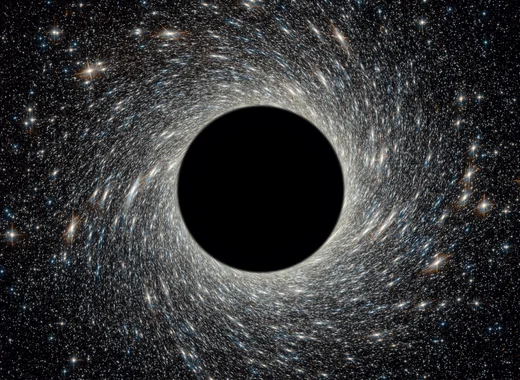
Stars were thought to be the principal and most important component for life to thrive… till now. Researchers from Harvard university explain that radiation coming from Black holes could do the same!

Dr. Inés Urdaneta
Last updated: 2025/01/07 at 10:55 PM
Dr. Inés Urdaneta
Share
4 Min Read
SHARE

The Role of Black Holes in Potential Life Formation

Habitable zones in outer space have been defined with respect to stars (suns), as regions where the stars radiation and energy are suitable for emergence of life. Closer or farther away from this source of energy, temperature would be too cold or too hot in order for liquid water to exist in a planet´s surface. The zones were liquid water and biological opportunity can happen are known as “Goldilocks zone”.

Active Galactic Nuclei and Their Potential Impact

A new study published in The Astrophysical Journal have found such zones around supermassive black holes as well. This is quite surprising, since the surroundings of a black hole, consisting on swirling disks of gas and dust called Active Galactic Nuclei -AGN-, emit enormous amounts of radiation (mainly x-ray, gamma and ultraviolet light) that could destroy nearby planets´ atmospheres, creating a dead zone around the black hole.

After numerical simulations using programs that model AGNs, researchers were able to identify such regions around the black holes and concluded that the destruction regime was highly overestimated. For instance, the damaging zone is located 100 light years away, a much shorter distance than the 3,200 light years predicted by former studies for Sagittarius A* -Milky ways´ supermassive black hole-. Meanwhile, its Goldilocks region extends 140 light years from the black hole center.

Being the dangerous distance of the AGN region narrower than the total extension of the AGN zone, if placed within the remaining AGN region, a planet´s atmosphere could remain intact while at the same time the radiation of the active nuclei could break molecules to create the biological building blocks which are lipids, proteins and DNA. For a galaxy as our own, the AGN-powered photosynthesis region would extend up to 1,100 light-years out from the center of the galaxy. At the same time, light emanating from the AGN could facilitate photosynthesis, a particularly important fact for free floating planets believed to have no source of light energy around them.

Astronomers have estimated there could be around 1 billion such rogue planets drifting in the Goldilocks zone of a Milky Way-like galaxy”

Manasvi.

Concerning the damaging effects of the ultraviolet and X-ray radiation in these zones, the scientists claim that bacteria on Earth created biofilms to protect themselves from ultraviolet rays, and that X-rays and gamma-rays are also readily absorbed by Earth-like atmospheres, reducing considerably their impact.

Unified Science in Perspective

Like the recently discovered AGN goldilocks zone, astrophysicist had already re-evaluated and extended the habitability zone due to M type stars. The increase in habitability keeps growing, which implies an exponential probability of life in outer space and therefore a high probability for intelligent life. We are most probably not alone in the galaxy. On the other hand, if black holes are so directly related to suns, wouldn´t the other direction apply? Wouldn´t suns behave or be white holes?

More at:
Black Holes could feed Alien Life
Radiation from black holes may create life
Sign Up For Daily Newsletter

Be keep up! Get the latest breaking news delivered straight to your inbox.
loader

loader

loader

By signing up, you acknowledge the data practices in our Privacy Policy. You may unsubscribe at any time.
En vous inscrivant, vous reconnaissez les pratiques en matière de données dans notre politique de confidentialité. Vous pouvez vous désinscrire à n'importe quel moment.
Al registrarse, reconoce las prácticas de datos en nuestra política de privacidad. Puedes darte de baja en cualquier momento.
Share This Article
Facebook Twitter Copy Link Print
By Dr. Inés Urdaneta
Dr. Inés Urdaneta is a multi-published research physicist in the domain of light-matter interaction at the atomic, molecular, and nano/solid-state scales. In her more than 20 years of research she participated in national and international research projects throughout France, USA, México and Venezuela, on an extensive variety of topics. At present, as part of our research staff at the International Space Federation, Inés focuses on developing physical-chemical models in the frame of the generalized holographic model (GHM) and unification theory developed by Nassim Haramein, together with quantum information processes and their connection to black holes and to proto-consciousness.
Previous Article A Tiny Galaxy With A Big Heart!
Next Article Bioengineer Researchers Discover New Type of Cell Communication

Stay Connected

981k Like
18.7k Follow
7.7k Follow
7.3k Subscribe

Categories

  • Astronomy106
  • Biology69
  • ISF News25
  • ISF Research14
  • Other22
  • Physics168
  • Technology36

You Might also Like

Astronomy

The Rotating Universe: Radio Galaxies and the Cosmic Dipole Anomaly

22. December 2025.
Astronomy

“Black Hole Stars” Detected at Cosmic Dawn

23. October 2025.
Astronomy

New Evidence Points to a Compact Object at the Sun’s Core

5. August 2025.
Astronomy

Image Reveals Coherently Ordered Spiral Vortex Around Milky Way’s Supermassive Black Hole

24. June 2024.
The International Space Federation (ISF)The International Space Federation (ISF)

Harnessing quantum vacuum energy for sustainable solutions – a unified approach to science, technology and education.

Quick links

  • About
  • Research Papers
  • Events
  • Invest

Explore

  • ISF Research
  • Physics
  • Technology
  • Astronomy
  • Biology
  • ISF News

Sign Up for Our Newsletter

Subscribe to our newsletter to get our newest articles instantly!

loader

Follow US
© 2023 International Space Federation. All Rights Reserved. INTERNATIONAL SPACE FEDERATION is a trademark of ISFS SA. The mark is registered in the United States under Registration No. 7772313. The ®️ symbol is used exclusively in the U.S.
  • Press
  • Careers
  • Privacy policy
  • Carrieres
  • Presse
  • Prensa
Join Us!

Subscribe to our newsletter and never miss our latest news.

loader

Welcome Back!

Sign in to your account

Lost your password?