
By using this site, you agree to the Privacy Policy.
Accept
The International Space Federation (ISF)The International Space Federation (ISF)The International Space Federation (ISF)
  • Science News
    • All Articles
    • Physics
    • Astronomy
    • Biology
    • Technology
    • Other
  • Research
    • Research Papers
    • Physicists Testimonials
  • Technology
  • About
    • About us
  • ISF News
  • Events
    • Events
  • Get Involved
    • Invest
    • Donate – Zero Point Foundation
  • Careers
  • Contact Us
Reading: First Virtual Reality Simulation of a Supermassive Black Hole
Share
The International Space Federation (ISF)The International Space Federation (ISF)
Search
  • Science News
    • Physics
    • Astronomy
    • Biology
    • Technology
  • Research Papers
    • Physicists Testimonials
  • About
    • ISF News
  • Events
  • Get involved
    • Invest
  • Translations
    online pharmacy https://worldneurologyonline.com/ no prescription pharmacy
Follow US
© 2022 International Space Federation. All Rights Reserved.
The International Space Federation (ISF) / Explore / Astronomy / First Virtual Reality Simulation of a Supermassive Black Hole
Astronomy

First Virtual Reality Simulation of a Supermassive Black Hole

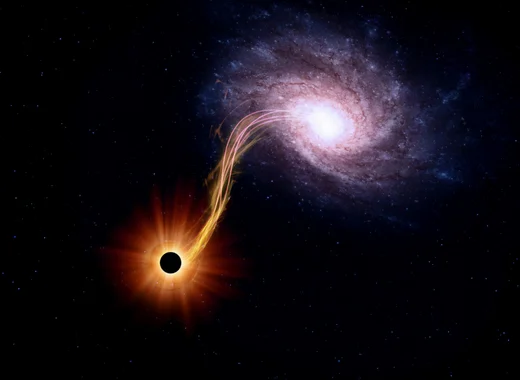
The Event Horizon Telescope EHT has been monitoring and collecting data from the supermassive Black Hole (SMBH) at the core of the Milky Way galaxy, known as Sagittarius A*, and results are expected very soon, probably 2019. Now, for the first time, the virtual reality simulation of Sagittarius A* has been achieved.

Dr. Inés Urdaneta
Last updated: 2025/01/07 at 10:00 PM
Dr. Inés Urdaneta
Share
4 Min Read
SHARE

As mentioned in a previous article, the Event Horizon Telescope is an international collaboration aiming to obtain the first real image of the event horizon (EH) of a black hole using a set of antennas scattered around the globe. EHT has been monitoring and collecting data from the supermassive Black Hole (SMBH) at the core of the Milky Way galaxy, known as Sagittarius A*, and results are expected very soon, probably 2019.

Now, for the first time, the virtual reality simulation of Sagittarius A* has been achieved by a group of scientists at Radbound University and collaborators from the Institute of theoretical Physics, in Germany, and the Mullard Space Science laboratory, at the University College London. In their article “Observing Supermassive Black Holes in virtual reality”, published last week, authors explain the methodology to obtain a full 360° view inside the accretion flow of the SMBH.

Placing the observer inside the flow itself opens a new window in understanding the geometrical structure and dynamical properties of such systems.

A clever combination of tools that include the virtual camera setup, black hole shadow vacuum lensing tests (with stationary and free-falling observers at different radial positions), and the best-fit models of the most recent observations on Sagittarius A*, generate a complete 360° of the EH and its surroundings. The theoretical framework called GRMHD – general relativistic magnetohydrodynamical plasma model- is used as an input for the geometry of the accretion flow onto the black hole.

Image: Movie snapshots from Scene 3. In this section of the virtual simulation, the observer now begins their journey through the accretion flow (panels with frames 5100–6150), before being advected away from the black hole via the large-scale jet (panels with frames 7200–8599). At frame 6150 the observer is at their point of closest approach to the black hole, where the incident flux is as high as ≈25L⊙. This region is highly optically thick, completely obscuring the observer’s view of the black hole shadow. As the observer is advected further away, by frame 8599 the angular size of the black hole and the surrounding accretion flow is greatly reduced and appears almost point-like.

All geometrical, relativistic, and general-relativistic effects on the observed emission are naturally and self-consistently folded into the imaging calculation, providing a complete and physically-accurate depiction of what would really be seen from an observer’s perspective.

Unified Science in Perspective

The combination of visualizations tools and the data recollection antennas such as the EHT will provide realistic images of the environment surrounding the black holes, such that many theories can be tested, and new ones will probably appear. The behavior of such enigmatic entities will be further elucidated, and Haramein’s hypothesis of all black holes spinning could be supported by these findings.

More at: 

Virtual reality simulation of a supermassive black hole

Sign Up For Daily Newsletter

Be keep up! Get the latest breaking news delivered straight to your inbox.
loader

loader

loader

By signing up, you acknowledge the data practices in our Privacy Policy. You may unsubscribe at any time.
En vous inscrivant, vous reconnaissez les pratiques en matière de données dans notre politique de confidentialité. Vous pouvez vous désinscrire à n'importe quel moment.
Al registrarse, reconoce las prácticas de datos en nuestra política de privacidad. Puedes darte de baja en cualquier momento.
Share This Article
Facebook Twitter Copy Link Print
By Dr. Inés Urdaneta
Dr. Inés Urdaneta is a multi-published research physicist in the domain of light-matter interaction at the atomic, molecular, and nano/solid-state scales. In her more than 20 years of research she participated in national and international research projects throughout France, USA, México and Venezuela, on an extensive variety of topics. At present, as part of our research staff at the International Space Federation, Inés focuses on developing physical-chemical models in the frame of the generalized holographic model (GHM) and unification theory developed by Nassim Haramein, together with quantum information processes and their connection to black holes and to proto-consciousness.
Previous Article From the Planck Constant to the Kilogram
Next Article Music for the Heart

Stay Connected

981k Like
18.7k Follow
7.7k Follow
7.3k Subscribe

Categories

  • Astronomy106
  • Biology69
  • ISF News25
  • ISF Research14
  • Other22
  • Physics168
  • Technology36

You Might also Like

Astronomy

The Rotating Universe: Radio Galaxies and the Cosmic Dipole Anomaly

22. December 2025.
Astronomy

“Black Hole Stars” Detected at Cosmic Dawn

23. October 2025.
Astronomy

New Evidence Points to a Compact Object at the Sun’s Core

5. August 2025.
Astronomy

Image Reveals Coherently Ordered Spiral Vortex Around Milky Way’s Supermassive Black Hole

24. June 2024.
The International Space Federation (ISF)The International Space Federation (ISF)

Harnessing quantum vacuum energy for sustainable solutions – a unified approach to science, technology and education.

Quick links

  • About
  • Research Papers
  • Events
  • Invest

Explore

  • ISF Research
  • Physics
  • Technology
  • Astronomy
  • Biology
  • ISF News

Sign Up for Our Newsletter

Subscribe to our newsletter to get our newest articles instantly!

loader

Follow US
© 2023 International Space Federation. All Rights Reserved. INTERNATIONAL SPACE FEDERATION is a trademark of ISFS SA. The mark is registered in the United States under Registration No. 7772313. The ®️ symbol is used exclusively in the U.S.
  • Press
  • Careers
  • Privacy policy
  • Carrieres
  • Presse
  • Prensa
Join Us!

Subscribe to our newsletter and never miss our latest news.

loader

Welcome Back!

Sign in to your account

Lost your password?