
By using this site, you agree to the Privacy Policy.
Accept
The International Space Federation (ISF)The International Space Federation (ISF)The International Space Federation (ISF)
  • Science News
    • All Articles
    • Physics
    • Astronomy
    • Biology
    • Technology
    • Other
  • Research
    • Research Papers
    • Physicists Testimonials
  • Technology
  • About
    • About us
  • ISF News
  • Events
    • Events
  • Get Involved
    • Invest
    • Donate – Zero Point Foundation
  • Careers
  • Contact Us
Reading: Neutron star jets challenge theory!
Share
The International Space Federation (ISF)The International Space Federation (ISF)
Search
  • Science News
    • Physics
    • Astronomy
    • Biology
    • Technology
  • Research Papers
    • Physicists Testimonials
  • About
    • ISF News
  • Events
  • Get involved
    • Invest
  • Translations
    online pharmacy https://worldneurologyonline.com/ no prescription pharmacy
Follow US
© 2022 International Space Federation. All Rights Reserved.
The International Space Federation (ISF) / Explore / Astronomy / Neutron star jets challenge theory!
Astronomy

Neutron star jets challenge theory!

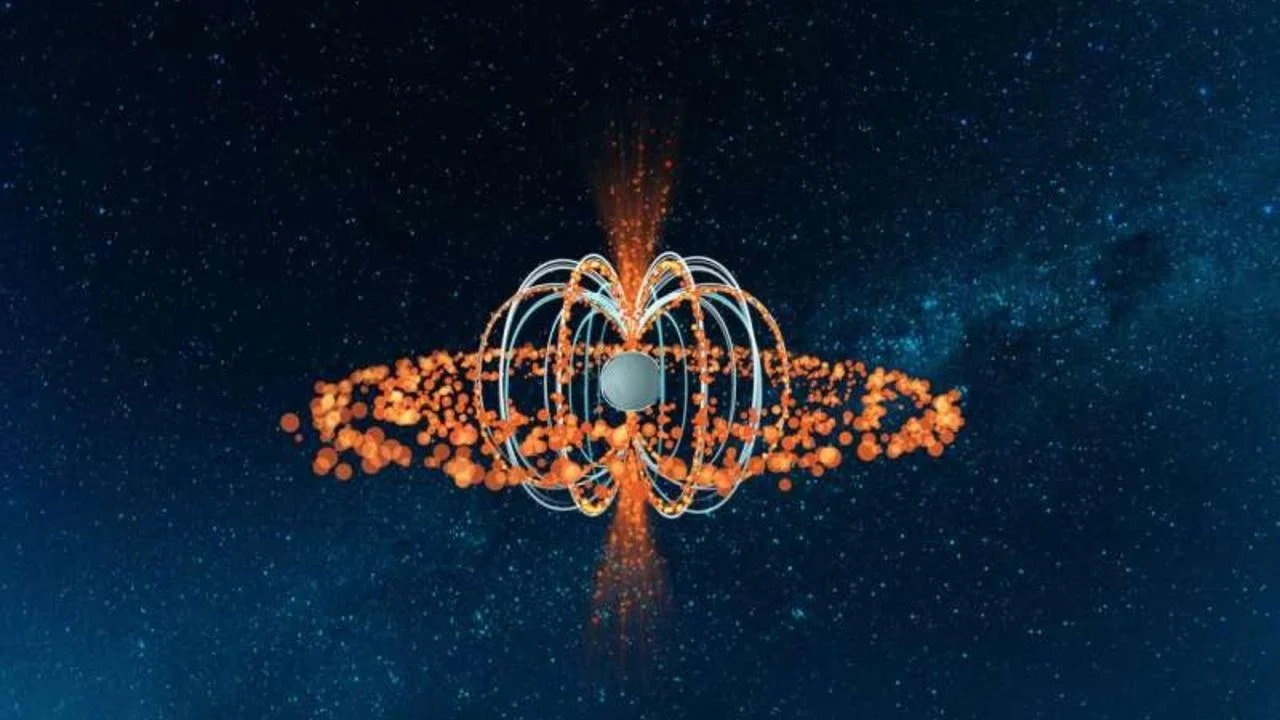
Relativistic jets synonymous with black holes have been observed in a highly magnetized neutron star for the first time – putting current theories into question!

RSF Research
Last updated: 2024/08/27 at 9:29 AM
RSF Research
Share
3 Min Read
SHARE

Relativistic jets synonymous with black holes have been observed in a highly magnetized neutron star for the first time – putting current theories into question!

Implications for Disk Fragmentation Theory

We see jets of ionized matter in all types of astrophysical objects from the plasma jets seen emanating from the surface of stars like our Sun (read more here) to the relativistic jets emanating from black holes. The energy of these jets and relativistic nature depends on the nature of the object and the location of the jet formation – with the most prominent generally emanating from the polar regions as extended beams along the axis of rotation.

However, although these jets are observed in some neutron stars, they have never been observed in highly magnetized neutron stars. This phenomenon has previously led theorists to conclude that magnetic fields inhibit their formation. Subsequent theories suggested that jet formation in neutron stars invoke a magneto-centrifugal launch mechanism which launches the jet from the innermost accretion disk along the magnetic flow dynamic – the magnetic field lines. It was therefore suggested that in highly magnetized neutrons stars the magnetic field would dominate over the disk pressure such that there would be no inner accretion to launch the jet.

A straightforward explanation it would seem – but not anymore.

The Unexpected Discovery: Relativistic Jets in a Highly Magnetized Neutron Star

Utilizing data from Very Large Array radio telescope in New Mexico and NASA’s Swift space telescope a team led by Jacob van den Eijnden at the University of Amsterdam, observed radio emission indicative of relativistic jets from the neutron star, Swift J0243.6+6124. Theses result contradict the existing ideas about jet formation in neutron stars and indicate that either the jet-launching region must be much farther from the neutron star than previously thought or jet formation models need to be revisited.

Gravity, electromagnetic radiation, mass and energy are all emergent properties of the fundamental spin dynamic. These features along with the resulting toroidal dynamic, symmetry and stability of the system are all interdependent with each other. Jets are one of these emergent features that we observe – and the appearance of jets as well as its characteristics would therefore also reflect this interdependence.

Article: https://phys.org/news/2018-09-neutron-star-jets-theory.html

Learn more in our free Unified Science Course

Sign Up For Daily Newsletter

Be keep up! Get the latest breaking news delivered straight to your inbox.
loader

loader

loader

By signing up, you acknowledge the data practices in our Privacy Policy. You may unsubscribe at any time.
En vous inscrivant, vous reconnaissez les pratiques en matière de données dans notre politique de confidentialité. Vous pouvez vous désinscrire à n'importe quel moment.
Al registrarse, reconoce las prácticas de datos en nuestra política de privacidad. Puedes darte de baja en cualquier momento.
Share This Article
Facebook Twitter Copy Link Print
Previous Article How Many Dimensions? A Deeper Look Into Outer Space
Next Article Where There is Black, There is White?

Stay Connected

981k Like
18.7k Follow
7.7k Follow
7.3k Subscribe

Categories

  • Astronomy106
  • Biology69
  • ISF News25
  • ISF Research14
  • Other22
  • Physics168
  • Technology36

You Might also Like

Astronomy

The Rotating Universe: Radio Galaxies and the Cosmic Dipole Anomaly

22. December 2025.
Astronomy

“Black Hole Stars” Detected at Cosmic Dawn

23. October 2025.
Astronomy

New Evidence Points to a Compact Object at the Sun’s Core

5. August 2025.
Astronomy

Image Reveals Coherently Ordered Spiral Vortex Around Milky Way’s Supermassive Black Hole

24. June 2024.
The International Space Federation (ISF)The International Space Federation (ISF)

Harnessing quantum vacuum energy for sustainable solutions – a unified approach to science, technology and education.

Quick links

  • About
  • Research Papers
  • Events
  • Invest

Explore

  • ISF Research
  • Physics
  • Technology
  • Astronomy
  • Biology
  • ISF News

Sign Up for Our Newsletter

Subscribe to our newsletter to get our newest articles instantly!

loader

Follow US
© 2023 International Space Federation. All Rights Reserved. INTERNATIONAL SPACE FEDERATION is a trademark of ISFS SA. The mark is registered in the United States under Registration No. 7772313. The ®️ symbol is used exclusively in the U.S.
  • Press
  • Careers
  • Privacy policy
  • Carrieres
  • Presse
  • Prensa
Join Us!

Subscribe to our newsletter and never miss our latest news.

loader

Welcome Back!

Sign in to your account

Lost your password?