
By using this site, you agree to the Privacy Policy.
Accept
The International Space Federation (ISF)The International Space Federation (ISF)The International Space Federation (ISF)
  • Science News
    • All Articles
    • Physics
    • Astronomy
    • Biology
    • Technology
    • Other
  • Research
    • Research Papers
    • Physicists Testimonials
  • Technology
  • About
    • About us
  • ISF News
  • Events
    • Events
  • Get Involved
    • Invest
    • Donate – Zero Point Foundation
  • Careers
  • Contact Us
Reading: The Search For Supernovae With The Re-Purposed Kepler – K2
Share
The International Space Federation (ISF)The International Space Federation (ISF)
Search
  • Science News
    • Physics
    • Astronomy
    • Biology
    • Technology
  • Research Papers
    • Physicists Testimonials
  • About
    • ISF News
  • Events
  • Get involved
    • Invest
  • Translations
    online pharmacy https://worldneurologyonline.com/ no prescription pharmacy
Follow US
© 2022 International Space Federation. All Rights Reserved.
The International Space Federation (ISF) / Explore / Astronomy / The Search For Supernovae With The Re-Purposed Kepler – K2
Astronomy

The Search For Supernovae With The Re-Purposed Kepler – K2

The latest supernovae survey reveals the crucial importance in furthering our understanding of supernovae and reaching confident conclusions as soon as possible.

RSF Research
Last updated: 2024/04/10 at 12:29 PM
RSF Research
Share
4 Min Read
SHARE

The latest supernovae survey reveals the crucial importance in furthering our understanding of supernovae and reaching confident conclusions as soon as possible.

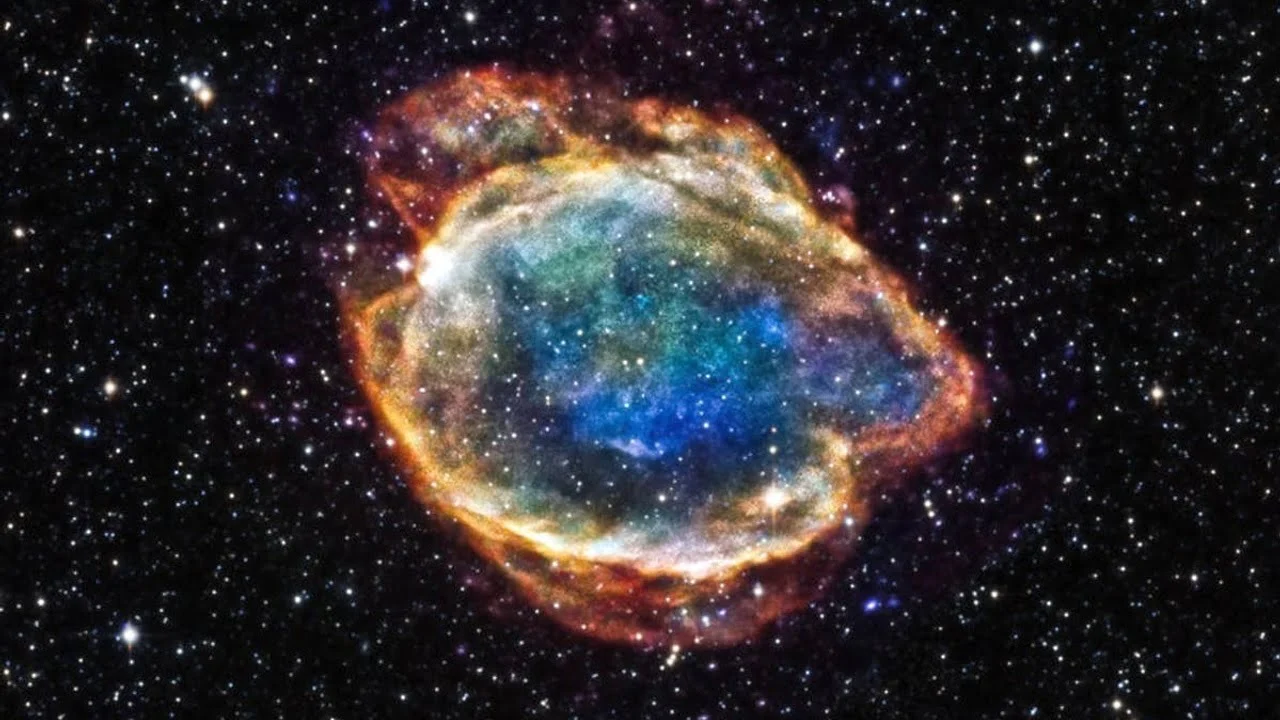
The standard theory of stellar evolution results in an explosion and is revealed in a rare and beautiful astronomical event. Astronomers search for these events in the hope that they will provide greater insight into our understanding of stellar evolution. Although each supernovae event is different, specific stars will yield certain characteristics. One type of Supernovae event that is of particular interest is the type associated with a binary star system in which one of the components is a white dwarf – this is known as a Type 1a supernova. White dwarfs are extremely dense stars that have exhausted all their hydrogen and their extreme density is thus a result of them not being able to support the inward pull of gravity with the outward pressure from stellar fusion. If a white dwarf is in a binary system and able to accrete matter from its companion star, then, upon reaching a specific mass (known as the Chandrasekhar limit), its core will ignite carbon fusion which leads to an explosion – known as a Type 1a supernova. The exact theoretical details of this process are far from understood – and recent observations have now highlighted this fact.

Armin Rest and his team at the Space Science Institute in Baltimore have been studying supernova in detail and were recently given data from the Kepler space craft K2. The primary objective of the Kepler mission was to hunt for exoplanets, but with the failure of two of its four gyroscopes it has been re-purposed and is now, among other things, on the hunt for supernovae. The resulting analysis have so far revealed numerous supernovae and supernovae-like events. One intriguing such event, dubbed the Fast-Evolving Luminous Transient (FELT), has prompted new hypothesis of how stars shed their matter and evolve, as unlike typical supernovae that take a few weeks to fade, FELTs disappear in a few days.

These findings and potential further studies not only have huge implications for our understanding of stellar evolution but as well are crucial to our understanding of cosmology. Type 1a supernova are used as standard candles, much like Cepheid variables (read more here, here and here) – however beyond the local group of galaxies, telescopes do not have the resolving power necessary to observe Cepheid variables. Instead, for the farther reaches of the Universe, astronomers rely on Type 1a supernova – the rational being that the thermonuclear process that results in the supernovae will happen at the same mass and in the same way, such that the brightness observed will primarily depend on the distance. However, if these latest results are correct and the mechanism responsible for the supernova event is not consistent, not only does this highlight our lack of understanding of supernovae, it also presents a significant source of error in our determination of cosmological parameters. Scientists have already been looking to new physics to explain many discrepancies between theory and data, and now this may have to include a revised data set. Let’s hope a unified picture can come to the rescue!

Article: https://hubblesite.org/news_release/news/2018-18

Article: https://physicstoday.scitation.org/do/10.1063/PT.6.1.20180529a/full/?utm_source=Physics+Today&utm_medium=email&utm_campaign=9538631_Q+-+TWIP+28+May%E2%80%931+June&dm_i=1Y69%2C5OG1Z%2CE1MRRJ%2CM3I54%2C1

Learn more in our free Unified Science Course

Sign Up For Daily Newsletter

Be keep up! Get the latest breaking news delivered straight to your inbox.
loader

loader

loader

By signing up, you acknowledge the data practices in our Privacy Policy. You may unsubscribe at any time.
En vous inscrivant, vous reconnaissez les pratiques en matière de données dans notre politique de confidentialité. Vous pouvez vous désinscrire à n'importe quel moment.
Al registrarse, reconoce las prácticas de datos en nuestra política de privacidad. Puedes darte de baja en cualquier momento.
Share This Article
Facebook Twitter Copy Link Print
Previous Article Speculative Wormhole Echoes Could Revolutionize Astrophysics
Next Article Friction Has Memory, Say Physicists

Stay Connected

981k Like
18.7k Follow
7.7k Follow
7.3k Subscribe

Categories

  • Astronomy106
  • Biology69
  • ISF News25
  • ISF Research14
  • Other22
  • Physics168
  • Technology36

You Might also Like

Astronomy

The Rotating Universe: Radio Galaxies and the Cosmic Dipole Anomaly

22. December 2025.
Astronomy

“Black Hole Stars” Detected at Cosmic Dawn

23. October 2025.
Astronomy

New Evidence Points to a Compact Object at the Sun’s Core

5. August 2025.
Astronomy

Image Reveals Coherently Ordered Spiral Vortex Around Milky Way’s Supermassive Black Hole

24. June 2024.
The International Space Federation (ISF)The International Space Federation (ISF)

Harnessing quantum vacuum energy for sustainable solutions – a unified approach to science, technology and education.

Quick links

  • About
  • Research Papers
  • Events
  • Invest

Explore

  • ISF Research
  • Physics
  • Technology
  • Astronomy
  • Biology
  • ISF News

Sign Up for Our Newsletter

Subscribe to our newsletter to get our newest articles instantly!

loader

Follow US
© 2023 International Space Federation. All Rights Reserved. INTERNATIONAL SPACE FEDERATION is a trademark of ISFS SA. The mark is registered in the United States under Registration No. 7772313. The ®️ symbol is used exclusively in the U.S.
  • Press
  • Careers
  • Privacy policy
  • Carrieres
  • Presse
  • Prensa
Join Us!

Subscribe to our newsletter and never miss our latest news.

loader

Welcome Back!

Sign in to your account

Lost your password?