

In a groundbreaking discovery at Kobe University, Professor Roumiana Tsenkova revealed that water molecules act as molecular mirrors, capable of storing and transmitting crucial biological information. This finding launched aquaphotomics, an innovative scientific field that analyzes how water interacts with light to provide detailed insights into living systems.
Using near-infrared spectroscopy, researchers can now detect distinct spectral patterns in water that function like molecular fingerprints, revealing everything from early-stage diseases to food quality without invasive procedures. This revolutionary approach has transformed our understanding of water from a simple solvent to an active participant in biological processes.
The implications are far-reaching: from early disease detection in agriculture to pharmaceutical quality control and cement quality evaluation, aquaphotomics is already proving its practical value. Combined with recent discoveries about water’s ability to maintain coherent structures and transmit electromagnetic signatures, this emerging field promises to revolutionize our approach to medical diagnostics, food production, and environmental monitoring.
The Founding of Aquaphotomics: A Revolutionary Field of Light-Water Interaction
In 2005, at Japan’s prestigious Kobe University, Professor Roumiana Tsenkova made a discovery that would launch an entirely new field of scientific study. While using near-infrared spectroscopy to analyze milk samples, she noticed something unexpected – the water itself was telling a story. The spectral patterns of the respective water molecular system were acting like a molecular mirror, reflecting detailed information about the biological system they were part of. This observation led her to establish aquaphotomics, a groundbreaking scientific discipline that studies how water interacts with light to reveal crucial information about living systems.
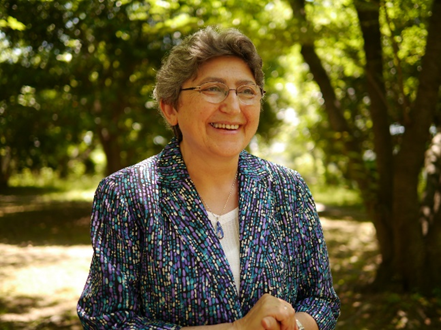
Professor Tsenkova is a pioneering researcher at Kobe University’s Graduate School of Agricultural Science, where she brings a unique interdisciplinary perspective to her work. With degrees in both physics and agricultural engineering, she has dedicated over three decades to investigating the relationship between light and biological systems. Her groundbreaking research began at the Bulgarian Ruse University and continued through collaborative projects across Europe and Japan. As a full professor at Kobe University since 2006, she has not only established the field of aquaphotomics but has also received numerous prestigious awards for her contributions to science, including the Japanese NIR Society’s Award, the Tomas Hershfeld Award for NIR spectroscopy, Buchi Award and the Gerald Birth Award for Outstanding NIRS Research. Her laboratory, equipped with state-of-the-art spectroscopic technology, has become a global hub for aquaphotomics research, attracting scientists from around the world eager to explore water’s remarkable properties.
The premise of aquaphotomics is deceptively simple: when light passes through water, the way water molecules absorb and scatter that light creates distinct patterns that can tell us about the entire biological system the water is part of. It’s similar to how a fingerprint can identify a person, but on a molecular level. These water spectral patterns act as a “molecular fingerprint” that can reveal everything from disease states to food quality to cellular health.
What makes this approach revolutionary is that water isn’t just a passive background element in living systems – it’s an active, dynamic participant that responds to and reflects the state of the entire system. As Professor Tsenkova explains it, water becomes a “mirror on the molecular level” when using near-infrared light. This mirror can reveal subtle changes in biological systems long before they become apparent through other means.
The technical foundation of aquaphotomics relies on what Tsenkova calls water matrix coordinates (WAMACS)—specific wavelengths of light where water shows characteristic absorption patterns [Visible Near_Infrared_perturbation_spectroscopy_Water_in_action_seen_as_a_source_of_information]. By carefully analyzing these patterns, researchers can gather detailed information about biological systems without having to disturb or destroy them. This non-invasive approach has enormous potential applications, from early disease detection to food safety monitoring to pharmaceutical quality control.
The implications of this work extend far beyond the laboratory. Aquaphotomics has already been successfully applied to detect early stages of mastitis in dairy cows [Tsenkova et al. 2023, “Adaptive Spectral Model for abnormality detection based on physiological status monitoring of dairy cows”], to identify viral infections in plants, and assess the quality of pharmaceutical products. The field is rapidly growing, with researchers around the world adopting and building upon Tsenkova’s methods.
Converging Evidence: How Different Scientific Fields Validate Water’s Information-Carrying Properties
The revolutionary nature of aquaphotomics becomes even more apparent when considered alongside related research into water’s unique properties. Professor Giuseppe Vitiello and Emilio Del Giudice’s groundbreaking work on “water as a free electric dipole laser” demonstrated how water molecules can organize themselves into coherent structures through interaction with electromagnetic fields. Their research, published in Physical Review Letters, showed that water isn’t just a collection of individual molecules but can behave as a coordinated system capable of storing and transmitting information.
This concept was further developed by Nobel laureate Luc Montagnier, who, along with Vitiello and others, published fascinating research on “DNA waves and water.” Their work suggested that water can retain and transmit electromagnetic signatures of DNA sequences, pointing to previously unknown properties of water in biological systems.
More recently, Professor Sylvie Roke’s research at EPFL has revealed how electrolytes can induce long-range ordering in water’s hydrogen bond network, demonstrating water’s remarkable ability to transmit influences across significant distances. Her work shows that even tiny changes in electrolyte concentration can affect water structure at scales much larger than previously thought possible.
Tsenkova’s approach to studying light signals to get molecular-level detailed information about the biological system is also highly synergistic with the work of the prolific researcher Dr. Anirban Bandyophadyay—who’s work we have detailed in previous articles like Microtubule-Actin Network Within Neuron Regulates the Precise Timing of Electrical Signals via Electromagnetic Vortices. As an example, Anirban’s research has demonstrated how an atomically ordered water channel within a single brain microtubule filament (microtubules are the primary component of the cellular cytoskeleton) controls nonlinear electronic responses.
Convergence with the Research of Nassim Haramein and The International Space Federation
This emerging understanding of water’s unique properties aligns remarkably well with theoretical work by physicist Nassim Haramein and colleagues at the International Space Federation. In our research on the Unified Spacememory Network, we have proposed that water’s tetrahedral molecular geometry and hydrogen-bonding network create a liquid-crystalline-like structure capable of coupling with quantum vacuum fluctuations. This coupling mechanism makes coherently ordered water a receiver of excitation energy from the zero-point energy density of the quantum vacuum and potentially explains water’s remarkable capacity to store and transmit quantum information through what we have described as “coherent vacuum oscillations” [see The Origin of Mass and the Nature of Gravity to learn about correlation functions delineating coherent modes of quantum vacuum oscillations].
Our research has revealed that water molecules, through their geometric arrangement and coherent dynamics, may serve as quantum intermediaries between biological systems and the fundamental information-encoding structure of spacetime itself. This perspective offers a potential quantum mechanical basis for aquaphotomics’ observations of water’s molecular mirror properties, as well as the findings of Montagnier and Del Giudice regarding water’s electromagnetic memory. The work provides a theoretical foundation for understanding how water molecules can maintain coherent structures capable of storing and transmitting biological information across multiple spatiotemporal scales—from the quantum to the cellular level.
From Laboratory Discovery to Global Impact: The Growing Promise of Aquaphotomics
These various lines of research all point to a revolutionary new understanding of water’s role in living systems. Rather than being merely a passive solvent, water appears to be an active, dynamic medium capable of storing, processing, and transmitting biological information. Aquaphotomics provides a practical method for accessing this information through the interaction of light with water’s complex molecular structures.

As we face growing challenges in healthcare, agriculture, and environmental protection, the ability to quickly and non-invasively analyze biological systems becomes increasingly valuable. Aquaphotomics offers a powerful new tool for addressing these challenges. The field continues to expand, with the upcoming 5th Aquaphotomics International Conference in 2025 bringing together researchers from around the world to share their findings and advance this promising field, including a keynote talk by Nassim Haramein.
Professor Tsenkova’s vision of water as a “molecular mirror” has opened up new possibilities for understanding and monitoring living systems. As aquaphotomics continues to develop, it may fundamentally change how we approach everything from medical diagnostics to food production to environmental monitoring. In revealing water’s hidden properties, this revolutionary field reminds us that sometimes the most profound scientific discoveries come from looking at familiar things in entirely new ways.