

Time crystals represent one of the most fascinating discoveries in modern quantum physics— a new state of matter that appears to defy some of our basic understanding of time and thermodynamics. First proposed theoretically by Nobel laureate Frank Wilczek in 2012, time crystals are structures that repeat themselves in time rather than in space, creating a pattern of motion that occurs without consuming or losing energy.
In traditional crystals, atoms arrange themselves in a repeating spatial pattern, like the structure of a diamond or salt crystals (including everyday table salt). Time crystals, however, exhibit a different kind of symmetry— their atoms spin periodically, switching direction in a regular rhythm while remaining in their lowest possible energy state. In the first theoretical formulation of a time crystal, this periodic oscillation was posited to occur without any external energy input, leading some to initially question whether such structures could exist without violating fundamental laws of physics.
The first experimental confirmation of time crystals came in 2017, when two independent research teams—one at Harvard University led by Mikhail Lukin and another at the University of Maryland led by Christopher Monroe—successfully created time crystals in laboratory settings. These early time crystals required sophisticated quantum systems, using either trapped ions or nitrogen-vacancy centers in diamonds, and needed to be maintained at extremely low temperatures.
However, in 2018, Yale physicists made a surprising discovery when they found signs of time crystal behavior in a much simpler system—a crystal that might be found in a child’s toy-making kit. Using monoammonium phosphate (MAP) crystals, which are commonly used in educational crystal growing sets, researchers observed the telltale signature of a discrete time crystal. This unexpected finding challenged previous assumptions about the conditions necessary for time crystals to form.
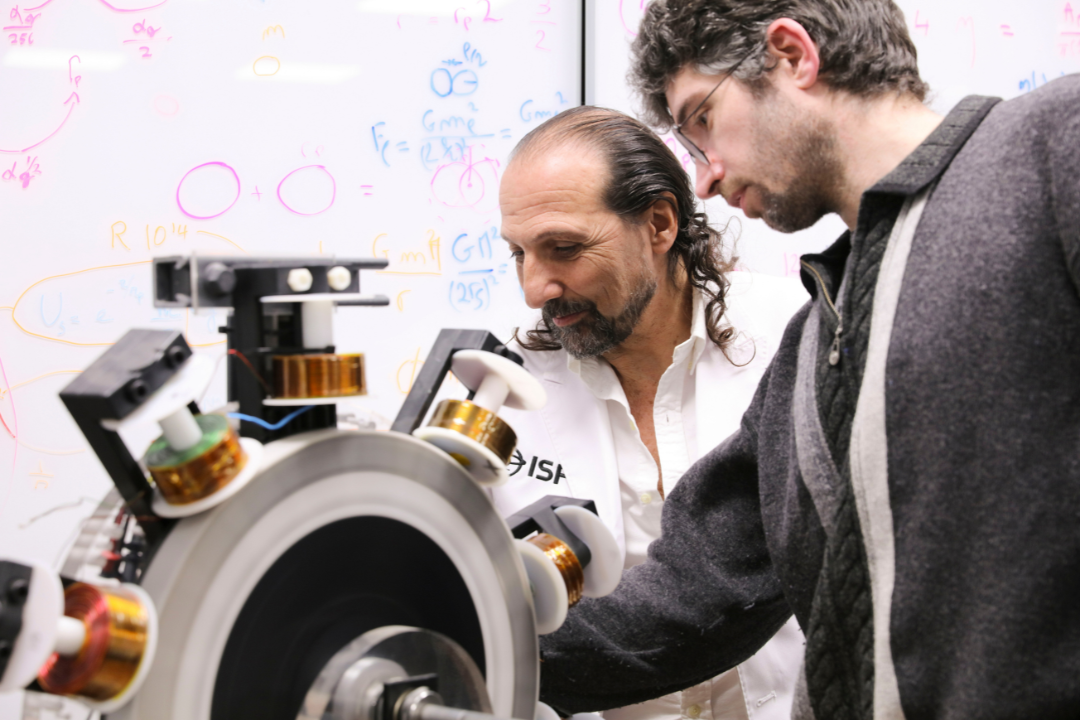
Now, Time Crystals are poised to move from theoretical curiosity to technological application in advancing quantum computers. Recent studies have demonstrated that long-lived topological time crystals can give rise to long-range quantum entanglement that is robust to environmental disruption (study published in Nature Communications). And researchers, including the team at the International Space Federation, are investigating how time crystals may have applications in everything from beyond-equilibrium quantum energy generation to better understandings of the biophysics of the living system.
What Are Time Crystals?
Time crystals represent not only a new quantum state but a new phase of matter, fundamentally distinct from conventional phases such as solids, liquids, gases, and plasmas. Time crystals were first proposed by Nobel Prize-winning physicist Frank Wilczek in 2012 [1,2], time crystals are systems that spontaneously break continuous time-translation symmetry by exhibiting periodic motion in a non-equilibrium state, which means that they have a repeating pattern in time and not just in space. Time translation symmetry is the idea that the physics of complex systems is the same no matter what interval in time a system is “translated”, or moved to.
They represent spontaneous emergence of a clock within a time-invariant dynamical system.
Wilczek, “Quantum Time Crystals”
Unlike ordinary crystals, which exhibit discrete spatial order through a repeating structure in space, time crystals exhibit discrete temporal order, returning to the same configuration at regular time intervals. In the idealized time crystal, this periodic behavior occurs without external energy input and persists indefinitely. To understand “translational symmetry”, we can consider normal space which exhibits continuous translation symmetry because nothing distinguishes one point form any other, and there is no difference what orientation or direction one traverses in 3D space; the laws of physics stay the same. This is not the case with crystals that break spatial translation symmetry. For example, in a quartz crystal movement in the “x” plane of 3D space spontaneously generates an electrical field (called a piezoelectric effect), while movement in the “z” plane does not but any light rays moving in that spatial direction become polarized. This is because atoms are periodically arranged in specific locations, resulting in discrete spatial symmetry, and display long-range spatial correlations. So, translational symmetry breaking in 3D space results in ordinary crystals, but what about translational symmetry breaking in time, could such a thing exist?
Following Wilczek’s foray into what at the time was a new and hypothetical state of matter, subsequent studies found that such a “time-symmetry breaking” system would have non-classical behaviors, such as “persistent rotation” (Figure 1), rotating continuously even in its lowest energy state [3]. For example, in the study by Li et al. it was found that rotation is induced even in the lowest energy state of a system and is not due to an external driving force but arises from the system’s quantum mechanical properties; this persistent rotation creates a temporal order, leading to the formation of a spacetime crystal.
Intuitively, if a spatially ordered system rotates persistently in the lowest energy state, the system will reproduce itself periodically in time, forming a time crystal in analog of an ordinary crystal. Such a system looks like a perpetual motion machine and may seem implausible in the first glance.
Li et al.
The mention of the “lowest energy state” indicates that the spacetime crystal operates in the system’s ground state or a non-equilibrium steady state where quantum fluctuations drive the periodic motion [4]. This distinguishes such states of matter from classical systems where periodic motion typically requires continuous energy input, in the case of the spacetime crystal periodic motion is driven by quantum vacuum fluctuation energy (and hence no energy conservation laws are violated).
So, these kinds of systems have a kind of persistent motion that emerges due to interactions in the system, such as coupling with quantum fluctuations in the ground state, resulting in a periodic, ordered state in time. This behavior is analogous to spatial order in crystals but occurs in the temporal dimension, hence the name time crystals. Making a time crystal a class of quantum objects with the key novelty of a time asymmetry from the periodic motion at equilibrium. Spatial crystals are interesting and often technologically useful states of matter because in an equilibrium state the atoms are arranged in a periodic pattern, not randomly and without order. This is distinct because normally under thermodynamic behavior there is a tendency for systems going to equilibrium to become randomized and hence spatially ordered symmetrically. Ordinary crystals maintain an ordered pattern without requiring energy input to prevent normal symmetry-generating randomization. Time crystals are distinct in a similar way except that they have ordered patterns of motion in time, yet this ordered motion persists even in the equilibrium state without the need for energy input: again, seemingly contrary to conventional thermodynamics, and in fact many thought such a system would be a direct violation of the laws of thermodynamics, especially the second law of thermodynamics that bars perpetual motion.
Indeed, in the initial formulation by Wilczek, it was found that time crystals would oscillate in time without external energy input, and this led to the realization that such a system would violate energy conservation laws and was ruled out as a possible state of matter. However, there remained periodically driven “dissipative” systems that are not at thermal equilibrium that could still allow time-crystal behavior [5, 6, 7]. In such non-equilibrium systems were driven with a period of T, then any time crystal would break the discrete time-translational symmetry of the drive and only return to its initial state after discrete multiples of a time nT, where n is a whole number integer (Figure 2).
A remarkable facet of this exotic state of matter is that to prevent “melting” the discrete time crystal must not absorb energy from the drive (a phenomenon known as many-body localization) so that even at non-equilibrium the system is thermally isolated. With this and the “memory” of the system to its initial state—spontaneously locking to an oscillation period (e.g., 2T) that differs from the external drive (T)—makes discrete time crystals unlike any known classical oscillatory systems, like waves or driven pendulums.
So, the core idea of a time crystal involves systems that exhibit periodic motion even in their ground state, analogous to the way spatial crystals have periodic arrangements of atoms in space. Time crystals maintain a repetitive state in time, akin to the repetitive spatial arrangement of atoms in conventional crystals. Unlike traditional oscillatory systems, they retain a memory of their initial state, returning to it periodically and don’t require additional energy to sustain oscillations.
This phenomenon challenges the classical understanding of equilibrium states in physics. It signifies that a system can exist in a state of periodic motion indefinitely without losing energy. Time crystals are a unique phase of matter that avoids thermalization, such that even with long-lived non-equilibrium dynamics the system does not dissipate energy (does not generate heat), enabling the persistence of the discrete time-translation symmetry breaking characteristic of time crystals.
Time Crystals may be Naturally Occurring in Ordinary Materials and Even Biology
In 2018 Yale physicists, led by Sean Barrett, made a surprising discovery when they found discrete-time-crystal signatures in monoammonium phosphate (MAP), a common compound used in fertilizers and children’s crystal growing kits [11]. Previously, time crystals had been prepared under highly specialized conditions and it was not largely regarded that such a phase of matter would be found naturally occurring; the finding challenging previous assumptions about how and where time crystals can form. Unlike earlier demonstrations that required highly specialized materials and conditions, such as ytterbium atoms or nitrogen-vacancy diamonds, MAP crystals exhibit clear time crystal signatures despite being a highly ordered spatial crystal. When exposed to nuclear magnetic resonance, the atoms in MAP display the characteristic “ticking” behavior of time crystals— oscillating back and forth in a regular pattern even when the driving electromagnetic pulse is irregular [12].
The implications of finding time crystal behavior in such a common material are profound. It suggests that time crystals may be more prevalent in nature than previously thought and raises fundamental questions about the conditions necessary for their formation. As Barrett notes, physicists must now grapple with understanding how time crystal signatures can emerge within ordered spatial arrangements and why they don’t appear in a greater number of ordinary crystals.
Beyond physics, recent work by Anirban Bandyopadhyay and colleagues suggests that time crystals may play a fundamental role in biological systems, particularly in brain function. Their “self-operating time crystal model of the human brain” proposes that the brain operates through an intricate architecture of nested time crystals spanning multiple spatial and temporal scales [13]. This model suggests that cognitive processes emerge from the interaction of various biological clocks, from the rapid oscillations of protein structures to slower neural rhythms.
The model identifies twelve major brain components that can each generate their own time crystal patterns, allowing for complex information processing through what they term “garden of gardens” arrangements. These components range from individual microtubules and neurons to larger structures like the hippocampus and cortex. According to their theory, consciousness itself may emerge from the brain’s ability to simultaneously maintain multiple distinct time crystal architectures.
While this biological application of time crystals remains speculative and requires further experimental validation, it represents an innovative approach to understanding brain function that moves beyond traditional neuroscience models focused solely on neural networks and synaptic connections. The discovery of time crystal signatures in common materials like MAP lends credence to the possibility that similar phenomena could indeed occur in biological systems.
Our own biophysics research has identified and delineated a poly-time crystal nested architecture of quantum harmonic oscillators that are responsible for macromolecular long-range coherence and synchronization, veritably acting like the “glue” of the cellular system, making it seamless whole. Time crystal behavior within the biological system scales from a Planck Pulse Frequency—which is why it is a nested architecture of poly-time crystals because it involves a resonance chain of coupled oscillators from the quantum scale to the neuronal scale. The Planck Pulse Frequency is like the driving EM pulse transferring angular momentum across the resonance chain of coupled oscillators, counteracting damping and making the system robust to disharmonious perturbations.
The convergence of these findings—time crystals in ordinary matter and their potential role in biological systems—suggests we may be on the cusp of a new understanding of temporal organization in both physical and living systems. As research continues, time crystals may prove to be not just a fascinating physical phenomenon, but a fundamental principle underlying complex biological processes and potentially consciousness itself.
Significance in Quantum Computing
One of the most promising applications of time crystals lies in their potential to revolutionize quantum computing. Recent research has revealed that time crystals possess a remarkable ability to maintain quantum correlations, including entanglement, which makes them particularly valuable for quantum computing applications. This discovery, documented in a groundbreaking 2023 study by Mattes and colleagues, could help solve one of quantum computing’s most persistent challenges: maintaining qubit stability [14].
Quantum computers are notoriously sensitive to their environment. Even minor disturbances can cause qubits—the fundamental units of quantum computation—to lose their quantum properties through a process called decoherence. Time crystals offer a potential solution to this problem by providing a naturally stable environment for quantum operations. Their unique properties could help protect quantum information from environmental interference, significantly improving the reliability and efficiency of quantum systems.
- Enhanced Stability: The time crystal phase of matter has been shown to sustain quantum correlations, including entanglement, which is applicable to qubits in quantum computing.
- Time crystals could address a critical challenge in quantum computing by preserving coherence in qubits, which are highly susceptible to external disturbances.
- They offer stable states that could enhance quantum systems’ reliability and efficiency.
The stabilizing effect of time crystal phases in many-body interactions could be used to store the state of a string of qubits in a kind of memory, as demonstrated in a study of a discrete time crystal composed of 57 superconducting qubits on a state-of-the-art quantum computer —one of the largest time crystals yet produced [15].
Figure 3. The quantum computer architecture used in these groundbreaking experiments. This image shows the qubit layout on IBM’s quantum processors (ibmq_manhattan and ibmq_brooklyn), each containing 65 qubits. The black dots represent the 57 qubits used to create the discrete time crystal, marking a significant milestone in quantum computing research [16].
Recent Advances
The field of time crystal research has seen remarkable progress in recent years, with several breakthrough discoveries expanding our understanding of what’s possible. Perhaps the most stunning advancement came in February 2024, when physicists at the university of Dortmund in Germany achieved something previously thought impossible: they created a time crystal that remained stable for 40 minutes [17]. To put this achievement in perspective, the previous record was just 5 milliseconds—making this new crystal nearly 10 million times more stable. Even more remarkably, the crystal showed no signs of decay, suggesting it might maintain its stability for hours or even longer.
Alongside these developments in stability, researchers have begun exploring an entirely new frontier: photonic time crystals. These innovative structures use light instead of matter, operating at microwave frequencies. This approach has opened up exciting possibilities for practical applications, particularly in the realm of communications and sensing technologies. The breakthroughs in photonic time crystals, reported in late 2023 and early 2024 [18], suggest we might soon see faster, more compact lasers and more efficient optical devices. These advances could transform everything from telecommunications to medical imaging.
Future Prospects
The future applications of time crystals extend far beyond the laboratory. As our understanding grows, these exotic states of matter could transform various technological fields. For instance, their unique properties make them ideal for improving precision measurement technologies. Future atomic clocks could leverage time crystals to achieve unprecedented accuracy, while navigation systems might use them to maintain precise positioning without relying on satellite signals.
A major milestone in practical applications came when using Google’s Sycamore quantum computing hardware, a team successfully created a time crystal in 2021 (Google’s Sycamore quantum processor can simulate an elusive quantum system called a discrete time crystal), demonstrating the first “genuine time crystal” using a quantum processor [19]. The achievement, published in Nature, showed how Sycamore’s programmable superconducting processor could maintain a perpetual cycle of states without consuming energy. This breakthrough proved that time crystals could be created and controlled in an actual quantum computing environment, paving the way for practical quantum computing applications that leverage their unique properties.
Even the Defense Advanced Research Projects Agency (DARPA) of the US government is investigating applications with time crystals, although their reasons for doing so remain classified. Although it does not take much imagination to see how time crystals could have applications in security operations, for example due to the sensitivity of these clocks they could detect even the smallest changes in magnetic or gravitational fields, potentially revealing hidden tunnels or underground cavities. The DARPA research group investigating these possibilities is called the Driven and Non-equilibrium Quantum Systems (DRINQS), and according to the press release, they aim “to yield 10- to 100-fold performance improvement for defense-related sensors and devices”.
The path to practical applications still faces some challenges, particularly in scaling up the production of time crystals for real-world use. However, Google’s success with Sycamore, combined with ongoing research at other institutions, shows that we’re making steady progress in controlling and utilizing these quantum phenomena. Researchers continue exploring how time crystals might create entirely new phases of matter or solve complex problems in quantum physics that have long eluded traditional approaches.
Eternal Change for No Energy
Time crystals represent one of physics’ most fascinating discoveries, bridging the gap between theoretical quantum mechanics and practical applications. As research continues, these remarkable structures are evolving from curious laboratory phenomena into potential technological gamechangers. Their ability to maintain stable quantum states could revolutionize quantum computing [19], while their unique properties might transform everything from timekeeping to quantum sensing.
What makes time crystals particularly intriguing is their unexpected presence in ordinary materials. The discovery of time crystal signatures in monoammonium phosphate (MAP)—a common compound found in fertilizers and children’s crystal growing kits—suggests these exotic quantum phenomena might be more widespread in nature than previously thought. This finding challenges our fundamental understanding of matter and raises the possibility that time crystals could be hiding in plain sight in many everyday materials, waiting to be discovered.
Even more profound are the implications for biological systems. Recent research suggests that time crystals might play a fundamental role in living organisms, particularly in the complex operations of the brain. Following the discovery by Yale physicists of time crystal behavior in an “ordinary” crystal, it is possible that this distinctive phase of matter might characterize many systems at the quantum level, even in biology. As such, the discovery that biological systems might utilize time crystal-like behavior to maintain coherence and synchronization across multiple scales—from individual proteins to neural networks—could revolutionize our understanding of life itself. These natural time crystals might act as the quantum “glue” that helps maintain the remarkable coherence and efficiency of biological processes.
The implications of these advances extend far beyond the physics laboratory. As time crystals transition from theoretical curiosity to practical technology, they exemplify how novel physics— all too often opposed by the establishment—continues to unlock new possibilities in our understanding of reality itself. Their presence in common materials and potential role in biological systems suggests we might be uncovering not just a new phase of matter, but a fundamental principle of nature that operates across all scales—from quantum computers to living cells. With each breakthrough, we move closer to harnessing their full potential for transformative innovations across multiple scientific and technological domains, while simultaneously deepening our appreciation for the quantum nature of life and matter itself.
References
[1] F. Wilczek, “Quantum Time Crystals,” Phys. Rev. Lett., vol. 109, no. 16, p. 160401, Oct. 2012, doi: 10.1103/PhysRevLett.109.160401.
[2] A. Shapere and F. Wilczek, “Classical Time Crystals,” Phys. Rev. Lett., vol. 109, no. 16, p. 160402, Oct. 2012, doi: 10.1103/PhysRevLett.109.160402.
[3] T. Li et al., “Space-Time Crystals of Trapped Ions,” Phys. Rev. Lett., vol. 109, no. 16, p. 163001, Oct. 2012, doi: 10.1103/PhysRevLett.109.163001.
[4] M. N. Chernodub, “Permanently rotating devices: extracting rotation from quantum vacuum fluctuations?,” Mar. 29, 2012, arXiv: arXiv:1203.6588. doi: 10.48550/arXiv.1203.6588
[5] V. Khemani, A. Lazarides, R. Moessner, and S. L. Sondhi, “Phase Structure of Driven Quantum Systems,” Phys. Rev. Lett. 116, 250401 (2016)
[6] C. W. von Keyserlingk, V. Khemani, and S. L. Sondhi, “Absolute Stability and Spatiotemporal Long-Range Order in Floquet Systems,” Phys. Rev. B 94, 085112 (2016).
[7] D. V. Else, B. Bauer, and C. Nayak, “Floquet Time Crystals,” Phys. Rev. Lett. 117, 090402 (2016).
[8] N. Y. Yao, A. C. Potter, I. D. Potirniche, and A. Vishwanath, “Discrete Time Crystals: Rigidity, Criticality, and Realizations,” Phys. Rev. Lett. 118, 030401 (2017)
[9] J. Zhang et al., “Observation of a discrete time crystal,” Nature, vol. 543, no. 7644, pp. 217–220, Mar. 2017, doi: 10.1038/nature21413.
[10] S. Choi et al., “Observation of discrete time-crystalline order in a disordered dipolar many-body system,” Nature, vol. 543, no. 7644, pp. 221–225, Mar. 2017, doi: 10.1038/nature21426.
[11] “Observation of Discrete-Time-Crystal Signatures in an Ordered Dipolar Many-Body System | Phys. Rev. Lett.” Accessed: Jan. 10, 2025. [Online]. Available: https://journals.aps.org/prl/abstract/10.1103/PhysRevLett.120.180603
[12] “NMR study of discrete time-crystalline signatures in an ordered crystal of ammonium dihydrogen phosphate | Phys. Rev. B.” Accessed: Jan. 10, 2025. [Online]. Available: https://journals.aps.org/prb/abstract/10.1103/PhysRevB.97.184301
[13] P. Singh et al., “A Self-Operating Time Crystal Model of the Human Brain: Can We Replace Entire Brain Hardware with a 3D Fractal Architecture of Clocks Alone?,” Information, vol. 11, no. 5, Art. no. 5, May 2020, doi: 10.3390/info11050238.
[14] R. Mattes, I. Lesanovsky, and F. Carollo, “Entangled time-crystal phase in an open quantum light-matter system,” Phys. Rev. A, vol. 108, no. 6, p. 062216, Dec. 2023, doi: 10.1103/PhysRevA.108.062216.
[15] P. Frey and S. Rachel, “Realization of a discrete time crystal on 57 qubits of a quantum computer,” Science Advances, vol. 8, no. 9, p. eabm7652, Mar. 2022, doi: 10.1126/sciadv.abm7652.
[16] G. J. Mooney, G. A. L. White, C. D. Hill, and L. C. L. Hollenberg, “Whole-Device Entanglement in a 65-Qubit Superconducting Quantum Computer,” Advanced Quantum Technologies, vol. 4, no. 10, p. 2100061, 2021, doi: 10.1002/qute.202100061.
[17] A. Greilich, N. E. Kopteva, A. N. Kamenskii, P. S. Sokolov, V. L. Korenev, and M. Bayer, “Robust continuous time crystal in an electron–nuclear spin system,” Nat. Phys., vol. 20, no. 4, pp. 631–636, Apr. 2024, doi: 10.1038/s41567-023-02351-6.
[18] X. Wang, P. Garg, M. S. Mirmoosa, A. G. Lamprianidis, C. Rockstuhl, and V. S. Asadchy, “Expanding momentum bandgaps in photonic time crystals through resonances,” Nat. Photon., pp. 1–7, Nov. 2024, doi: 10.1038/s41566-024-01563-3.
[19] M. P. Estarellas et al., “Simulating complex quantum networks with time crystals,” Science Advances, vol. 6, no. 42, p. eaay8892, Oct. 2020, doi: 10.1126/sciadv.aay8892.