


In 2015, after 85 years of searching, researchers confirmed the existence of a massless particle called the Weyl fermion. With the unique ability to behave as both matter and anti-matter inside a crystal, this quasiparticle is like an electron with no mass. The story begun in 1928 when Dirac proposed an equation for the foundational unification of quantum mechanics and special relativity in describing the nature of the electron. This new equation suggested three distinct forms of relativistic particles: the Dirac, the Majorana, and the Weyl fermions. And recently, an analog of Weyl fermions has been discovered in certain electronic materials exhibiting a strong spin orbit coupling and topological behavior. Just as Dirac fermions emerge as signatures of topological insulators, in certain types of semimetals, electrons can behave like Weyl fermions.
These Weyl fermions are what can be called quasiparticles, which means they can only exist in a solid such as a crystal, and not as standalone particles. However, as complex as quasiparticles sound, their behavior is actually much simpler than that of fundamental particles, because their properties allow them to shrug off the same forces that knock their counterparts around. This discovery of Weyl fermions is huge, not just because there is finally a proof that these elusive particles exist, but because it paves the way for far more efficient electronics, and new types of quantum computing. Weyl fermions could be used to solve the traffic jams with electrons in electronics. In fact, Weyl electrons can carry charges at least 1,000 times faster than electrons in ordinary semiconductors, and twice as fast as inside graphene. This could lead to a whole new type of electronics called ‘Weyltronics’.”
Weyl Semimetals: The Birth of Weyltronics
Power dissipation is the main obstacle in modern electronics, and the unique non-dissipative nature of currents carried by Weyl fermions may well offer the solution.
This lead to the discovery of Weyl semimetals. They are crystal semi-conductors whose low-energy bulk excitations are Weyl fermions, whereas their surfaces possess metallic Fermi arc surface states. The first experimental measurement was done by moving and rotating the crystal while also varying the wavelength of the microwaves beamed at it. The detection of which microwave bands were “forbidden” or “allowed,” produced a frequency-wavelength graph that showed a Weyl point — the predicted fingerprint of the Weyl particles.
Significant advances in both topological insulators and topological semimetals have provided an alternative way to realize Weyl fermions in condensed matter as an emergent phenomenon: when two non-degenerate bands in the three dimensional momentum space cross in the vicinity of the Fermi energy (called Weyl nodes), the low-energy excitations behave exactly as Weyl fermions.
Princeton University’s Breakthrough: Weyl Nodes and Metallic Phases
Recently, studying Weyl nodes a team from Princeton University found an interesting emergent phenomenon. They observed that a metallic phase protected by Weyl nodes persists over a finite interval of the tuning parameter (for example pressure). The gap reappears when the Weyl nodes mutually annihilate. Using pressure to tune the gap, they have tracked the nucleation of a Fermi surface droplet that rapidly grows in volume with the pressure. These new discoveries are a big step in the direction of the emergence of a viable Weyltronics technology
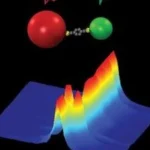
Calculated Weyl node trajectories (Supplementary Materials), magnified 10× relative to the BZ scale and top-down view of the hexagon face. At P1, two Dirac nodes nucleate around L1 because of inversion-symmetry breaking. With increasing P, the four Weyl FS near L1 move apart and expand in volume. Effect of B on the Weyl node separations. A finite Zeeman field increases the separation and Fermi energy of the pair w1± while decreasing them in w2±.
Everything we have, from light bulbs to cars to computers, is based on the electronic technology where we use massive and slow moving electrons. In the new Weyltronics technology, we utilize the novel features of massless Weyl fermions, which conduct electricity much faster and efficiently compared to the normal electrons. Since this technology is still at an early stage, it is hard to imagine all the possible devices that one can design using Weyl fermions. However, some major possible applications of this technology could include ultrafast switches, spin-transistors, logic devices, electric and magnetic field sensors and quantum computers.
Sobhit Singh, Department of Physics and Astronomy, West Virginia University
Continue reading at: https://phys.org/news/2017-12-physicists-tune-dynamics-exotic-quantum.html