

When “Impossible” Propulsion Meets Orbit
For as long as humans have been traveling, we have followed one simple rule: to go forward, you have to push something backward. A rower pushes water with an oar; a car’s tires push against the road; a jet engine pushes air; and a rocket pushes massive amounts of chemical fuel. This “action and reaction” principle (Newton’s Third Law) governs all conventional modes of travel and when it comes to space travel it comes with a major limitation—once a spacecraft runs out of fuel, it stops being able to accelerate.
That rule is so fundamental it’s baked into the rocket equation—the reason rockets become towering stacks of fuel to deliver a comparatively small payload. And it’s also why any claim of propellantless thrust immediately grabs attention. If you could produce even a tiny, steady push without reaction mass, you wouldn’t just improve satellites. You would rewrite the logistics of space.
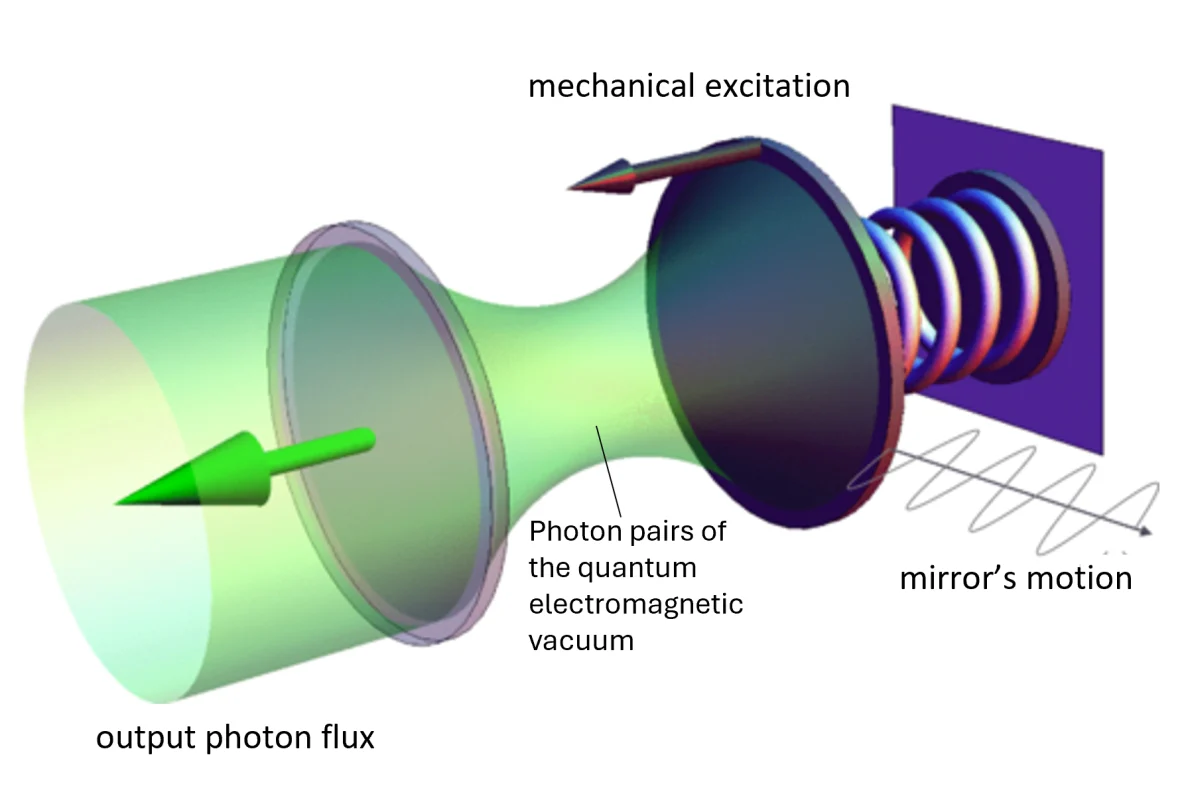
The IVO Quantum Drive is a prototype propulsion system that aims to supersede this rule with a clever work-around: the vacuum of space is not empty, it is substantive (Lawrence Krauss & Frank Wilczek – Materiality of a Vacuum PHYSICS – Part 1), and with the right engineering we can utilize it to generate force, as demonstrated with experiments like the dynamical Casimir effect [how to build a spacecraft that operates using the quantum vacuum; 1].
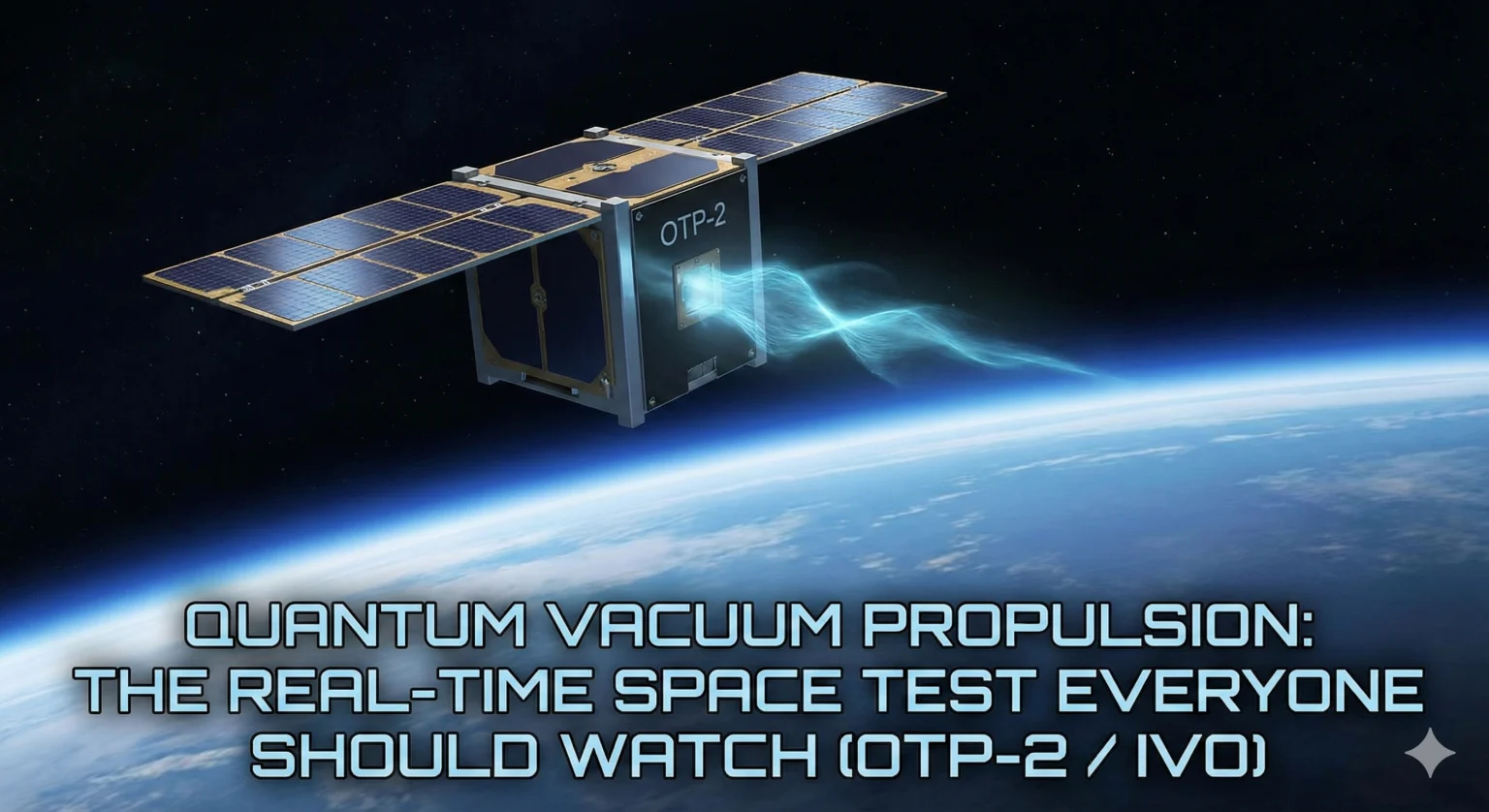
Developed by IVO Ltd, the IVO Quantum Drive is described as the world’s first “pure electric” thruster. Unlike every other engine in history, it requires zero fuel or propellant to generate movement. Instead of carrying heavy tanks of gas, it uses only electricity—harvested from the sun—to generate thrust. During the last quarter of 2025 the IVO Quantum Drive was running preliminary operations in Low Earth Orbit. The objective: test the “Quantum Drive” to see if it works as the inventors and Earth-based testing purports. If it can re-position a satellite, then there will be little doubt as to the validity of the claims of its functionality. Telemetry measurements are expected in the coming months, and objectively valid indications of successful force signatures will be nothing short of revolutionary.

The IVO Quantum Drive: Propulsion Without the Exhaust
In most cases (excluding, for the moment, gravitational warp drives) to change momentum, you must exchange momentum with something—propellant, photons, a planet’s gravity field, a magnetic field, etc. Spacecraft already ‘push’ without propellant more often than people realize. Solar sails trade momentum with sunlight. Gravity assists trade momentum with planets. Even electrodynamic tethers can trade momentum with Earth’s magnetic field (a class of momentum exchange tether). What makes the new wave of ‘quantum drive’ claims so provocative is that they imply a different partner in the exchange—not exhaust, not photons, not planets, but the vacuum itself.
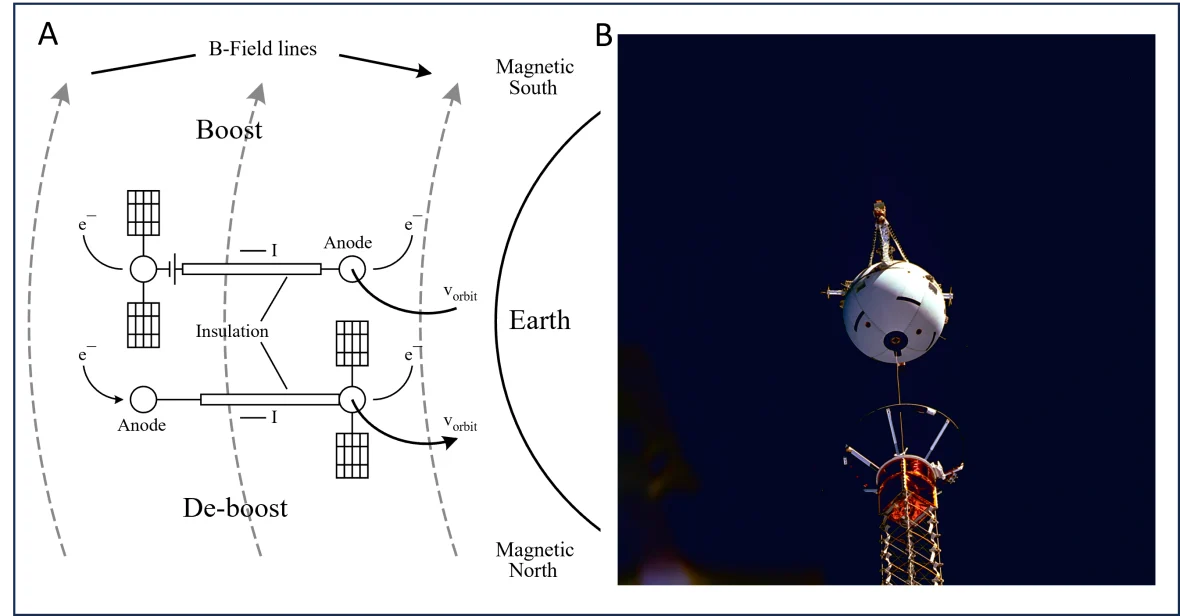
The idea that craft could achieve acceleration without chemical propulsion is a key consideration within a parallel storyline: credible military witnesses describing unidentified anomalous phenomena (UAP) that appear to make extreme maneuvers and near-instantaneous accelerations without obvious propulsion. Those claims are now part of the official record via U.S. congressional testimony.
One non-chemical “reactionless” explanation for the highly anomalous maneuverability and acceleration characteristics observed with these craft— recorded and officially documented by the US military—would be an Alcubierre-type warp drive, in which a craft doesn’t travel through spacetime in the classical sense, but instead the spacetime metric itself reshapes or “warps”. This enables extreme maneuvers because the spacetime metric can have near-instantaneous reshaping without generating any gravitational forces (g-forces) on the craft. Quantum thrusters don’t claim to operate via spacetime engineering—but this UAP context gives the conversation broader weight: if something appears to be bypassing conventional propulsion, it’s worth understanding the scientific hypotheses (however speculative) for what that something might be.
Whatever one concludes about origins, the engineering question is unavoidable: if some vehicles really accelerate without wings, rotors, jets, or exhaust plumes (Navy Officially Releases Controversial UFO Videos), then somewhere there exists a workable pathway to field-based propulsion.
One of the most concrete near-term tests of that question is now in orbit: the Otter Pup Two (OTP-2) satellite mission carrying the IVO Quantum Drive. The test is on to see if space travel will open up to humanity in this century, or if we will have to continue to crawl along with painstakingly inefficient and rudimentary chemical-based propulsion, remaining restricted to only the nearest celestial bodies like the moon and mars.
The OTP-2 / IVO “Quantum Drive” case study
IVO’s premise is bold but testable: fly hardware in Low Earth Orbit, run controlled actuation sequences, and look for repeatable orbital changes or force signatures that cannot be explained by conventional disturbances (drag variability, outgassing, thermal effects, attitude coupling, power transients, etc.). Public satellite documentation summarizes the goal plainly as qualifying a drive “with no required propellant,” and even lists an estimated thrust value.
By late 2025, public updates around the payload converged on the same headline: the hardware is reported to be “operational in space,” but thrust had not yet been reported as measured at the time of those updates. This is an important distinction. “Survived launch + operated on orbit” is a real milestone in aerospace engineering; it is not, by itself, evidence that a new physics thrust mechanism is working. The scientific inflection point is whether the mission can produce a clean, reproducible force signal with transparent accounting for confounds.
A useful way to keep the discussion grounded is to separate three layers:
First: space qualification (does the device function as hardware in the orbital environment?).
Second: signal detection (is there a thrust-like effect above the noise floor and above known perturbations?).
Third: mechanism (if thrust exists, what is the physical explanation, and does it generalize?).
The reason OTP-2 matters is that it is aimed squarely at layer two. If a propellantless thruster produces even millinewton-scale thrust in orbit in a way that survives adversarial error analysis, it changes the tone of this entire field overnight—because it turns “propellantless propulsion” from a philosophical argument into an engineering parameter.
Quantized Inertia: the “vacuum-origin” inertia idea behind the IVO drive
One of the better-defined theoretical frameworks that supporters point to for the IVO Quantum Drive is Quantized Inertia (QI), also known as MiHsC (“Modified inertia by a Hubble-scale Casimir effect”). In QI, inertia is not treated as a fundamental given, but as an emergent effect tied to an object’s interaction with the quantum vacuum when it accelerates. The core intuition is that acceleration is associated with Unruh radiation, and that relativistic horizons that appear for an accelerating system can “clip” or damp those modes in an asymmetric way, producing an effective inertial reaction. In McCulloch’s published derivations, this leads to a modified inertial mass that closely matches standard inertia at everyday accelerations but departs from it at extremely low accelerations, which QI proponents argue can reproduce certain astrophysical anomalies without invoking dark matter.
How does that translate into a thruster? In the popular “horizon drive” framing, the goal is to engineer a controlled gradient in the vacuum-mode environment—sometimes described as making synthetic horizons using conductive boundaries—so that the effective inertia (or inertial response) differs across a device. If one side of an internal accelerating system experiences a different horizon constraint than the other, QI predicts an imbalance that can appear as a net force on the apparatus.
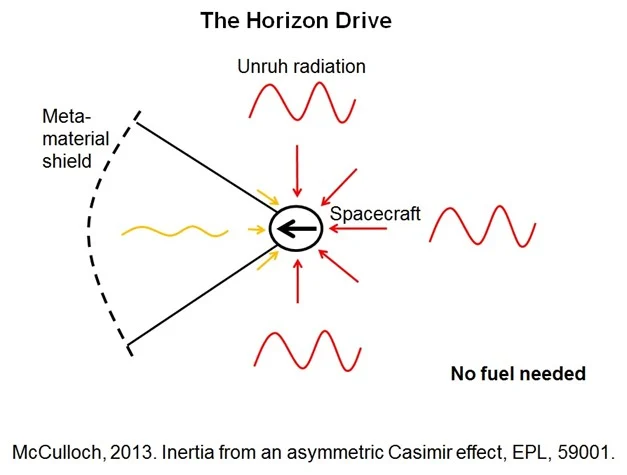
The specific implementation most often associated with IVO is the capacitor-cavity method. As summarized in one widely circulated technical explainer, the approach involves high-acceleration charge motion within a capacitor structure, typically with a dielectric between closely spaced plates, and an asymmetric boundary configuration intended to create the required gradient in the “horizon” constraint. IVO itself has publicly described its thruster as a capacitive-based, “pure electric” device built on quantized inertia, and has claimed substantial thrust in thermal-vacuum testing (company-reported), emphasizing that it uses no fuel.
It’s important to state the status cleanly. Quantized inertia is not mainstream consensus physics, and its propulsion claims remain contentious largely because extraordinary performance requires extraordinary controls. That is precisely why an orbital test like OTP-2 matters: in principle, if a propellant-less thrust signal exists, a sustained, repeatable effect should eventually show up in the spacecraft’s dynamics in a way that survives careful accounting for drag variability, attitude changes, outgassing, and other non-gravitational perturbations. Until that data is publicly persuasive, QI remains best treated as an explicit, testable hypothesis—interesting because it makes concrete predictions but still awaiting the kind of unambiguous validation that would force the broader community to update.
Being outside conventional theory is not disqualifying in itself. The Standard Model remains incomplete—it offers no unification of the forces and no prescription for controlling gravity the way Maxwell’s equations taught us to control electromagnetism. As mainstream physics has largely resigned itself to the view that interstellar travel is infeasible within a human lifetime, leaving us stuck with chemical propulsion indefinitely, the case for investigating unconventional approaches grows stronger. Novel, paradigm-challenging ideas deserve rigorous experimental testing—with empirical data sorting the promising from the implausible, and a fair dose of humility on all sides.
How Is It Built?
If you were to look inside a Quantum Drive, you wouldn’t find combustion chambers or complex plumbing. Instead, its “motor” is essentially a specialized set of high-tech electrical components called asymmetric capacitors.
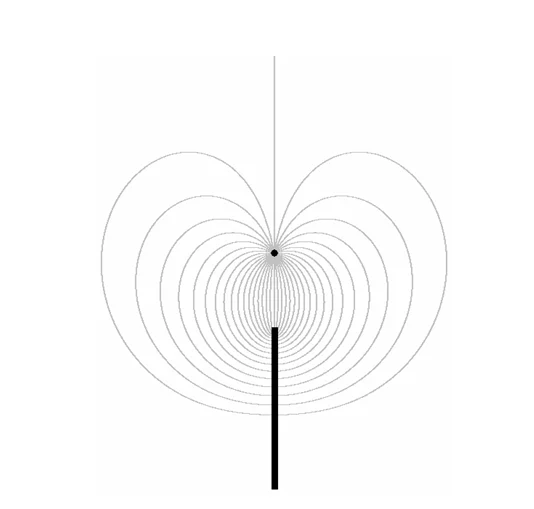
The drive is built using a proprietary technology IVO calls CBAT (Capacitive-Based Aerial Transmission). At its core, the device consists of plates separated by a microscopic gap (about one-tenth the thickness of a human hair). When a high-voltage electrical charge is applied, electrons are accelerated across this gap. According to the company, the specific arrangement and “geometry” of these plates allow the device to interact with the background energy of the universe itself to create a tiny but steady nudge.
Because there are no fuel tanks or heavy engines, the drive is incredibly small and modular. A single unit weighs only about 300 grams (roughly the weight of a large apple) and can be stacked like LEGO bricks, which the developers say can be used to power everything from a tiny “CubeSat” to a massive interstellar probe.
Performance: Tiny Power, Massive Potential
The performance claims for the Quantum Drive are, quite literally, “out of this world.” Because it doesn’t need to carry its own weight in fuel, its efficiency is off the charts:
- *Fuel Independence: Since it runs entirely on electricity, a satellite equipped with this drive could theoretically stay in orbit for decades, maneuvering “limitlessly” as long as its solar panels are working.
- *Thrust-to-Power Ratio: In Earth-based vacuum tests, the drive produced approximately 52 millinewtons of thrust for every 1 watt of power. To put that in perspective, traditional high-tech “Ion Thrusters” used by NASA typically require thousands of times more power to achieve similar results.
- *Speed for the Stars: While the thrust is small, it is constant. IVO suggests that a scaled-up version of this technology could eventually power an interstellar probe to reach 20% of the speed of light, potentially reaching our neighboring star system, Alpha Centauri, within a human lifetime.
Why the physics debate is so contentious
IVO isn’t the only group aiming to validate propellantless propulsion with an orbital test. Quantum Dynamics Enterprises (QDE) is developing what it calls a Centrifugal Impulse Drive (CID) and publicly presents it as a propellantless system with an “orbital demo” planned, describing a flight program intended to move the concept from lab-scale validation into space-based verification.
Unlike OTP-2/IVO, which is discussed in the context of an already-launched hosted payload mission, QDE’s CID appears publicly framed as an upcoming orbital demonstration rather than a completed on-orbit thrust result. If and when CID flies with transparent telemetry and repeatable performance, it would offer a valuable second data stream—either reinforcing the possibility of propellantless thrust or clarifying which effects disappear under space-grade measurement conditions.
At the theoretical level, both QI-based approaches and other propellantless concepts rely on reinterpreting how momentum is conserved. In conventional physics, “reactionless drive” claims trigger immediate skepticism because momentum conservation is not optional; it is welded into classical mechanics. The case is not so straightforward with quantum mechanics, however, since the superposition principle “makes a mockery of conservation laws” and it can be proven that under certain conditions conservation laws are violated [4].
This asymmetry is striking: physicists tolerate theoretical ambiguities about conservation laws in quantum foundations, yet often dismiss propellantless propulsion concepts on purely theoretical grounds before empirical data is collected. If conservation-law puzzles don’t disqualify quantum mechanics from serious investigation, then novel propulsion concepts warrant the same standard—rigorous empirical testing rather than a priori rejection. That said, any credible propellantless result must still account for momentum transfer with something—typically a field, a boundary condition, or an external reference (even if that “external” is subtle, like interaction with structured vacuum modes, radiation fields, or spacetime geometry).
To illustrate this point: if a purported “reactionless” drive delivers a fixed thrust-to-power ratio F/P while the only energy input is the onboard electrical power, then in principle one can construct regimes where the craft’s kinetic energy grows faster than the accumulated input energy—opening the door to a perpetual-energy loop via cycles of acceleration and regenerative deceleration [5]. Under those closed-system assumptions, the clean benchmark is the photon rocket, where thrust (F) is tied to radiated momentum by , where P, is the momentum of ejected photons and c is the speed of those photons (the speed of light). Because c is huge (≈3 X 10⁸ m/s), the thrust per watt is tiny: F ≈ 1 W / (3 X 10⁸ m/s) ≈ 3.3 nanonewtons, for one watt of power being supplied, which is about the amount of thrust of a mote of dust that has landed on your hand.
So, for ordinary power levels, the resulting acceleration of a photon rocket is so small that the total velocity change remains tiny unless the craft is extremely low mass or the beam runs for a very long time. However, that “photon-rocket bound” is only a bound for a closed device whose only input is onboard power and which has no external reaction partner. Rockets evade it by expelling reaction mass; and any genuine “field drive” would evade it only if it demonstrably exchanges both momentum and energy with an external field or reservoir (like drawing energy from the quantum electromagnetic vacuum energy density) that can be independently accounted for—so that the total energy includes whatever additional power is being drawn (or radiated away), and the counter-momentum has an explicit destination. Generating a boundary condition or horizon is one such way to achieve this.
The ordinary Casimir effect is a concrete demonstration that the quantum electromagnetic field is not an inert backdrop: when you impose boundaries (like closely spaced conducting plates), you reshape the allowed field modes and measurable forces can result. MiHsC takes that same “boundary-conditions matter” motif and stretches it to cosmological scale: in McCulloch’s formulation, an accelerating object experiences Unruh radiation, but the spectrum it can “see” is constrained by horizons—most importantly a Rindler horizon on one side and the cosmic (Hubble) horizon on the other—creating an asymmetric Casimir-like suppression that manifests as the inertial reaction force. Although the Casimir effect is a clear demonstration of how forces can be generated from the quantum vacuum, it is often dismissed as almost trivial since two plates drawn together will require energy to be pulled apart, so the net gain is zero. However, this is obviously remedied by introducing an asymmetry in boundary conditions, like many proposals do (see, for example Garret Moddel) [Test of zero-point energy emission from gases flowing through Casimir cavities,” 6].
In alignment with this, IVO has engineered an asymmetry deliberately, using a capacitor/cavity geometry so that accelerating charges experience a different vacuum-mode environment on one side than the other (analogous in spirit to how plates suppress modes in the laboratory Casimir effect), potentially yielding a net force if MiHsC’s assumptions hold. Thus, Casimir physics establishes that vacuum fields can mediate real forces under engineered boundary conditions, and MiHsC is a specific (non-consensus) hypothesis that tries to elevate that idea into a propulsion-relevant mechanism by linking vacuum-mode asymmetry to inertia itself—meaning that, in principle, the quantum vacuum could serve as the “medium” for field-based propulsion if the predicted asymmetry can be made to produce a reproducible, independently verified thrust signal.
Where ISF sits in this landscape
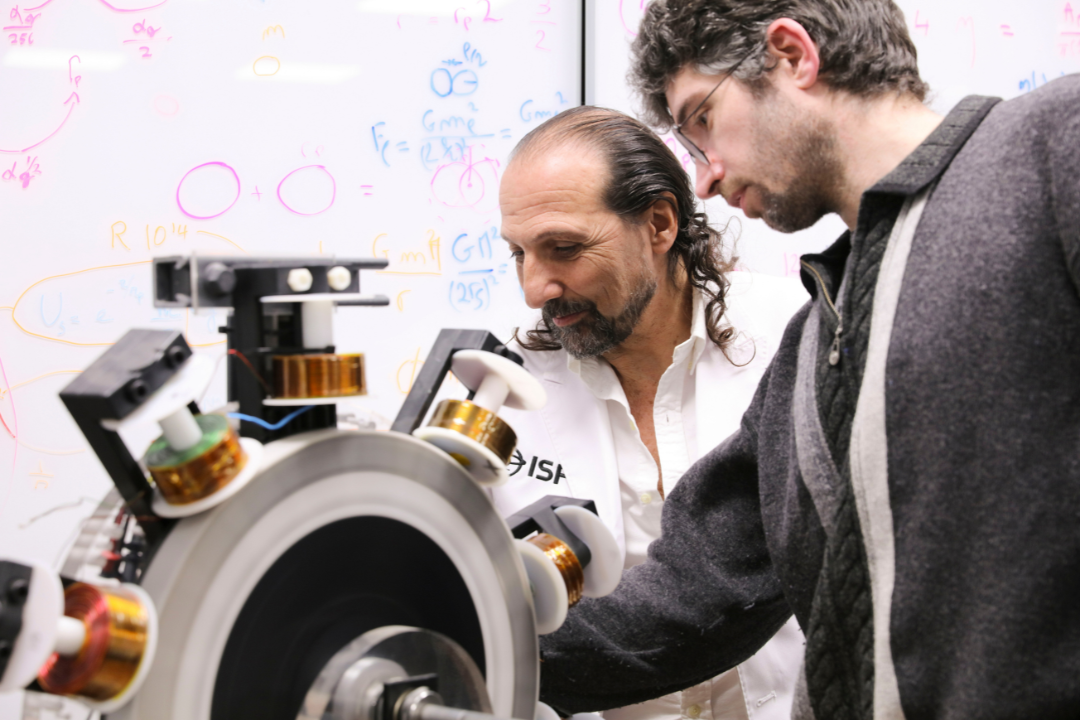
At the International Space Federation, we want credible third-party propellantless propulsion efforts to succeed—because success would validate what many engineers already suspect: that our current “chemical propellant mindset” is not the end of the story.
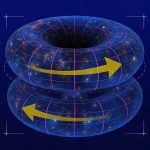
At the same time, we’re not waiting on anyone’s press releases. In our own theoretical development, we’ve been working from a specific pathway: coherent modes of quantum electromagnetic vacuum fluctuations inducing metric perturbations (curvature), with an explicit treatment of how field correlations map into spacetime response via Einstein’s field equations. In the preprint Extending Einstein-Rosen’s Geometric Vision: Vacuum Fluctuations-Induced Curvature as the Source of Mass, Gravity and Nuclear Confinement [6], ISF physicists lay out a framework in which coherent vacuum fluctuations generate metric perturbations and, through the field equations, a calculable conversion into gravitational-wave–like curvature dynamics in a resonant cavity setting (developed there at the proton scale). Because it is demonstrated under what conditions vacuum fluctuations of the quantum electromagnetic field shift into coherent phases with positive net energy values, it is understood how those conditions can be engineered.
You do not have to accept every element of that model to appreciate the broader point: it is an example of what a “theoretical pathway” looks like—equations that specify (1) what coherence is required, (2) what coupling term does the work, and (3) what observable consequences follow if the coupling is real.
That is the posture we encourage readers to adopt with IVO as well. If IVO can demonstrate thrust in orbit, it becomes a proof-of-concept that field-coupled propulsion is not merely a speculative category—regardless of which theory ultimately explains it. And if thrust is not observed once the data are in, that also matters: it tells us where the noise floors, confounds, and engineering limits actually are.
What to watch for next
The next phase of the OTP-2 story boils down to a short checklist: reported thrust magnitude (with uncertainty), repeatability across runs, how the analysis treated thermal and attitude coupling, and whether independent analysts can reproduce the inference from raw telemetry. The public updates so far emphasize operational readiness while noting that thrust measurement is still pending, which means the most important chapter is the data chapter.
If OTP-2 produces a clean positive result, skeptics who insist “propellantless propulsion is impossible” will be forced to update—because the argument will no longer be about what “should” happen, but about what did happen and what physics best accounts for it. If it does not, the field still advances by learning exactly what failed and why.
Either way, the signal-spine remains the same: put a concrete claim in orbit, reduce the confounds, and let reality answer.
References
- G. J. Maclay and R. L. Forward, “A Gedanken Spacecraft that Operates Using the Quantum Vacuum (Dynamic Casimir Effect),” Foundations of Physics, vol. 34, no. 3, pp. 477–500, Mar. 2004, doi: 10.1023/B:FOOP.0000019624.51662.50.
- V. Macrì, A. Ridolfo, O. Di Stefano, A. F. Kockum, F. Nori, and S. Savasta, “Nonperturbative Dynamical Casimir Effect in Optomechanical Systems: Vacuum Casimir-Rabi Splittings,” Phys. Rev. X, vol. 8, no. 1, p. 011031, Feb. 2018, doi: 10.1103/PhysRevX.8.011031.
- From: F. X. Canning, C. Melcher, and E. Winet, “Asymmetrical Capacitors for Propulsion,” NASA/CR-2004-213312, Oct. 2004. Accessed: Jan. 16, 2026. [Online]. Available: https://ntrs.nasa.gov/citations/20040171929
- Y. Aharonov, S. Popescu, and D. Rohrlich, “Conservation laws and the foundations of quantum mechanics,” Proceedings of the National Academy of Sciences, vol. 120, no. 41, p. e2220810120, Oct. 2023, doi: 10.1073/pnas.2220810120.
- A. J. Higgins, “Reconciling a Reactionless Propulsive Drive with the First Law of Thermodynamics,” May 07, 2015, arXiv: arXiv:1506.00494. doi: 10.48550/arXiv.1506.00494.
- O. Dmitryeva and G. Moddel, Test of zero-point energy emission from gases flowing through Casimir cavities, Physics Procedia, 38 8-17 (2012); Presented at Space, Propulsion & Energy Sciences International Forum – 2012, University of Maryland, College Park, MD, March 1-2, 2012.